Kerala Temple's 53-Year Tradition: Serving Onam Sadya to Monkeys
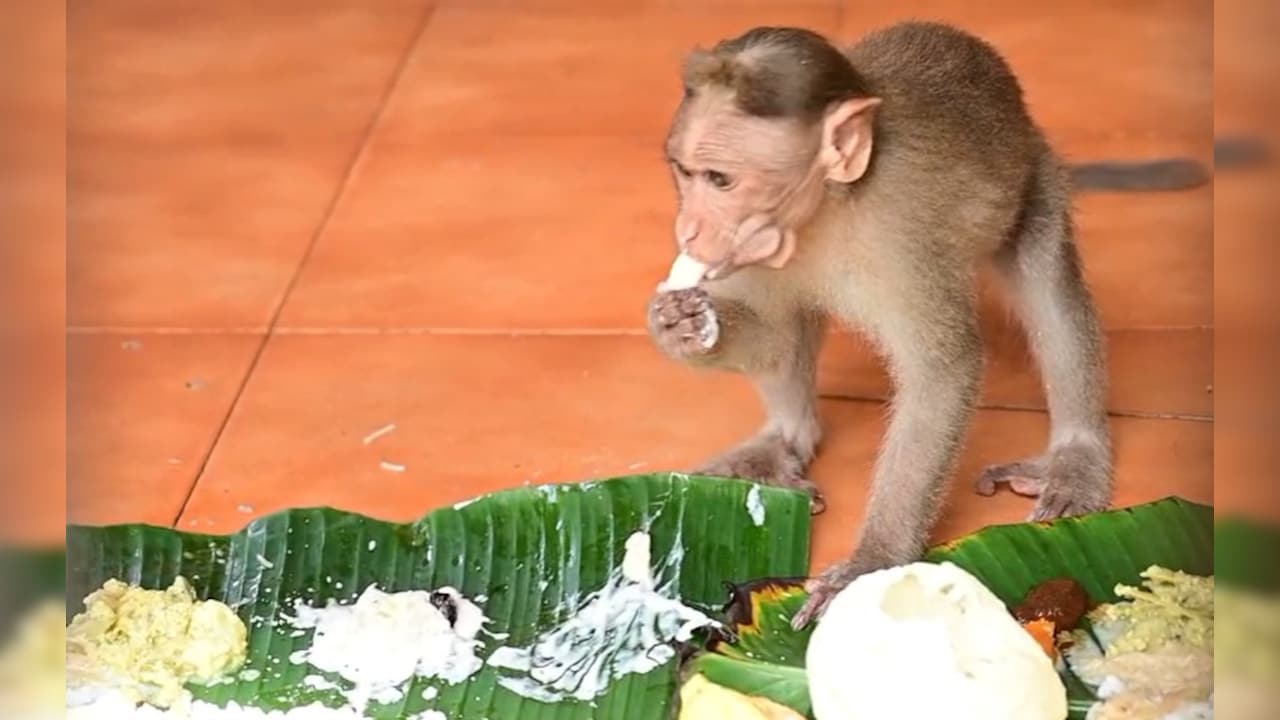
In a quiet corner of Kerala's Kollam district, the Sasthamkotta Sree Dharma Sastha Temple has become known for a unique Onam tradition that turns the usual feast into a shared celebration with the animal kingdom. For over five decades, the temple's resident monkeys have been treated to a full traditional Onam sadya, served on banana leaves in the temple's dining hall.
Every year on Uthradam and Thiruvonam, the ninth and tenth days of the ten-day Onam festival, the ritual unfolds with careful preparation. Human volunteers lay out rows of banana leaves and serve each dish one by one—pachadi, payasam, and the many curries and sides that make up a traditional Kerala feast. But the guests are not people; they are monkeys who live in and around the temple premises.
The monkeys, known to be a disciplined troop, wait patiently on tree branches, walls, and rooftops as the feast is being prepared. They do not rush toward the food. Only after the last dish is served and the humans step aside does the first guest approach—a senior monkey locally known as Murivaalan, who is considered the leader of the troop. He samples the sadya first, and only then do the others climb down to take their places in front of the banana leaves. Within moments, the dining hall transforms into one of Kerala's most remarkable Onam scenes: a full assembly of monkeys quietly enjoying a festive meal.
The tradition began 53 years ago, when Aravindakshan Nair, a local devotee, noticed the monkeys struggling to find food during the festival season. The idea of serving them a proper sadya came to him as a way to extend the spirit of Onam—a time of abundance and sharing—to the temple's oldest residents. 'When we celebrate Onam with a grand sadya, it is painful to think that these animals, who have lived alongside us for so long, should remain hungry,' Nair said.
What started as a personal act of compassion has since become an enduring tradition, with volunteers and temple authorities carrying it forward every year. The practice also reflects the deep cultural and religious significance of the temple, which is dedicated to Dharma Sastha (Ayyappan) and is associated with a legend linking the monkeys to Lord Rama. According to local belief, the monkeys at Sasthamkotta are descendants of the vanara sena (monkey army) that helped Rama in the Ramayana.
The temple's location near the Sasthamkotta Lake, the largest freshwater lake in Kerala, adds to the natural setting that supports a thriving monkey population. The monkeys have become an integral part of the temple's identity, and the Onam feast is a way of honouring that bond.
As the festival concludes, the scene serves as a gentle reminder of the coexistence between humans and nature. It is a tradition where humans do the cooking and serving, then quietly step aside—a small act of respect that has turned into a symbol of compassion and community.







