Karnataka CM tells Union Minister to seek river-linking project details from PM before commenting

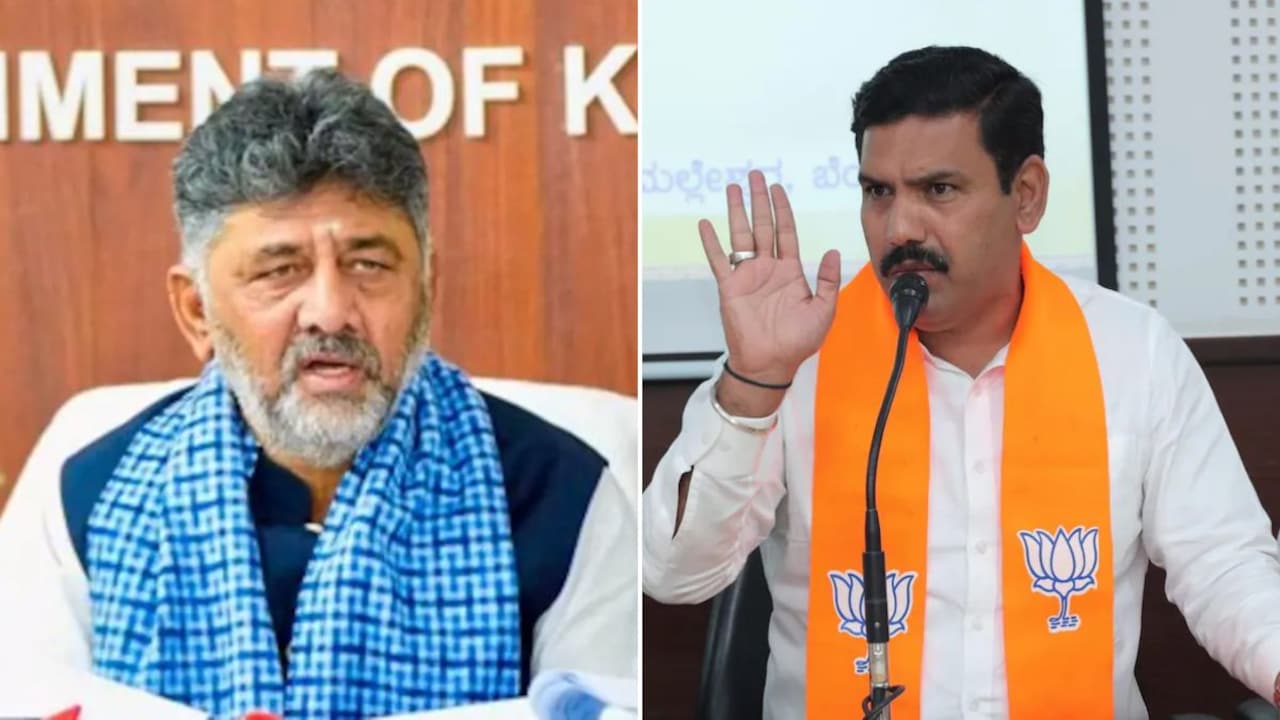
Karnataka Chief Minister D.K. Shivakumar on Saturday hit back at Union Minister H.D. Kumaraswamy over his remarks on the Godavari-Krishna-Cauvery river-linking project, advising the Janata Dal (Secular) leader to first obtain details from Prime Minister Narendra Modi and Union Jal Shakti Minister C.R. Patil before commenting further.
Speaking to reporters in Bengaluru, Mr. Shivakumar responded to Mr. Kumaraswamy's earlier criticism that Karnataka would not benefit adequately from the project and that the state must fight for its rightful share. Mr. Kumaraswamy, who serves as Union Minister for Heavy Industries and Steel, had also cautioned the Chief Minister to seek technical advice before making announcements about the project.
Mr. Shivakumar stated: 'Mr. Kumaraswamy should first meet the Prime Minister and the Union Jal Shakti Minister. He should get information about this project and speak only after that.' When asked about Mr. Kumaraswamy's remark that river-linking is not a 'real estate transaction' and that water availability must first be established, the Chief Minister declined to elaborate, saying he would respond to the right person at the appropriate time.
The river-linking project, which proposes to transfer water from the Godavari and Krishna rivers to the Cauvery basin, has been a subject of political debate in Karnataka and neighbouring states. The state government had recently given its consent to the project, a move that Mr. Kumaraswamy questioned.
Separately, Mr. Shivakumar also addressed the state government's anti-drug campaign, reiterating Karnataka's commitment to becoming a drug-free state through sustained awareness and enforcement measures. 'We are determined to make Karnataka a drug-free state. Awareness is being created among students, youth and parents, and we seek the cooperation of the public with the police,' he said.
The Chief Minister highlighted the Police Department's 'Beda Bro' campaign, which aims to educate young people about the dangers of drug abuse and encourage community participation in preventing the spread of narcotics.