Kargil War 1999: The Battle That Tested India's Resolve at 18,000 Feet
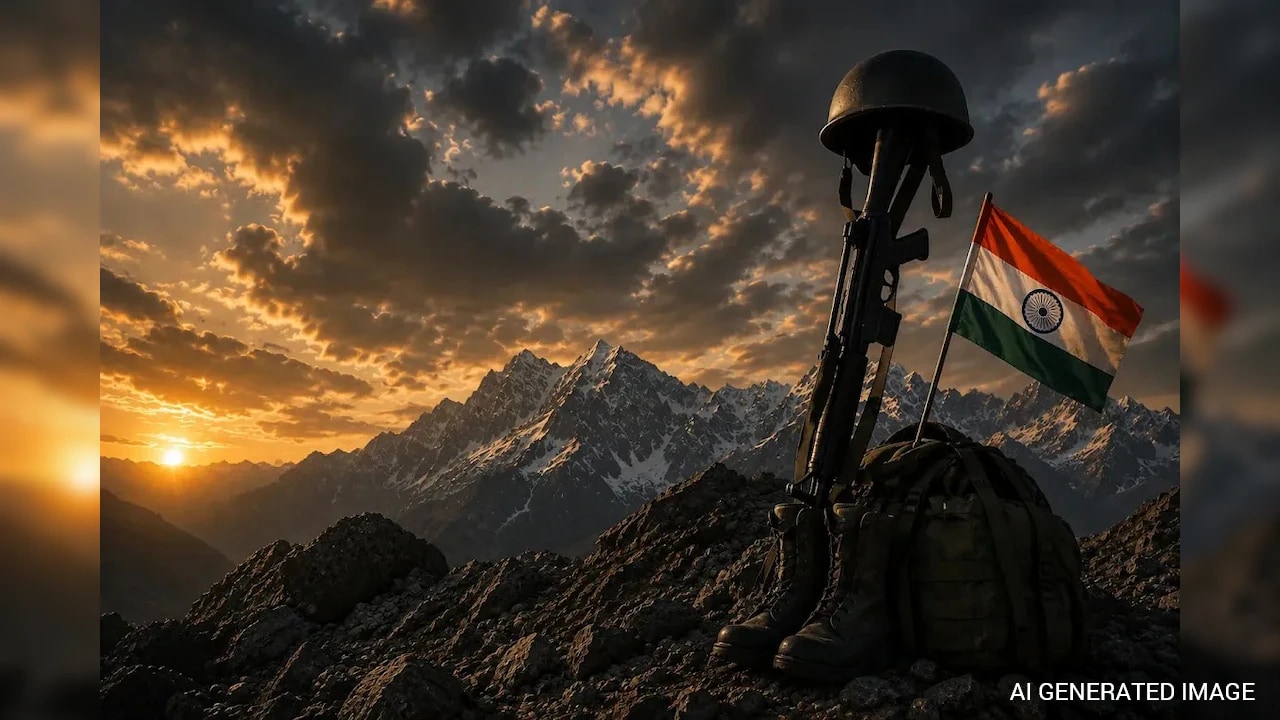
In the summer of 1999, India and Pakistan engaged in a conflict in the Kargil district of Jammu and Kashmir, at altitudes exceeding 16,000 feet. The terrain, described as one of the most inhospitable in the world, became the stage for a war that would test the endurance and courage of young Indian soldiers.
For years, both Indian and Pakistani armies vacated high-altitude posts along the Line of Control (LoC) in winter, due to extreme conditions. This unwritten understanding was broken in the winter of 1998-1999, when Pakistani soldiers and irregulars occupied vacated Indian positions. By May 1999, shepherds reported movement on the ridgelines overlooking National Highway 1A, a critical artery connecting Srinagar to Leh.
The Indian Army launched Operation Vijay on May 26, 1999, with the objective of evicting the intruders. Soldiers advanced uphill under heavy fire, often in darkness, over loose scree and bare rock. The fighting was intense, with key battles at Tololing, Tiger Hill, and Point 4875.
Among the many who fought was Captain Vikram Batra of the 13 JAK Rifles, aged 24. He and his men captured Point 5140, a strategically crucial peak. His radio message 'Yeh Dil Mange More' became iconic. He was killed in action on July 7, 1999, while rescuing a wounded officer. He was posthumously awarded the Param Vir Chakra, India's highest military decoration.
The conflict lasted over two months, ending on July 26, 1999, when India announced the complete withdrawal of Pakistani forces. The war claimed 527 Indian soldiers and an unknown number of Pakistani casualties. It reaffirmed India's territorial integrity but also highlighted the vulnerability of high-altitude posts.
The Kargil War remains a defining moment in India's military history, showcasing the bravery and sacrifice of young soldiers who fought in extreme conditions to defend their nation's sovereignty.