Justice Karol retires, leaves landmark ruling on homemakers' worth
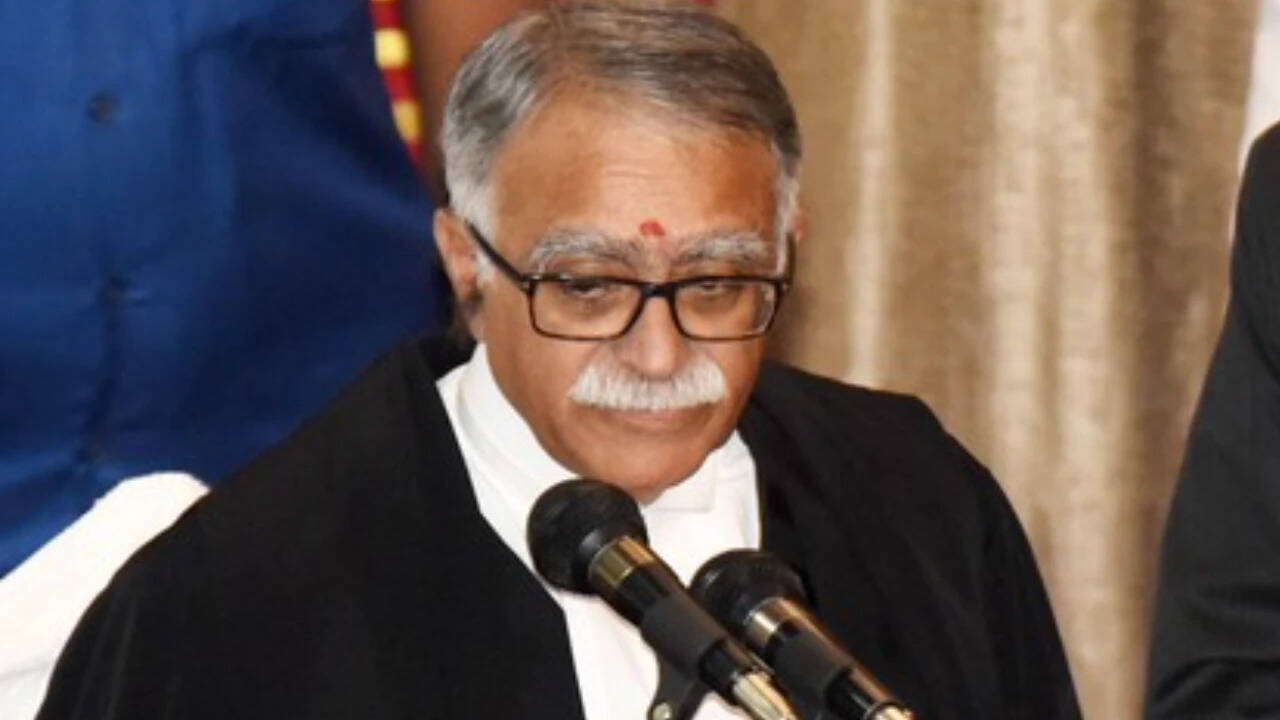
Justice Sanjay Karol retired from the Supreme Court on Saturday, ending a judicial career marked by compassion, empathy, and a pioneering judgment that recognized the economic value of homemakers' work. Hailing from Garli, India's first heritage village in Himachal Pradesh, Justice Karol was fondly called 'Chachaji' by young lawyers for his encouraging and mentoring approach.
His most notable contribution came in a landmark judgment that notionally computed the income of a housewife for determining compensation in a motor accident case. The case involved a woman who died in an accident in 2001. Drawing attention to the role of women in society and their direct contribution to the GDP, the Supreme Court under Justice Karol's authorship observed: "Apart from the fact that contribution of women to the society extends far beyond biological reproduction, they are also largely responsible for the preparation of human capital on which the dreams of being the world’s largest economy among other things rest. It is often said that a mother is the first teacher that a child has. This teaching however is not like a school or a college, that has a definite end date and instead continues for the entire lives of both the mother and the child."
In that judgment, the court conservatively fixed the monthly income of a homemaker at Rs 30,000 and awarded Rs 63 lakh in compensation to the deceased's relatives, as against Rs 8 lakh earlier granted by the High Court. The ruling was hailed as a step towards valuing unpaid domestic work, a recognition of the invisible labour that sustains families and the economy.
Justice Karol's judicial journey began on March 8, 2007, when he was appointed a judge of the Himachal Pradesh High Court. He later served as Chief Justice of the Tripura High Court from November 14, 2018, and subsequently as Chief Justice of the Patna High Court. His tenure as Chief Justice spanned over four years, one of the longest before elevation to the Supreme Court. During the Covid-19 pandemic, he personally arranged food for many needy people while serving in Patna.
At the farewell function, Solicitor General Tushar Mehta described Justice Karol as a 'saintly judge' and an 'unapologetic believer'. He recalled that Justice Karol would even apologise to litigants against whom he delivered adverse judgments. Mehta also praised him as a torch-bearer for young lawyers, noting that nearly 500 junior advocates were appointed as amicus curiae by the judge to give them opportunities to argue before the highest court.
A poignant story shared at the farewell highlighted the judge's compassion. On a morning while travelling to the Himachal Pradesh High Court, Justice Karol saw a milkman collapse on the roadside. He immediately stopped his car, attended to the man, ensured he reached a hospital, and received treatment. That instinct of humanity defined his approach to law and justice.
Justice Karol's retirement leaves a void in the Supreme Court, but his landmark judgment and his legacy of empathy will continue to inspire the legal fraternity and the nation.







