June 3, 1947: The Mountbatten Plan That Decided India's Partition
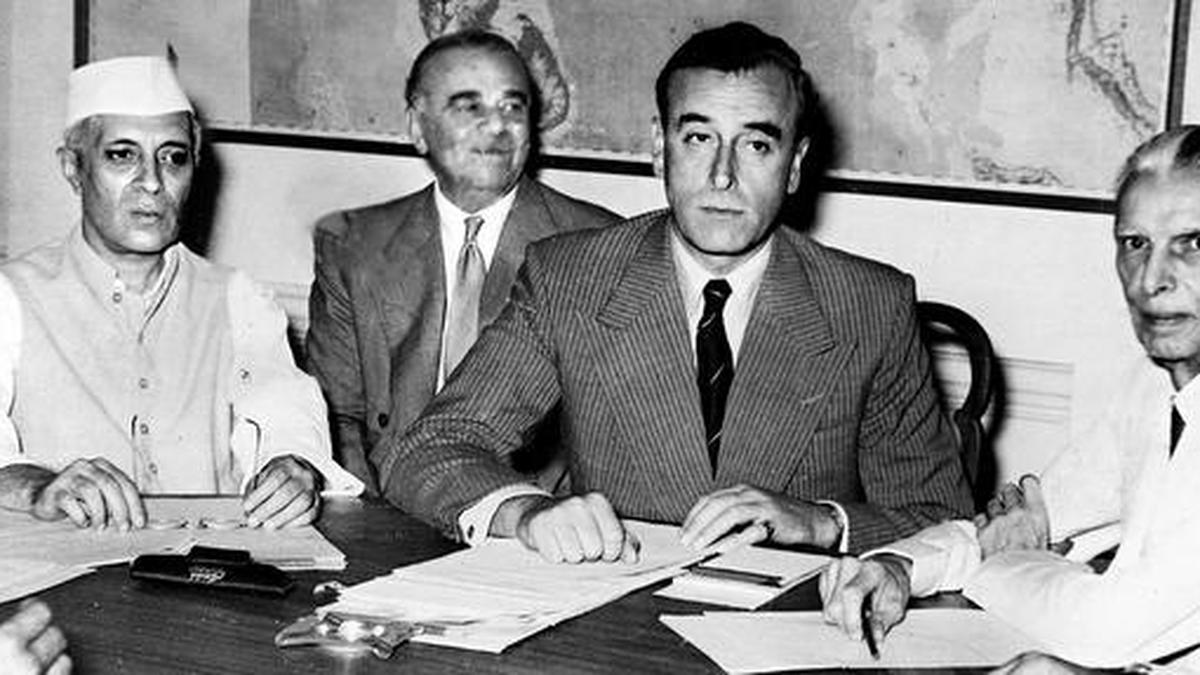
On June 3, 1947, the British government unveiled a blueprint that would fundamentally alter the political map of the Indian subcontinent. Known as the Mountbatten Plan, after the then Viceroy Lord Louis Mountbatten, this proposal laid out the framework for the partition of British India into two independent dominions: India and Pakistan. The plan, after subsequent deliberations, culminated in the Indian Independence Act of 1947, which formally ended British rule and triggered a defining, and often painful, chapter in the region's history.
The announcement came at a time of intense political turmoil. The Indian National Congress and the Muslim League had been unable to agree on a unified political structure for a free India. The British government, weakened by World War II and facing mounting pressure, sought a swift exit. Several earlier initiatives, including the Cripps Mission and the Cabinet Mission Plan, had failed to bridge the divide. Against this backdrop, the Mountbatten Plan was presented as a pragmatic solution, though it carried profound consequences.
The plan proposed that the provinces of British India be divided into two sovereign states based on religious majorities. Bengal and Punjab, which had significant religious diversity, were to be partitioned. It also offered the princely states the choice to accede to either dominion or remain independent—a provision that led to complex negotiations and, in some cases, conflict. The plan was accepted by the leadership of both the Congress and the Muslim League, marking a significant shift in their positions.
Following the announcement, the British Parliament passed the Indian Independence Act on July 18, 1947. The Act set the date for the transfer of power to August 15, 1947, just weeks after the plan's introduction. It legally established the two new dominions and provided for the appointment of governors-general to oversee the transition. The Act also empowered the newly formed governments to legislate for their respective territories, effectively dissolving British parliamentary jurisdiction over India.
The implementation of the partition, however, was fraught with adversity. The boundary lines, drawn by the Radcliffe Commission, were announced only days before independence, leaving little time for preparation. The resulting mass migration was one of the largest in human history, with an estimated 10 to 15 million people crossing borders to join their co-religionists. Communal violence erupted in several regions, leading to the deaths of hundreds of thousands. The human cost of partition remains a subject of deep reflection and study in India, Pakistan, and Bangladesh.
The Mountbatten Plan, named after the last Viceroy, thus sealed a course that transformed the subcontinent. It ended two centuries of British colonial rule but also sowed seeds of geopolitical division that persist to this day. Historians continue to debate whether the plan was a necessary compromise or an expedient retreat by the British. What remains beyond dispute is the profound impact it had on the lives of ordinary people, the nature of statehood in South Asia, and the long-term relationship between India and Pakistan.
As the region observes the 77th anniversary of that momentous year, the events of June 3, 1947 serve as a reminder of how complex negotiations can shape destinies. The Indian Independence Act of 1947 stands as a legal milestone, yet its legacy is indelibly linked to the suffering that accompanied the birth of two nations. The Mountbatten Plan remains a critical subject for understanding modern South Asia, offering lessons in the importance of thoughtful, inclusive diplomacy during times of transition.







