ISS Astronauts Grow Kale and Mustard Greens in Microgravity, Advancing Space Agriculture
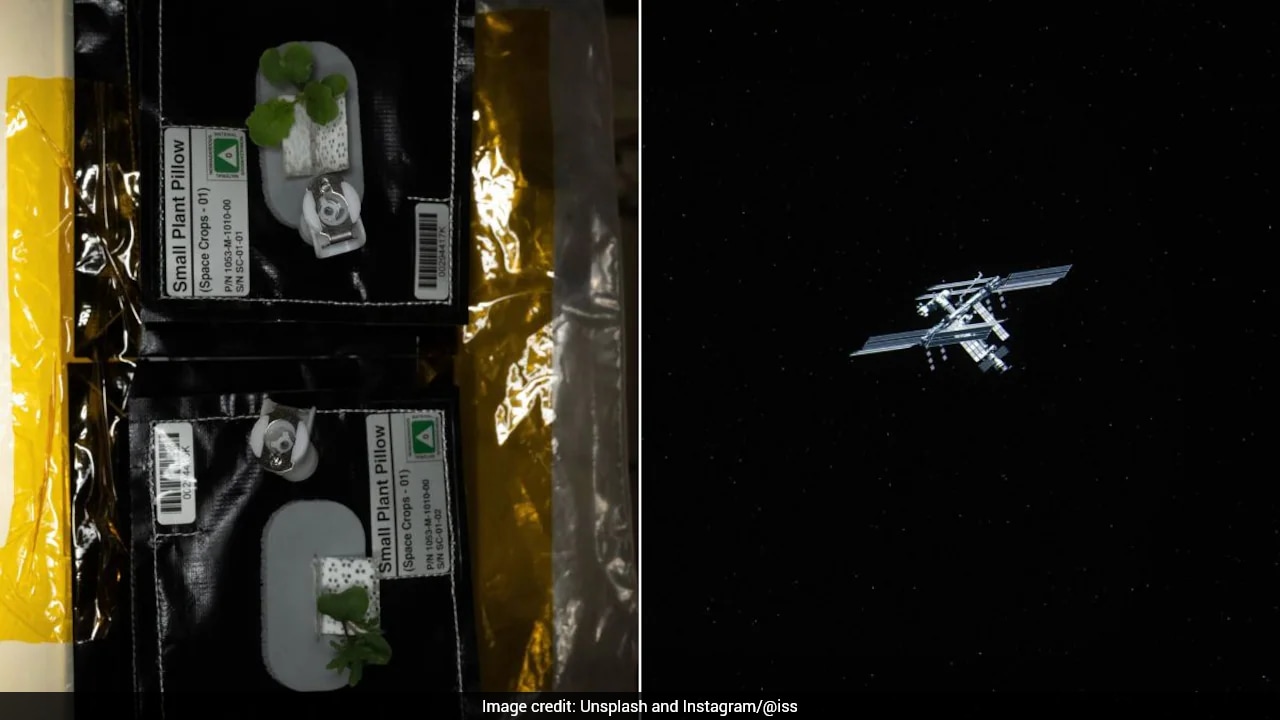
Astronauts aboard the International Space Station (ISS) have achieved a notable milestone in space agriculture by successfully growing small sprouts of Red Russian kale and Wasabi mustard greens. The progress was announced through the ISS’s official Instagram account, where the crew shared images of the young plants. The post explained that the sprouts are being cultivated in different areas of the space station, rather than inside a dedicated plant growth facility. This approach allows researchers to study how plants respond to the varied environmental conditions present in different modules of the orbiting laboratory.
“This research is helping pave the way for astronauts to grow fresh, nutritious food on future missions to the Moon, Mars, and beyond,” the ISS stated in its post.
Understanding plant development in microgravity is considered a key requirement for long-duration human space exploration. On missions to the Moon or Mars, astronauts will depend on sustainable food sources and ecological systems that can help recycle oxygen and carbon dioxide. The ability to grow crops quickly and healthily in the absence of Earth’s gravity brings scientists a step closer to creating reliable space-based agricultural systems.
The ISS experiment involves studying factors such as water distribution, nutrient delivery, and gas exchange in microgravity. By placing the plants in various sections of the station, researchers hope to learn how local conditions—such as airflow, lighting, and radiation levels—affect germination and growth. This information could guide the design of future space greenhouses and regenerative life support systems that support human crews during deep-space voyages.
The Instagram post drew a positive response from social media users, many of whom expressed curiosity and enthusiasm. One user commented, “While my plants are struggling on the balcony.” Another wrote, “It is amazing seeing the astronauts grow their plants in space! Keep moving forward.” A third added, “This is great news for the field of astrobotany! Keep going; may the plants continue to grow beautifully!” The reactions reflect public interest in the practical aspects of space exploration, particularly the possibility of producing fresh food beyond Earth.
Plant growth experiments have been a part of the ISS research programme for years, with earlier studies focusing on crops such as lettuce and radishes. Each mission builds on previous findings, gradually refining the techniques required to grow edible plants in space. The current kale and mustard greens trial adds to this knowledge base, offering new data on plant development in different station microenvironments.
The successful cultivation of these sprouts is not just a scientific curiosity; it represents a step toward making long-term space habitation more self-sufficient. For future missions to the Moon or Mars, where resupply from Earth would be impractical, astronauts will need to grow their own food. Systems that can produce fresh vegetables would reduce the need for packaged food and provide essential nutrients that are often lost during storage.
Moreover, plants contribute to the recycling of air and water within closed habitats. They consume carbon dioxide and produce oxygen, suggesting that biological life support systems could complement mechanical systems. Research aboard the ISS is helping to validate these concepts in the actual space environment.
While the current harvest is modest, the implications are significant. Space agencies are already planning extended missions beyond low Earth orbit, and experiments like this one are essential building blocks for self-sufficient habitats. The data gathered from the ISS will help engineers design agricultural systems that are compact, efficient, and capable of operating in the harsh conditions of outer space.
The progress also serves an inspirational purpose. By sharing images of green plants thriving aboard space stations, space agencies are able to connect with the public and demonstrate real-world achievements in exploration. The sight of a kale sprout growing in microgravity offers a tangible reminder of human ingenuity and the expanding reach of scientific discovery.
As researchers continue to refine techniques for growing plants in space, the day may come when astronauts enjoy freshly harvested salads on the Moon or Mars. Until then, each successful crop aboard the ISS contributes to a growing understanding of how life can be sustained beyond the boundaries of our planet.