ISRO's GSLV-F17 Launch Success: India's First Geosynchronous Imaging Satellite EOS-05 in Orbit
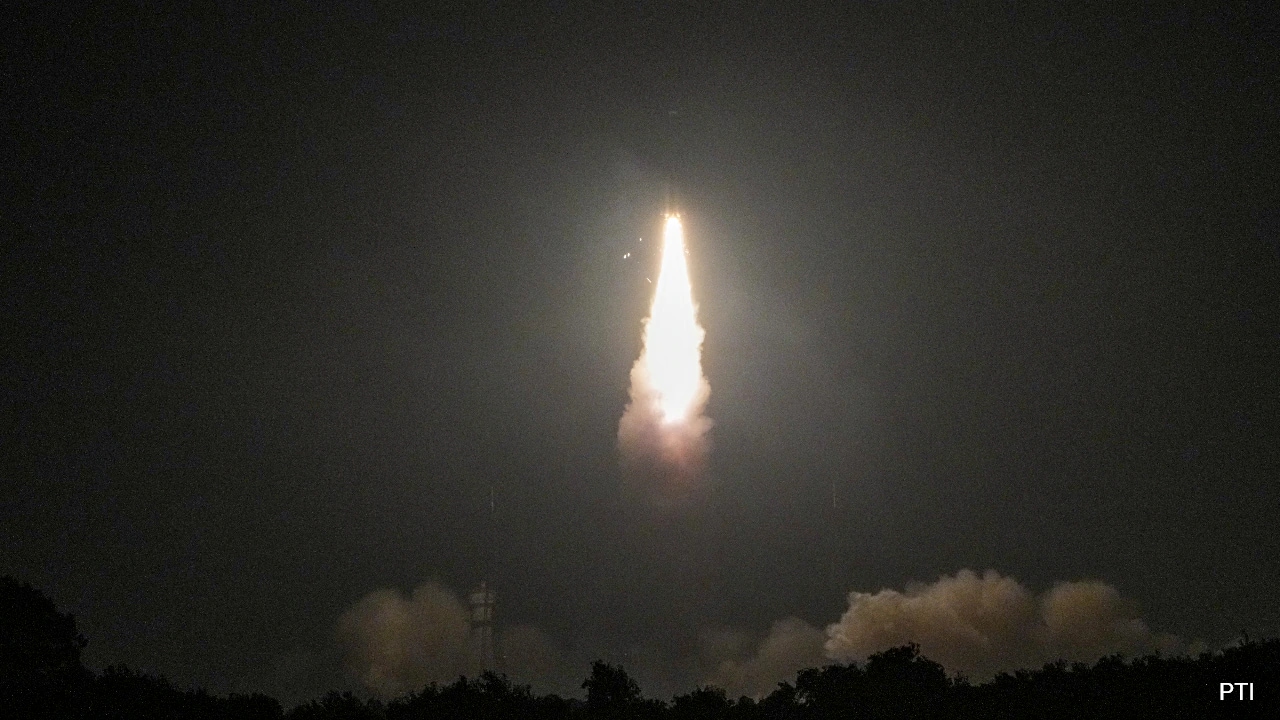
The Indian Space Research Organisation (ISRO) successfully launched the GSLV-F17 rocket carrying the EOS-05 Earth observation satellite on Friday. The pre-dawn liftoff took place at 2:55 a.m. IST from the Satish Dhawan Space Centre in Sriharikota, Andhra Pradesh. The satellite was placed into a sub-geosynchronous transfer orbit, a key step towards its final operational position. EOS-05 is India's first imaging satellite designed to operate from a geosynchronous orbit, marking a significant advancement in the country's Earth observation capabilities.
ISRO Chairman Dr V Narayanan expressed satisfaction with the mission's outcome, stating that the GSLV-F17 precisely injected the advanced Earth observation satellite into its intended orbit. Mission Director Thomas Kurian described the launch as a significant milestone for the GSLV programme. He noted that this was the 19th flight of the GSLV and that EOS-05 is the heaviest satellite ever placed in a geosynchronous transfer orbit or sub-GTO orbit by this launch vehicle. He credited the success to years of extensive preparation and the dedicated efforts of scientists, engineers, and other teams involved in the mission.
The EOS-05 mission is designed to strengthen India's Earth observation capabilities. The satellite is expected to provide a continuous view of the country from an altitude of nearly 36,000 kilometres above the Earth. It will support advanced imaging and observation applications, including near-real-time monitoring, which is a crucial requirement for disaster management, agriculture, and environmental tracking, among other uses.
Prime Minister Narendra Modi congratulated ISRO on the achievement in a post on social media platform X. He described it as a reflection of the excellence, innovation, and growing capabilities that define India's space sector. He also highlighted the growing partnership between ISRO and Indian industry, stating that this collaboration is adding new strength and scale to the country's space programme and expanding capabilities across the entire space ecosystem.
Science and Technology Minister Jitendra Singh also welcomed the successful mission. In a post on X, he said that EOS-05 is a state-of-the-art Earth observation satellite and India's first imaging satellite from geosynchronous orbit, enabling advanced imaging across visible, infrared, multispectral, and hyperspectral bands. He stated that India's space programme continues to achieve new milestones and reinforce the country's standing as a major global space power.
The GSLV-F17 launch vehicle stands 51.7 metres tall with a liftoff mass of approximately 420.5 tonnes, making it one of India's operational launch systems for heavier payloads. The successful deployment of EOS-05 further demonstrates the reliability of the GSLV, which is configured with an indigenous cryogenic upper stage. This launch adds to a series of achievements for ISRO, which has been progressively enhancing its capabilities in satellite technology, launch vehicles, and space-based applications.
The EOS-05 satellite will now be raised to its final geosynchronous orbit using its own propulsion system over the coming days. Once operational, it will complement the existing fleet of Earth observation satellites and provide valuable data for various civilian applications, contributing to the country's broader objectives in space-based monitoring and resource management.