Iran President Pezeshkian to Visit India for BRICS Summit Amid West Asia Tensions
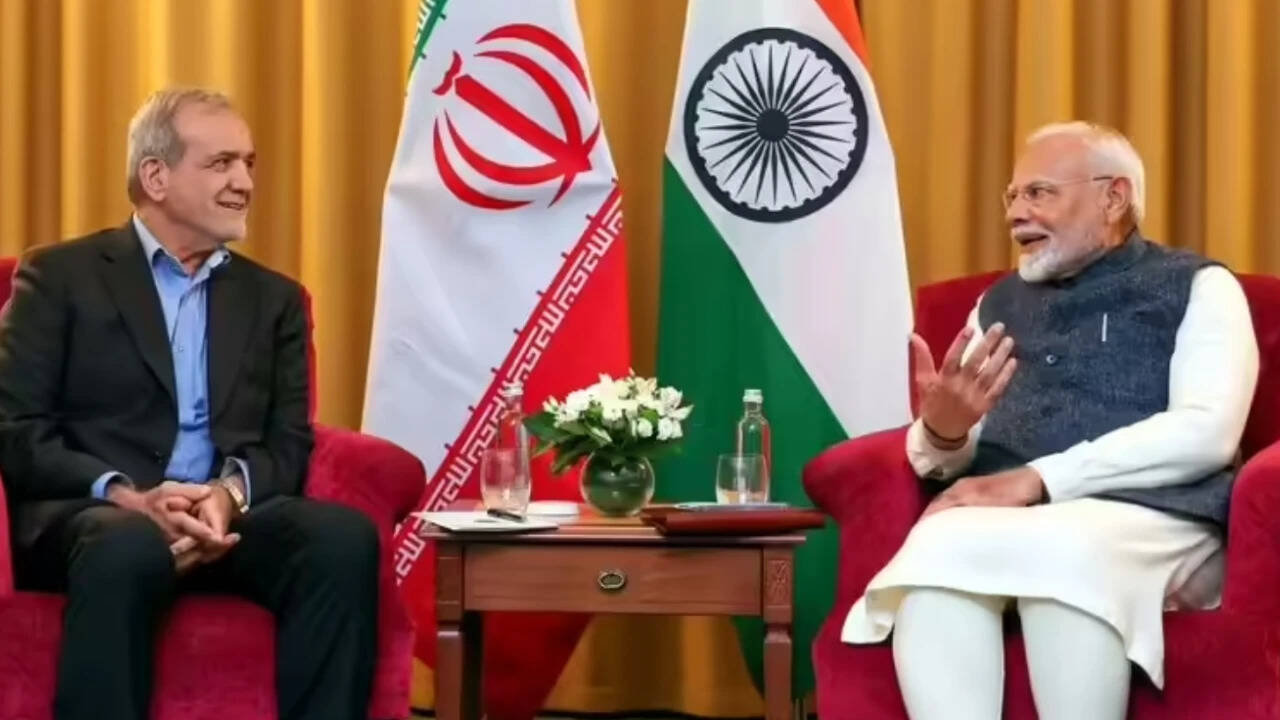
Iranian President Masoud Pezeshkian is scheduled to visit India for the BRICS summit, a diplomatic engagement that underscores Iran's interest in enlisting New Delhi's support for regional de-escalation.
During a visit to India in June, Iranian Foreign Minister Abbas Araghchi said New Delhi could play a greater role in reducing tensions in West Asia. He stressed that Tehran does not see a military solution to the conflict and believes negotiations are the only viable way forward.
The BRICS summit, being hosted by India, will bring together leaders of the grouping, which now includes Iran as a member. Iran formally joined BRICS in January 2024, along with other nations, as part of a broader expansion of the bloc. The forum, originally comprising Brazil, Russia, India, China and South Africa, has evolved into a platform for emerging economies to coordinate on global governance reforms.
India and Iran have maintained longstanding ties, marked by economic cooperation and shared strategic interests, including the development of the Chabahar port. The port project is vital for landlocked Afghanistan and Central Asian markets, and India has invested in its development despite international sanctions on Iran. This cooperation forms a key pillar of the bilateral relationship.
Observers see the upcoming visit as an opportunity for both nations to strengthen bilateral relations while addressing pressing regional issues. India has consistently advocated for diplomacy and dialogue in conflicts across West Asia, a position that aligns with Iran's stated preference for negotiations. New Delhi has called for a ceasefire in Gaza and a return to talks, reflecting its broader approach of engagement with all parties.
However, India's foreign policy in the region is balanced by its close ties with countries such as Israel, Saudi Arabia, and the United Arab Emirates. New Delhi has historically refrained from taking sides in disputes, instead offering its good offices where possible. This balancing act positions India as a credible, though cautious, interlocutor.
Araghchi's remarks suggest that Iran views India as a potential mediator. The two countries have also cooperated on issues such as counter-terrorism and connectivity, within the framework of the International North-South Transport Corridor. These shared projects contribute to regional stability and economic integration.
President Pezeshkian's visit marks the first by an Iranian president to India in recent years, reflecting a renewed effort to deepen diplomatic engagement. The agenda is expected to include bilateral discussions on trade, energy, and regional security, although official schedules have not yet been released. Energy cooperation remains significant, as India has been a major buyer of Iranian crude oil, though purchases have fluctuated due to sanctions.
The BRICS summit comes at a time of heightened tensions in West Asia, including the ongoing conflict in Gaza and exchanges along the Israel-Lebanon border. Iran is a key actor in the region, and its interactions with India are closely watched by other nations. The forum offers a setting for quiet diplomacy, with leaders able to discuss complex issues informally on the margins of the formal sessions.
For India, hosting the BRICS summit is a chance to demonstrate its global leadership credentials. The grouping's expansion has brought in new members with diverse perspectives, making consensus-building more challenging yet also more representative. India has repeatedly called for reform of multilateral institutions to reflect contemporary realities, a stance that resonates with many BRICS members.
Iran's active participation in BRICS is seen as part of its strategy to diversify its international partnerships beyond traditional allies. Tehran has sought to counter Western dominance in global institutions, and BRICS provides an alternative forum for such engagement. The summit, therefore, carries symbolic weight beyond its immediate outcomes.
As President Pezeshkian prepares for his visit, diplomatic observers will be looking for signals on how India responds to Iran's overtures. While formal outcomes will be announced in due course, the very presence of the Iranian president in India signifies the importance both countries place on dialogue and cooperation. In a region marked by volatility, such high-level engagement is a constructive step toward stability.







