India's UPI: The Public Digital Payments Network That Changed Daily Commerce
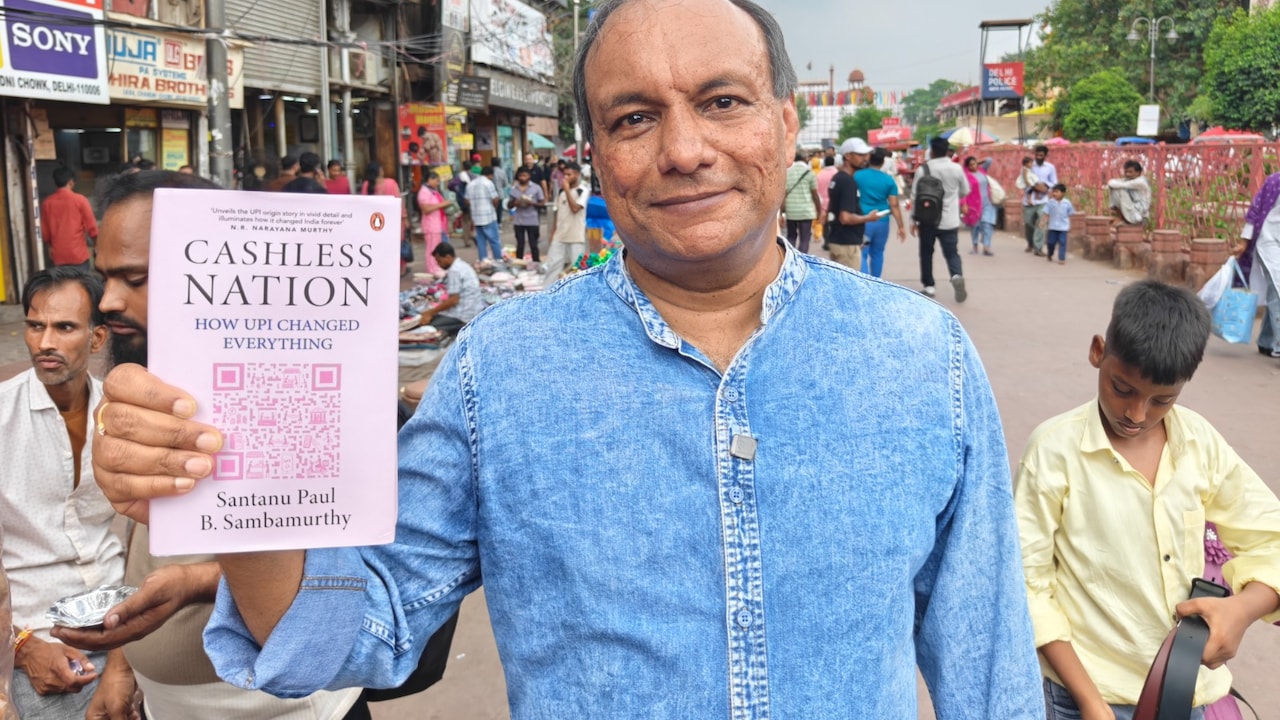
In the narrow, crowded lanes of Chandni Chowk, a market that has traded in Delhi for centuries, the shift from cash to digital payments is visible at every stall. Shopkeepers, wholesalers, hawkers and customers, who once relied almost entirely on cash, now settle transactions in seconds by scanning QR codes on their phones. At the centre of this change is the Unified Payments Interface (UPI), the public digital payments system built by the National Payments Corporation of India (NPCI). Operationally launched on August 26, 2016, UPI has become one of India's most significant financial infrastructure projects.
The scale of UPI's adoption is vast. According to NPCI and government figures, India accounts for about half of the world's real-time digital payment transactions. On particularly busy days, UPI handles transactions worth nearly ₹1 lakh crore. More than 55 crore individuals and about 6.5 crore merchants use the platform. UPI has also expanded beyond India's borders, with acceptance in 11 countries, including France, Singapore and the UAE.
The system's evolution is the subject of a new book, "Cashless Nation: How UPI Changed Everything", written by Dr Santanu Paul and B Sambamurthy. Dr Paul, a computer scientist, served as an independent director on NPCI's board; Sambamurthy is a career banker. Both had first-hand access to the decisions and developments that shaped UPI. Published by Penguin Random House, the book examines the major debates, trade-offs and choices involved in building the network.
Infosys chairman Nandan Nilekani, who founded the Unique Identification Authority of India and played a role in shaping the country's digital public infrastructure, has endorsed the book. "This is the tale of a country that went from a laggard to a leader in just a few years," he writes. He also explains that UPI's success was not immediate; it drew on decades of work and a deliberate policy of building public rails for private innovation.
One of UPI's defining features is its design as a public utility rather than a commercial product. Unlike card networks such as Visa and Mastercard, which are operated by private corporations, UPI is owned and run as public infrastructure. This means that a street-side tea vendor and a multinational retail chain have the same access to the network. Prime Minister Narendra Modi has acknowledged this transformation, noting that payments are now completed by scanning a QR code, whether at a roadside stall or at a car showroom.
Dr Paul said in an interview from Chandni Chowk that UPI changed how India moves money. He said the decision to make the system interoperable and open allowed banks and technology companies to build services on top of it. The result has been a steady reduction in dependence on cash for daily purchases, even in markets that historically operated on paper currency.
However, the shift to digital payments also brings challenges. Cases of online fraud and cybercrime have increased, and officials have repeatedly advised users to be cautious with their credentials. Although the UPI network itself has not suffered a major breach, its success depends on users' digital awareness. The book and financial regulators emphasise the need for continued investment in digital literacy and security.
As UPI enters its second decade, questions remain about its long-term sustainability, competition from private players, and the need to adapt to new technologies. But its impact on Indian commerce is already clear. What began as a payment experiment in 2016 has become a foundational layer for financial transactions across the country, affecting how millions of people buy, sell and save.







