India's Rs 70,000-Crore Submarine Deal With Germany Nears Cabinet Approval
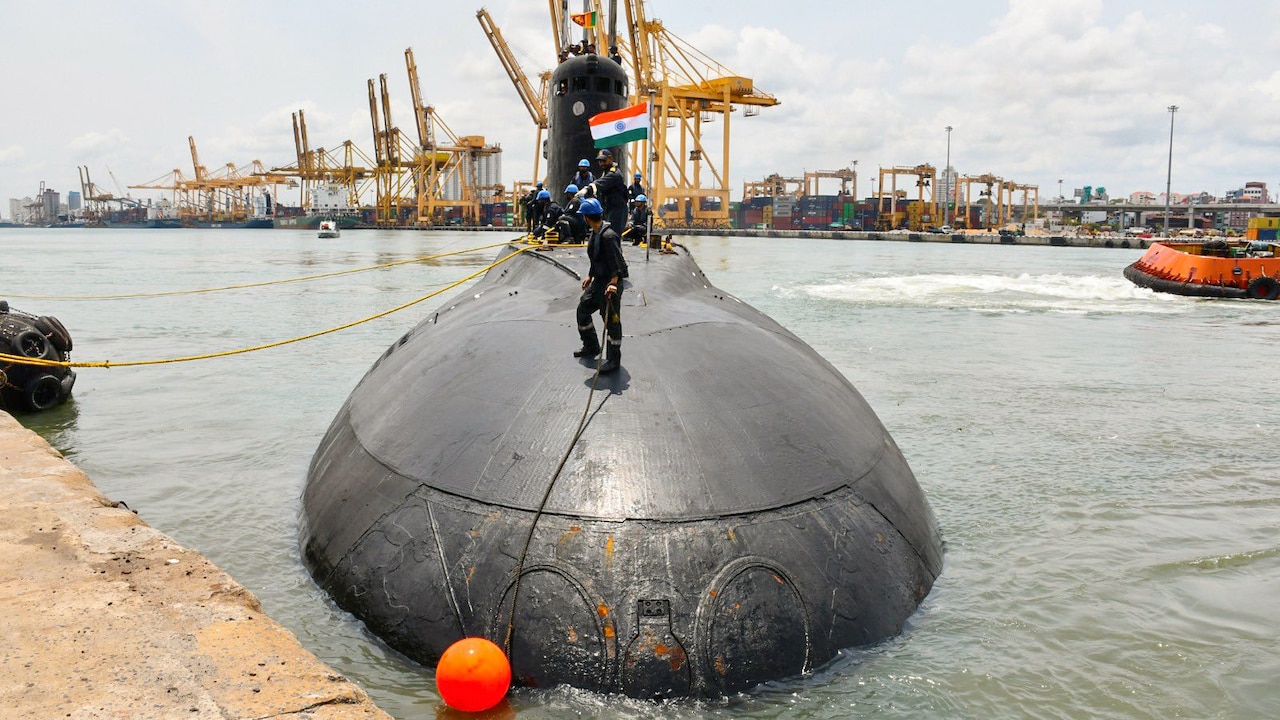
The Indian Navy's long-pending Project 75(I) submarine programme is expected to move forward, with a proposal likely to be placed before the Cabinet Committee on Security (CCS), according to sources cited by NDTV.
The project entails the construction of six advanced conventional submarines for the Indian Navy, at an estimated cost of roughly Rs 70,000 crore. These submarines are to be built primarily in India by Mazagon Dock Shipbuilders Ltd (MDL) in Mumbai, in partnership with Germany's ThyssenKrupp Marine Systems (TKMS).
The deal has been under negotiation for several years, with talks repeatedly stalling over commercial terms and technical specifications. A CCS approval would clear the way for the contract to be signed and for work to commence.
Even before any decision, TKMS has been quietly expanding its Indian footprint, suggesting a long-term approach to India's underwater warfare sector. The German firm has signed a memorandum of understanding with Hyderabad-based VEM Technologies to develop, build, integrate, and eventually modernise heavyweight torpedoes. TKMS's subsidiary, ATLAS ELEKTRONIK, is also involved, with VEM handling integration and testing on the Indian side. This arrangement has since evolved into a teaming agreement, covering technology transfer and a Make-in-India torpedo project.
TKMS has also partnered with Mumbai-based CFF Fluid Control on anti-submarine warfare systems and is exploring additional tie-ups with Indian organisations, including the Defence Research and Development Organisation (DRDO).
For India, the deal has never been solely about purchasing six submarines. The larger objective is to build domestic capabilities in construction, maintenance, upgrades, and eventually, design. The boats are expected to feature air-independent propulsion (AIP), allowing them to remain submerged far longer than conventional diesel-electric submarines. They are also likely to carry modern sensors, torpedoes, missiles, and electronic warfare systems.
Indian officials are still examining whether the deal provides sufficient scope for domestic shipyards and companies to absorb and build upon the technology, rather than merely assembling parts. The focus is on genuinely understanding and improving the technology over time.
The delay in the deal comes at a time when the Indian Navy is grappling with a shortfall in its conventional submarine fleet. The six new boats are intended to enhance underwater endurance, stealth, surveillance, and strike capability. Their AIP systems would enable longer submerged operations, which are crucial for extended patrols and sea-denial missions across the Indian Ocean.
The timing also coincides with increased Chinese submarine activity in the Indian Ocean region. In the past, MDL built six Kalvari-class submarines with French assistance. The first entered service in 2017, and the last, INS Vagsheer, was commissioned in January 2025.
India has operated German-designed Type 209/1500 Shishumar-class submarines for decades, with several built at MDL since the 1980s. The TKMS-MDL partnership would revive this connection, but with a much stronger emphasis on indigenous manufacturing, technology transfer, and the growth of a broader underwater warfare industry in India.
If the CCS approves the deal, the subsequent steps will involve contract signing and commencement of work. The final agreement is expected to specify the workshare between the government, MDL, and TKMS, along with timelines for production, technology transfer, and long-term maintenance.







