India's Bullet Train Nears Reality: 100 km of Piers Complete on Mumbai-Ahmedabad Route
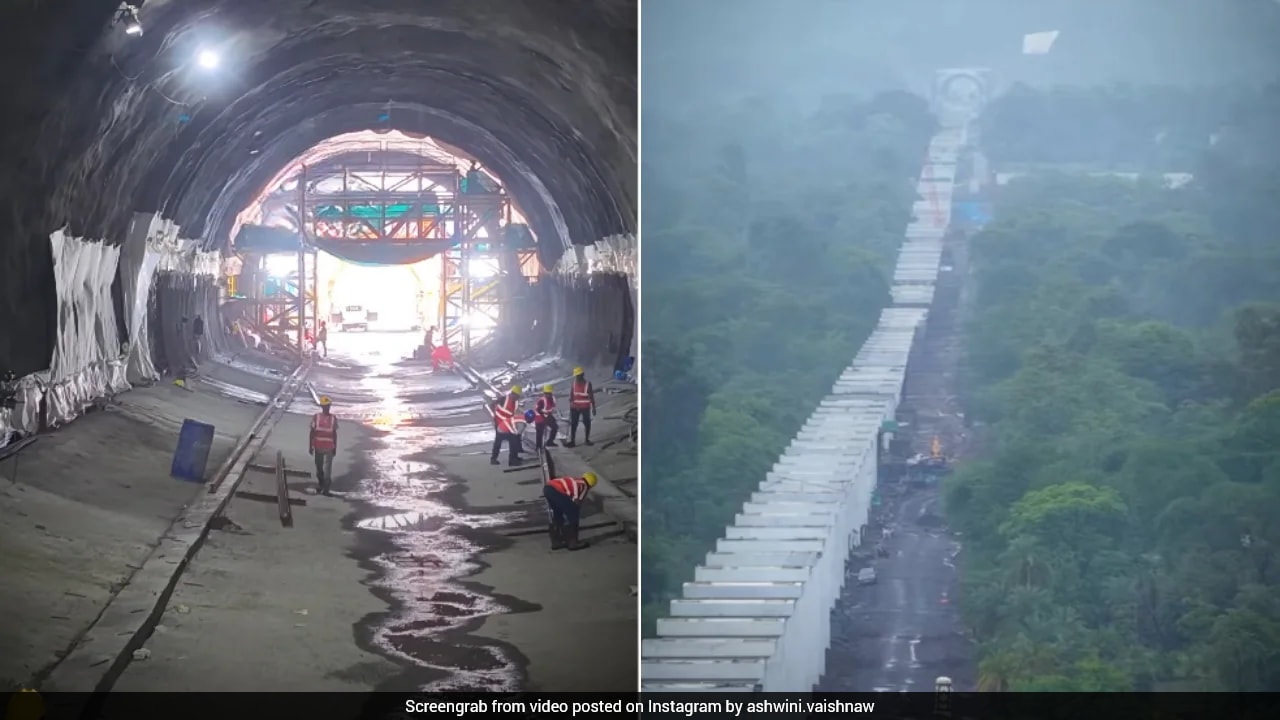
Construction of India's first bullet train is progressing rapidly along the Mumbai-Ahmedabad High-Speed Rail Corridor, with work underway across the challenging terrains of Thane and Palghar in Maharashtra. The corridor cuts through mountains, crosses rivers and navigates major transport routes, making it one of the most complex infrastructure projects in the country.
The current phase of construction covers a 135.45-km elevated stretch from Shilphata in Thane to Zaroli village near the Maharashtra-Gujarat border. Of this, 124.027 km will feature viaducts and bridges. A viaduct is an elevated structure that carries the railway line above the ground, allowing trains to pass over valleys, roads and existing railway lines without disrupting the ground-level activities.
Three elevated stations are being built in Maharashtra – at Thane, Virar and Boisar. The Thane station is being constructed approximately 12 metres above ground level, reflecting the need to integrate the high-speed corridor with the existing urban landscape. Work inside the tunnels is also moving ahead, with drainage, waterproofing and lining now being taken up as part of the tunnelling process.
According to project updates, more than 100 km of pier construction has been completed, while around 74 km of piers are ready for the next stage of work. Piers are the vertical supports on which the viaducts rest, and their completion marks a significant milestone in the project's timeline.
The corridor includes extensive tunnelling through the hills, with seven mountain tunnels planned along this section. These tunnels are critical to maintaining the high-speed alignment while minimising impact on the surrounding geography. In addition, the bullet train corridor will cross several major rivers through large bridges. A 460-metre bridge is being built over the Ulhas River, while a 2.32-kilometre bridge will come up over the Vaitarna River. Another 510-metre bridge is being constructed over the Jagani River.
In total, the Maharashtra section of the project will have 36 bridges and crossings. These include 12 steel bridges that will span railway lines, rivers and major highways, ensuring seamless connectivity and safety.
Railways Minister Ashwini Vaishnaw has said that India could get its first bullet train on August 15, 2027. The minister made the announcement while briefing the media in New Delhi earlier this year. He said construction of the country's first bullet train project is underway between Ahmedabad and Mumbai, with a target to make the first section operational within the next few years.
The entire Mumbai-Ahmedabad corridor will not become operational at the same time. The project will be opened in phases, with the section between Surat and Bilimora likely to be the first one. This will be followed by the Vapi-Surat section. The phased approach allows for testing and commissioning to be carried out systematically.
The entire corridor is expected to be fully functional by 2029. Once operational, the bullet train will complete the full journey between Mumbai and Ahmedabad in about 1 hour and 58 minutes, running at speeds up to 320 km/h. This represents a dramatic reduction in travel time compared to the current journey, which takes several hours by road or conventional rail.
The Mumbai-Ahmedabad High-Speed Rail Corridor is a landmark infrastructure project for India, promising to transform regional connectivity and set the stage for future high-speed rail networks across the country. As construction continues, the project remains a symbol of India's growing engineering and technological capabilities.







