Indian Seafarer Killed as Ship Heading to India Is Struck Off Oman Coast
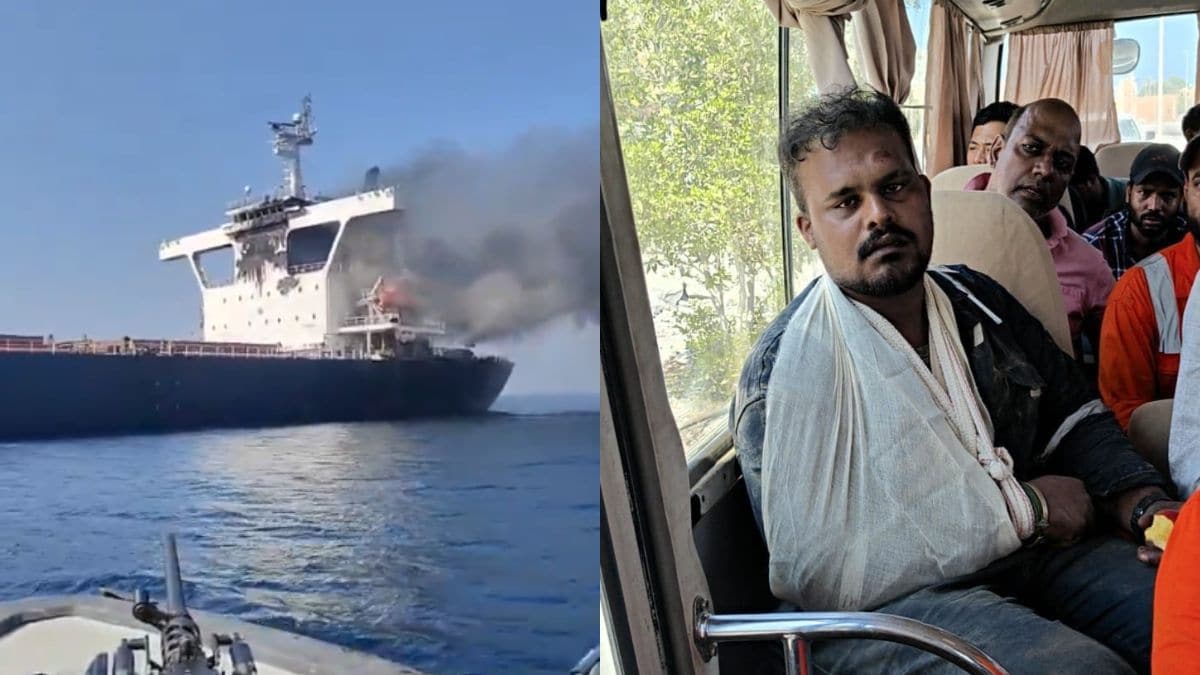
An Indian seafarer was killed after the merchant vessel MV Cape Dao came under attack while sailing towards India, according to the Forward Seamen's Union of India (FSUI). The deceased has been identified as Suraj Yadav, who worked as a wiper on board and was from Deoria district in Uttar Pradesh.
The union said the ship was struck by two torpedoes. One hit the port side C-deck, where the crew's living quarters are located, and the other struck the port side hull near the engine room, it said. The union's account of how the vessel was hit could not be independently verified.
According to the FSUI, the vessel had 28 crew members on board, of whom 20 were Indian nationals. The Indian Embassy in Oman, in its statement, referred to 19 Indian nationals on board. The reason for the difference in the two figures has not been explained.
The FSUI said assurances of safety for seafarers in the region meant little in light of the attack. "Innocent civilian seafarers are being slaughtered in and around Hormuz," the union said in its statement.
The organisation demanded immediate accountability for the incident, safe passage for seafarers travelling through the region, and justice for Yadav and for "every Indian seafarer still at risk".
"We are closely monitoring the attack on MV Cape Dao today while transiting toward India, and are in close coordination with Omani authorities regarding the safety of all crew on board, including 19 Indian nationals," the Indian Embassy in Oman said in a statement on X on Wednesday.
"We are deeply saddened by the loss of one Indian national in this attack. Our heartfelt condolences to the bereaved family. The Mission is coordinating with the RPSL and is in touch with the family of the deceased," the statement added.
Neither the embassy's statement nor the union's note named any party as responsible for the strike. No claim of responsibility had been reported publicly at the time of writing.
The waters off Oman and the Strait of Hormuz form one of the world's busiest maritime corridors, carrying a large share of global oil and gas shipments. In recent years, attacks on commercial vessels in and around the region have raised concern among seafaring nations about the safety of crews who sail through these routes.
India is among the largest suppliers of merchant navy personnel in the world, and the welfare of Indian seafarers in high-risk waters has been a recurring subject of discussion between shipping unions, manning agencies and the government. Unions representing seafarers have repeatedly sought clearer protocols for routing, insurance cover and evacuation.
The FSUI is a recognised body representing the interests of seafarers in India, and its statements on casualties at sea are closely followed by the families of crew members serving on affected vessels.
The embassy said it remains in touch with the family of the deceased and is working with the relevant authorities in Oman. Details of when the body will be repatriated, and of any further assistance to the family, have not yet been made public.
The attack underscores the risks faced by civilian crews, who are not combatants but are often the first to bear the consequences of strikes at sea. For the family of Suraj Yadav in Deoria, the loss is immediate and personal; for the wider shipping industry, the incident renews questions about how safety assurances translate into protection on the water.