India sets 100 GW nuclear target by 2047, five reactors this decade
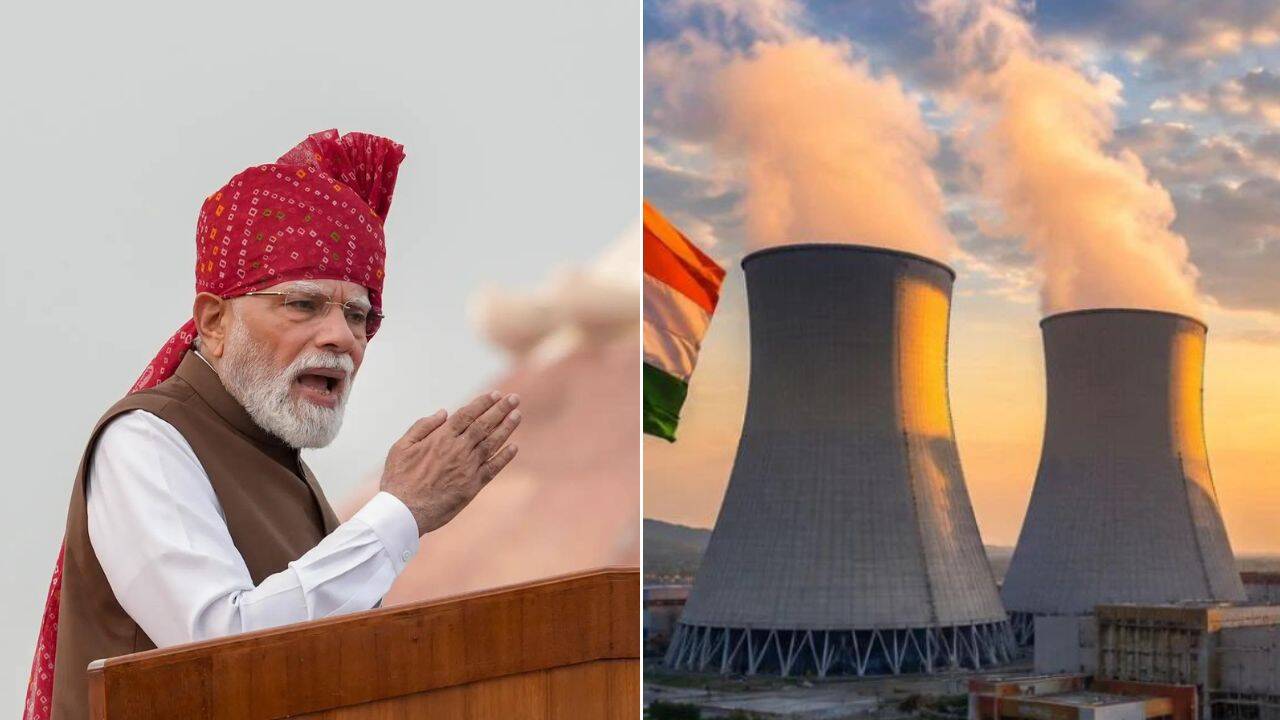
NEW DELHI: Prime Minister Narendra Modi announced on Saturday that India aims to achieve 100 gigawatts (GW) of nuclear power capacity by 2047, with five new reactors expected to become operational during this decade. The announcement, made from the ramparts of the Red Fort on the 80th Independence Day, underscores the government's push for energy security and self-reliance as electricity demand rises with the growth of emerging technologies.
PM Modi highlighted the recent milestone of the 500 MWe Prototype Fast Breeder Reactor (PFBR) at Kalpakkam in Tamil Nadu, which attained first criticality in April this year. He described this as an important step towards self-reliance in nuclear energy, marking India's entry into the second stage of its three-stage nuclear power programme.
The three-stage programme, originally conceived by Homi J Bhabha, begins with Pressurised Heavy Water Reactors (PHWRs) that use natural uranium as fuel and produce plutonium as a byproduct. The second stage uses this plutonium in fast breeder reactors like the PFBR. The third stage aims to leverage India's abundant thorium reserves to produce uranium-233 for power generation.
The PFBR, built indigenously by Bharatiya Nabhikiya Vidyut Nigam Limited (BHAVINI) under the Department of Atomic Energy, is a sodium-cooled fast breeder reactor designed to produce more fissile material than it consumes. It uses a uranium-plutonium mixed oxide fuel and is encircled by a blanket of uranium-238, which converts into plutonium-239 through fast neutrons. This breeding capability is crucial for India, which has limited uranium resources but substantial thorium deposits.
PM Modi said nuclear power would be a key component of India's energy security, noting that sectors such as semiconductors, artificial intelligence, and data centres require large amounts of electricity. He also referenced the SHANTI Act, enacted in December 2025, as part of policy reforms to expand the sector. The Act seeks to reshape India's nuclear power framework, inviting greater participation from private entities and promoting advanced reactor technologies.
India currently has a nuclear capacity of 8.78 GW, which is expected to grow significantly with the operationalisation of five new reactors in the coming years. The expansion aligns with the country's broader goal of adding 500 GW of renewable energy capacity by 2030 and achieving net-zero emissions by 2070.
The PFBR's criticality is seen as a major milestone, as it bridges India's existing uranium-based programme and its long-term thorium strategy. The Department of Atomic Energy has stated that the reactor will help lay the foundation for the third stage of the nuclear programme, in which thorium would be processed to produce uranium-233.
While experts view the expansion as a positive step towards clean and reliable baseload power, they also note challenges such as fuel supply, safety regulations, and public acceptance. The government's push for nuclear energy reflects a pragmatic approach to meeting India's growing energy demands while reducing carbon emissions.
As India moves forward with its ambitious nuclear roadmap, the successful operation of the PFBR will be closely watched as a test of the country's technological capabilities and its ability to scale up advanced reactor systems.







