India rejects US religious freedom body's RSS sanctions call as 'biased'
New Delhi: The Indian government has strongly rejected a recommendation by the United States Commission on International Religious Freedom (USCIRF) to impose sanctions on the Rashtriya Swayamsevak Sangh (RSS) and its chief, calling the body biased and lacking credibility.
In its annual report, the USCIRF recommended that the RSS be designated as a foreign terrorist organisation and that sanctions be imposed on RSS chief Mohan Bhagwat and other individuals linked to the organisation. The commission also highlighted alleged incidents of violence against religious minorities in India.
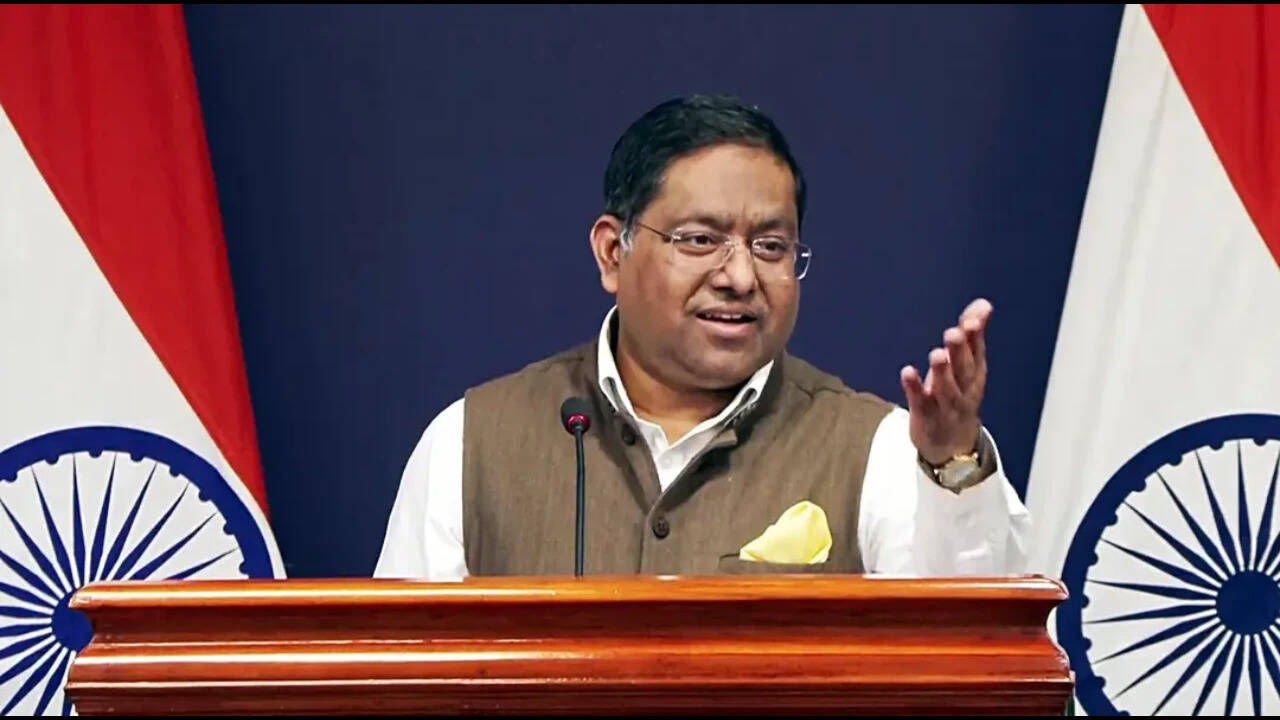
Responding to the report, the Ministry of External Affairs (MEA) said that such recommendations reflect a narrow and prejudiced perspective. The MEA spokesperson said the commission has repeatedly made unfounded allegations against India and has no credibility in international discourse on human rights. The spokesperson added that India's commitment to democracy and pluralism is well established and that such remarks do not change that reality.
The RSS, a Hindu nationalist organisation, has often been criticised by international bodies for its ideology. However, the Indian government has consistently defended the RSS as a social and cultural organisation that operates within the framework of the Constitution. Union ministers and ruling party leaders have expressed solidarity with the RSS, calling the USCIRF report an attempt to undermine India's sovereignty.
This is not the first time the USCIRF has recommended action against Indian entities. Previous annual reports have similarly called for designating RSS members and leaders as terrorists. In 2020, the commission had made similar observations about India's citizenship law and its impact on religious minorities, leading to strong objections from New Delhi.
The USCIRF is an independent, bipartisan commission created by the US Congress in 1998 to advise the White House and the State Department on religious freedom worldwide. Its recommendations are not legally binding but carry political weight. The commission's reports often draw criticism from countries that are named in them, and India has frequently been a target.
Political analysts in India note that the USCIRF's composition and methodology are often shaped by partisan interests in Washington. They argue that the commission tends to focus disproportionately on India while ignoring more severe violations of religious freedom in other nations. This has led to a perception among many Indian observers that the body is a tool of pressure rather than a neutral monitor.
The latest recommendation has triggered a domestic debate about the role of external bodies in assessing India's internal affairs. Some civil society groups have welcomed global scrutiny, saying that it helps highlight issues of intolerance and violence against minorities. They point to reports of hate speech, attacks on places of worship, and incidents of mob violence in India in recent years. The government, for its part, says it takes action against such crimes as per law and that communal harmony is maintained through administrative and legal measures.
The US State Department, which receives USCIRF recommendations, has not yet commented on the latest proposal. Past recommendations have often been softened or set aside due to diplomatic considerations. India and the United States have deepened their strategic partnership over the past decade, particularly in defence, technology, and trade. Both countries have also maintained a dialogue on human rights and religious freedom, with Indian officials often seeking to present their perspective in Washington.
Experts believe that the timing of the USCIRF report is unlikely to significantly affect bilateral relations. India's rising global stature, its role as a counterweight to China, and its large diaspora in the United States provide a strong buffer against such symbolic actions. However, the report could add friction to the ongoing human rights dialogue between the two democracies.
This article is based on official government statements, the USCIRF annual report, and publicly available reports at the time of writing. Further details on India's formal response may emerge as the issue develops.







