India Records Hottest August Since 1901, IMD Warns of Below-Normal September Rains
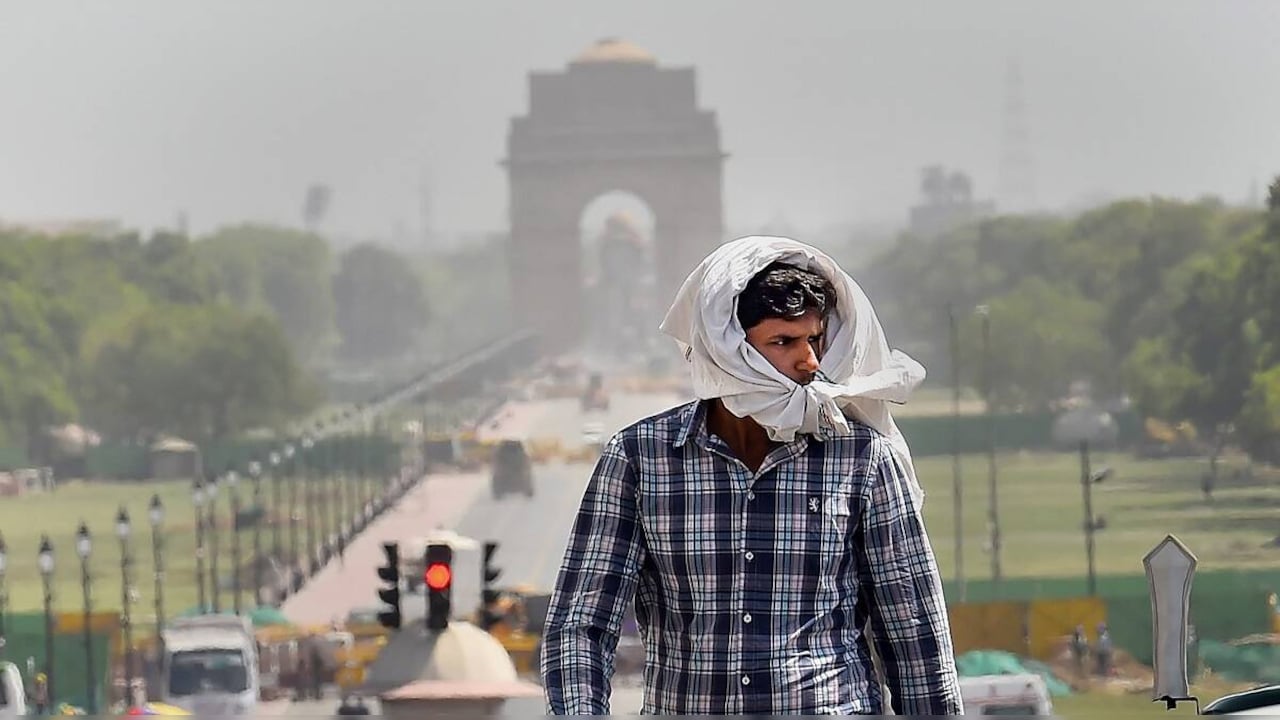
The India Meteorological Department (IMD) announced on Monday that the country experienced its hottest August on record since 1901, with the mean temperature for the month reaching 28.01 degrees Celsius. The normal mean temperature for August is 27.34 degrees Celsius.
In its monthly forecast, the IMD also said that rainfall across India in September is most likely to be below normal, with precipitation expected to be under 91 per cent of the long period average (LPA). The LPA is the average rainfall recorded over a region over a long period, typically 30 to 50 years. For September, the LPA is about 167.9 mm based on data from 1971 to 2020.
The IMD further stated that the average minimum temperature for August was also the highest since 1901, at 24.36 degrees Celsius against a normal of 23.68 degrees Celsius.
August also witnessed deficient rainfall at 213.3 mm, the seventh lowest since 2001. According to the IMD, the key reason for the below-normal rainfall was moderate to strong El Nino conditions prevailing over the equatorial Pacific Ocean.
Mrutyunjay Mohapatra, Director General of Meteorology at the IMD, explained that sea surface temperatures remain above normal across the central and eastern equatorial Pacific and that these conditions are expected to intensify in the coming months. He added that although four low-pressure systems formed during August and collectively persisted for 26 days, their rainfall activity remained largely confined to the Indo-Gangetic plains, leaving other regions in a rainfall deficit.
For September, the IMD predicted that monthly average maximum temperatures are likely to be above normal across the country.
El Nino is a climate pattern characterised by unusually warm surface waters in the central and eastern equatorial Pacific Ocean. It is known to suppress monsoon rainfall in India and contribute to higher temperatures. The current El Nino conditions have been under observation for several months, and the IMD's forecast suggests they will persist into the second half of the year.
The IMD's monthly outlook for September is particularly significant for the southern peninsula and other regions that rely on the northeast monsoon, which begins around October. However, the forecast for September suggests a continuation of the dry spell seen in August.
With a major portion of India's farmland dependent on monsoon rains, below-normal precipitation can affect crop sowing and yields. The government and farmers will be closely monitoring the evolving weather conditions and the IMD's subsequent forecasts.
The weather office issues monthly forecasts as part of its routine services, providing essential inputs for agricultural planning and water resource management. The developments underscore the ongoing influence of large-scale climate phenomena such as El Nino on India's monsoon and temperature patterns.