India Opts for Indigenous Bullet Train After Japan’s Delivery Delays
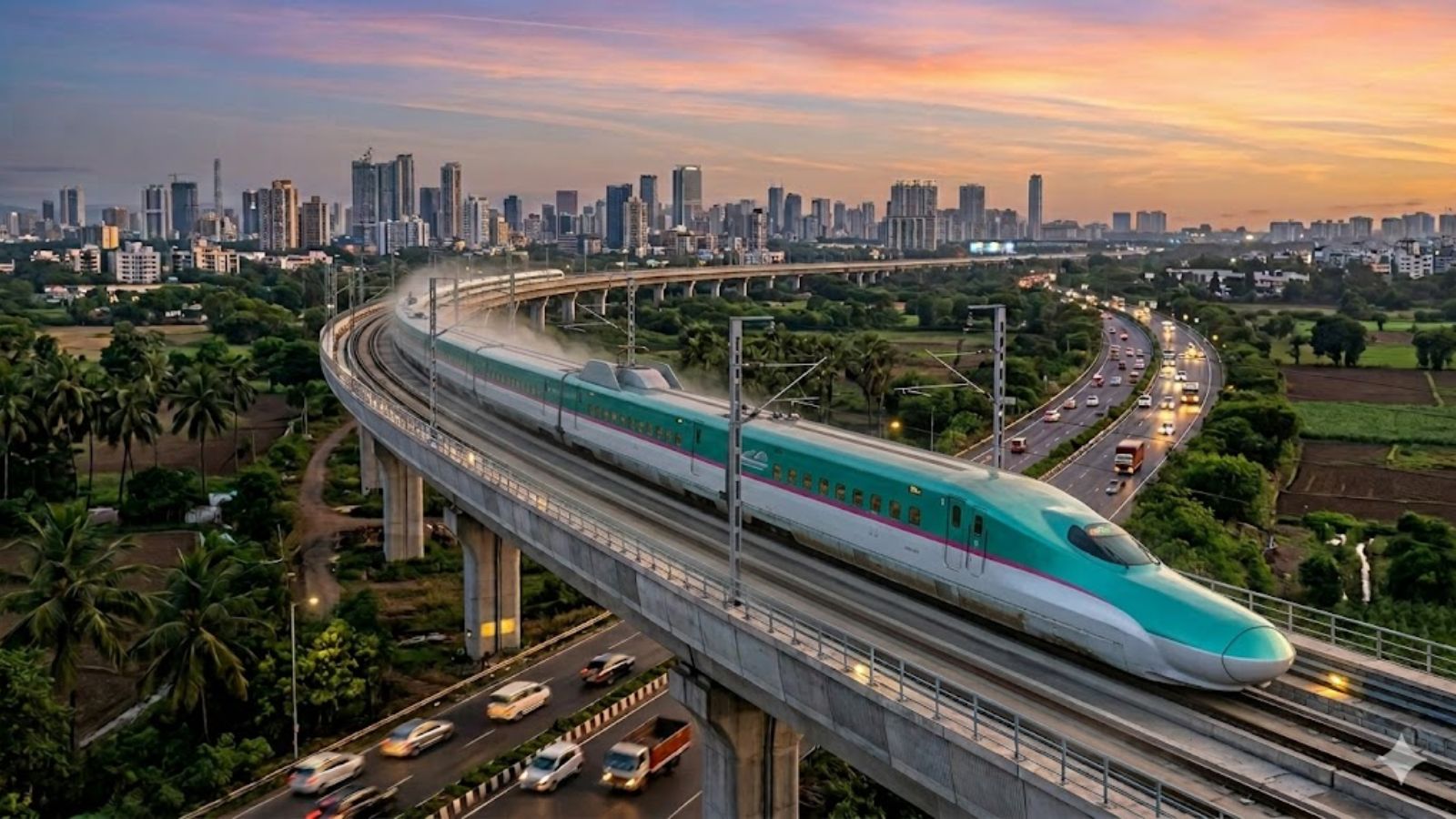
For the 508-km Mumbai-Ahmedabad High Speed Rail (MAHSR) project, India had planned to import three key systems from Japan — the Shinkansen bullet train, the signalling system, and the Operation Control Centre (OCC). The civil construction work was to be carried out by India. However, in 2024, the government decided to develop its own bullet train and deploy an international signalling system after it became clear that Japan could not provide the E10 Shinkansen train before 2034, a senior Railway ministry official said.
“The Japanese side has still not been able to share the offers for E10 trains, signalling system, and Operation Control Centre (OCC) systems because the train is still under design,” the official stated, requesting anonymity as he was not authorised to speak to the media.
Hideki Makihara, a former Japanese justice minister and member of the ruling Liberal Democratic Party, posted on X (formerly Twitter) on Friday that India had displayed “sheer recklessness” in its approach to the bullet train project, which he claimed had stalled progress. The post drew attention to the differing perspectives between the two countries on the project’s timeline and execution.
The MAHSR project, aimed at connecting Mumbai and Ahmedabad with high-speed rail, has been in planning for several years. The decision to pivot towards indigenous development reflects India’s push for self-reliance in critical infrastructure sectors. The E10 Shinkansen, still under design in Japan, has faced delays that affected the original timeline. India’s move to proceed with its own train and an international signalling system is seen as a pragmatic step to avoid further postponements.
Officials have emphasised that the decision was taken after careful evaluation of Japan’s delivery schedule and technological readiness. The Indian government remains committed to the project, which is expected to significantly reduce travel time between the two cities.