India cites Trump's unpredictable behaviour for skipping G7 press conference
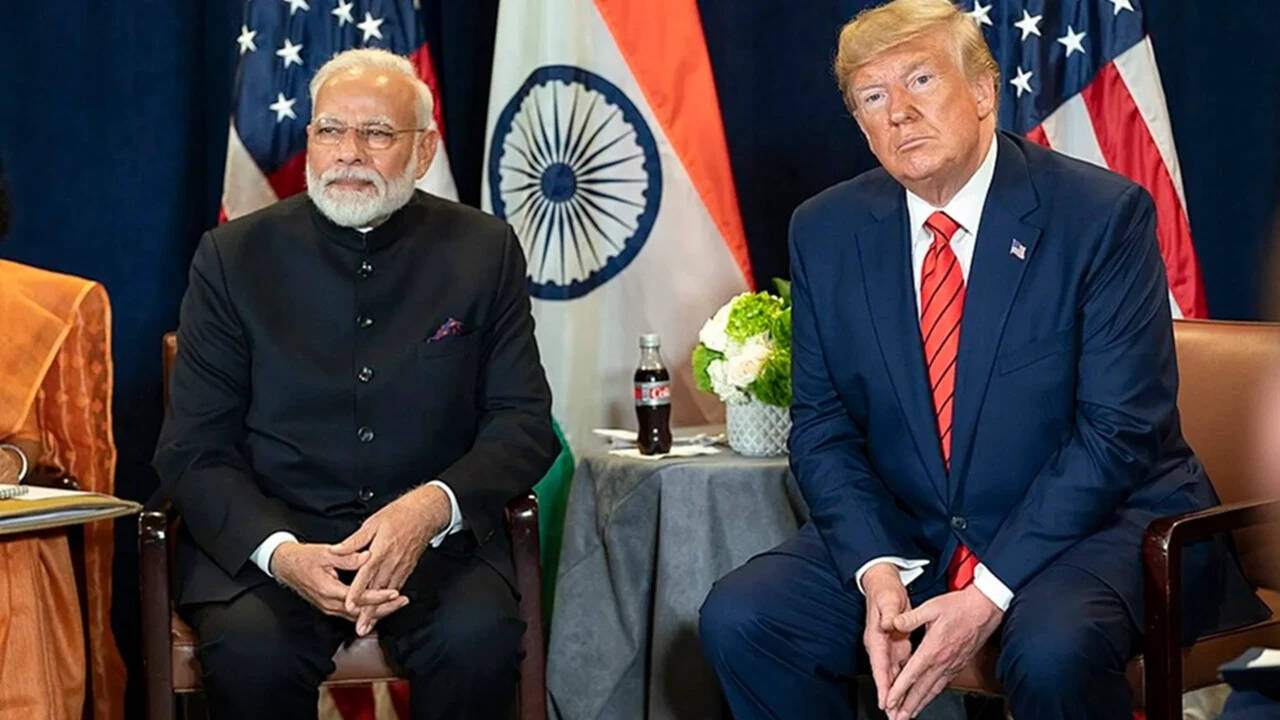
The Indian government has offered a detailed explanation for its decision to skip a joint press conference with US President Donald Trump following their bilateral meeting on the margins of the G7 summit in France. Official sources cited Trump's "unpredictable behaviour" at media engagements with other world leaders as a key factor in the cautious approach.
During the summit, US Ambassador to India Sergio Gor had revealed that the Ministry of External Affairs (MEA) had requested limiting media interaction to just photo opportunities and opening remarks, without a question-and-answer session. Gor's comments, which came ahead of the meeting, created a stir in diplomatic circles. Despite the request, Trump later conducted a lengthy unscripted news conference with journalists.
Government sources, speaking on condition of anonymity, insisted that such requests were routine and not unusual. "Discussions regarding arrangements for public appearances of leaders are normal practice ahead of any VVIP visit," said one official. "Delegations when meeting Donald Trump are wary about his unpredictable behaviour, as may be seen from his interactions with the president of South Africa and Ukraine, etc. Thus, the cautious approach by India."
Trump has previously engaged in heated exchanges with foreign leaders during joint press events. For instance, his televised meetings with Ukrainian President Volodymyr Zelensky and South African President Cyril Ramaphosa drew attention for the confrontational tone. Indian officials maintained that the decision was a safeguard against an unpredictable diplomatic setting, not a reflection on the bilateral relationship.
The disclosure by Ambassador Gor, which hinted at private discussions, is believed to have irked the Indian side, though there was no official reaction. The episode underscores the delicate nature of diplomatic communication, especially when it involves public disclosures about internal planning.
India's longstanding practice under Prime Minister Narendra Modi has been to avoid unscripted joint press conferences during foreign visits or with visiting dignitaries. Instead, officials typically issue separate statements or hold brief encounters. This approach has been questioned by journalists in several countries, including Norway, the Netherlands, Australia and New Zealand, where local media have expressed disappointment over the limited access.
The MEA defended the arrangement, reiterating that India follows standard diplomatic procedures for international visits. "The ministry follows the established protocol and all decisions are made in the interest of smooth conduct of diplomacy," said a spokesperson.
The decision, however, drew mixed reactions from diplomatic observers. While some supported India's need for controlled messaging, others argued that the absence of a joint press conference might be interpreted as a lack of transparency, especially when public scrutiny of leaders' interactions is high.
The Modi-Trump meeting at the G7 was part of a series of bilateral engagements on the sidelines of the summit. The two leaders discussed trade, defence, and regional security issues, according to official readouts. No comments were made after the meeting, leaving the press to rely on official statements.
As India continues to navigate its strategic partnerships, the balance between protocol and public engagement is likely to remain a topic of debate. For now, the government's position is clear: unpredictable outcomes in diplomatic media events justify a more measured approach.