IN-SPACe approves India's first private Earth observation satellite constellation
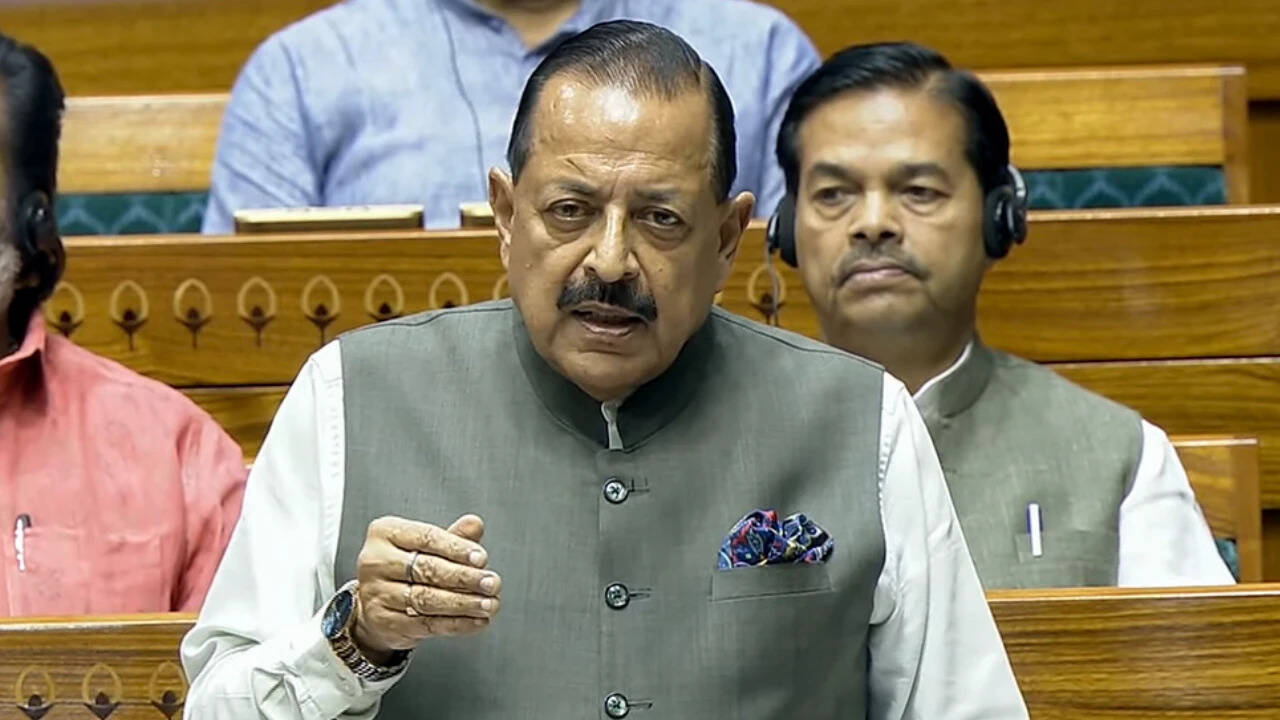
New Delhi: The Indian National Space Promotion and Authorisation Centre (IN-SPACe), India's space regulator, has approved and signed an agreement under the public-private partnership (PPP) model with a private consortium to establish the country's first fully commercial Earth observation (EO) satellite constellation. Union Minister of State for Space Jitendra Singh informed the Lok Sabha on Wednesday that the agreement was signed with Allied Orbits Private Limited, a consortium led by Bengaluru-based Pixxel Space India.
Allied Orbits Private Limited includes Dhruva Space, PierSight Space, and Satsure Analytics India as partners. The consortium will invest more than Rs 1,200 crore to develop and operate the 12-satellite constellation, which is expected to be fully operational by 2029. Under the arrangement, the consortium will design, build, own, and operate the satellites, marking a significant shift from the traditional government-owned remote sensing infrastructure.
The constellation will be equipped with a range of imaging capabilities, including panchromatic, multispectral, hyperspectral, and Synthetic Aperture Radar (SAR) sensors. Specifically, the programme includes five ultra-high resolution optical satellites with 4 bands, three multispectral satellites with 8 bands, two hyperspectral optical satellites with 250 bands, and two SAR satellites in the X-band. These satellites are intended to provide high-resolution imagery for applications such as agriculture, urban planning, disaster management, and defence surveillance.
All satellites in the constellation will be manufactured domestically and launched on Indian launch vehicles, either through private launch providers or ISRO facilities. The mission control and ground infrastructure will also be based in India, ensuring end-to-end indigenous capability. The programme further allows collaboration with academic and research institutions for capacity building and application development, according to the minister.
The approval is a major step in India's space sector reforms initiated in 2020, which opened up space activities to private players. IN-SPACe was established as a single-window nodal agency to authorise and supervise private entities' participation in space activities. This initiative aligns with the government's push for self-reliance in critical technologies while creating commercial opportunities for Indian companies.
Industry experts view this as a landmark development for India's growing space economy, as it shifts from a largely governmental domain to a more commercial and competitive ecosystem. The fully commercial nature of the constellation means the consortium will market the satellite data to both domestic and international customers, potentially reducing India's dependence on foreign Earth observation data.
The minister's reply also highlighted that the programme is part of broader efforts to strengthen India's space-based observation capabilities. By 2029, the country is expected to have a robust private-led EO infrastructure, contributing to national development and strategic needs.







