IIT Bombay to Swap Hostel Ceiling Fans for Wall-Mounted Units After Student's Death
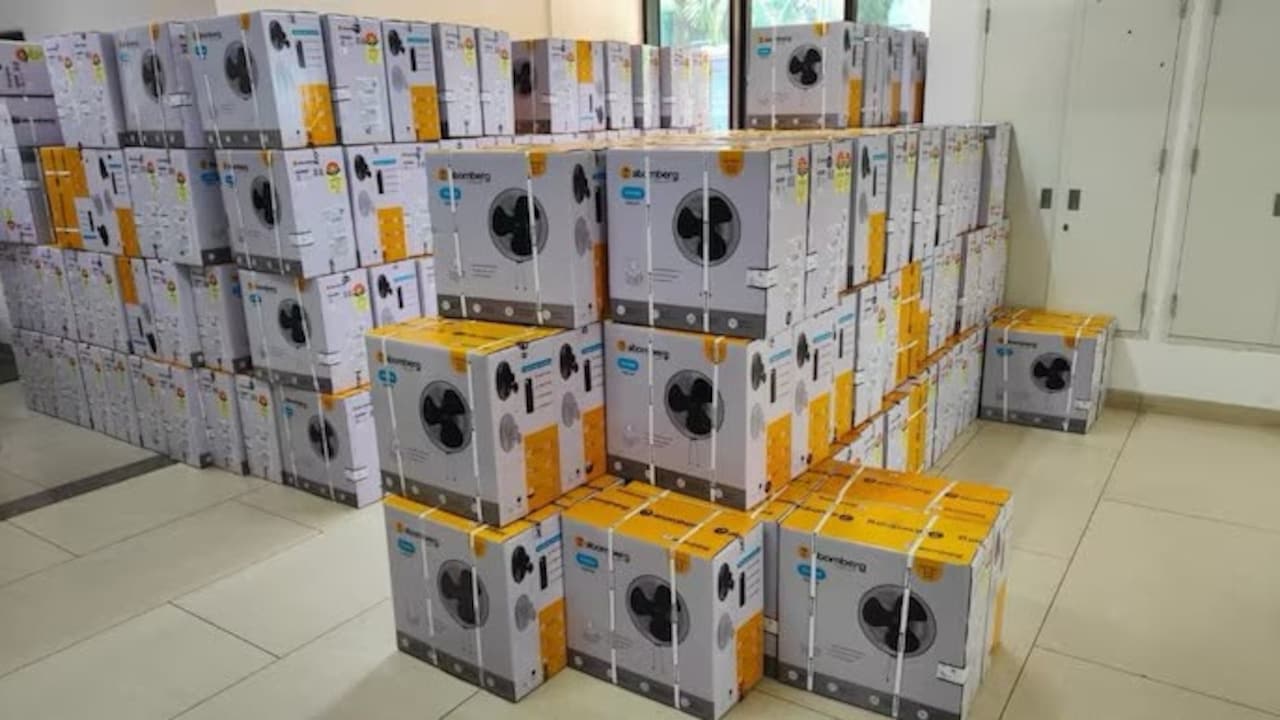
IIT Bombay has begun moving to replace ceiling fans in its hostel rooms with wall-mounted units, a change that sources say had been under discussion for about two months but which has drawn public attention because it comes days after the death by suicide of a 22-year-old student on the Powai campus.
The first consignment of wall-mounted fans has reached the campus and installation is expected to begin soon. Sources said the proposal was recently approved as part of a renovation project and predates the present situation. Students have confirmed the development, while the institute administration has neither issued an official statement nor denied the reports.
Sahil Wakode, a second-year student in the Department of Energy Science and Engineering, was found dead in his hostel room on Friday evening. He was from Yavatmal district in Maharashtra. According to reports, he was allegedly found using a mobile phone to access ChatGPT during a mid-semester examination earlier that day.
The death has provoked protests on campus and demands from students for what they describe as meaningful institutional reforms and greater accountability. Students have pointed out that this is the third death by suicide at the institute in seven months.
Political criticism
NCP (SP) spokesperson Anish Gavande criticised the fan replacement, saying it could not address the larger crisis of student suicides. "Does IIT Bombay really think that replacing ceiling fans with wall fans will solve the suicide problem affecting IITs across the country?" he asked, calling instead for a sharper focus on suicide prevention and mental health support.
The institute has not responded publicly to that criticism.
The case so far
On Monday, IIT Bombay removed Prof Suryanarayana Doolla as dean of Administrative Affairs following the protests. He continues to serve on the faculty.
Sahil's father, Ravindra Wakode, has alleged that his son was mocked, harassed and discriminated against on caste lines, and has demanded a probe into the role of the institute's administration in his son's death.
Following a complaint lodged by the family, the Mumbai Police have charged Prof Doolla under the Scheduled Castes and Scheduled Tribes (Prevention of Atrocities) Act and under Section 108 (abetment of suicide) of the Bharatiya Nyaya Sanhita. These are allegations made in a first information report; they have not been established in court, and the matter is under investigation.
Wider questions
The sequence of events has turned attention to how India's elite technical institutions handle examination rules, student distress and complaints of discrimination. Student groups have argued that administrative responses so far have been procedural rather than structural, and that the institute has yet to publish a clear account of what happened.
Mental health professionals note that suicides are rarely attributable to a single cause, and that academic pressure, disciplinary action, social isolation and discrimination can each contribute. They stress that institutional responses should include accessible counselling, trained hostel staff, and clear, fair processes for disciplinary matters.
The institute's silence on the fan replacement, and the absence of an official statement on the death itself, have left students and the family waiting for answers. What began as a campus renovation decision has become part of a broader question about accountability at one of the country's most prominent institutions.
Readers in distress, or those who know someone who may be, can contact Tele-MANAS on 14416 or 1-800-891-4416, or AASRA on 91-9820466726.
(With inputs from Padmesh Pawar)