IIM Ahmedabad inducts 458 students into PGP and PGP-FABM; 61% from engineering, 31% women in PGP
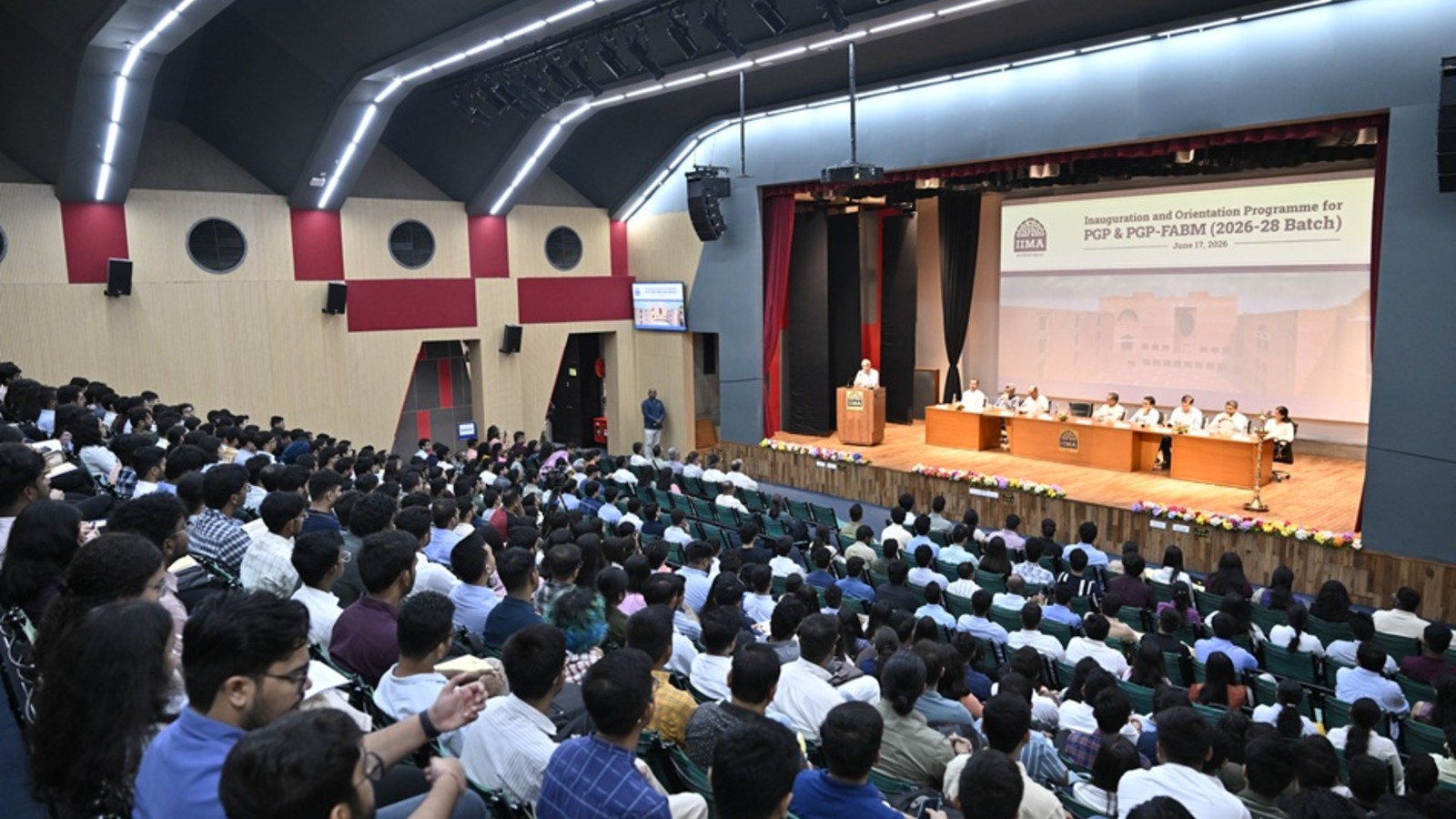
The Indian Institute of Management Ahmedabad (IIMA) formally inducted its new class of 2026-28 into the flagship Post Graduate Programme (PGP) and Post Graduate Programme in Food and Agribusiness Management (PGP-FABM) on June 17. The ceremony, held on campus, marked the beginning of the academic journey for 458 students who have joined the institute, one of India's premier business schools.
Of the total, 414 students have enrolled in the PGP, while 44 are part of the specialised PGP-FABM. IIMA released a profile of the incoming PGP batch, revealing a continued trend of academic and professional diversity. Students with engineering degrees account for 60.87% of the batch, while 39.13% come from non-engineering disciplines such as commerce, arts, science, and others. Women constitute 30.92% of the cohort, a figure that has seen consistent improvement over the years due to the institute's affirmative steps towards gender inclusivity.
The average age of the PGP students is 23 years, and the average prior work experience is 24 months. Notably, 77% of the batch has some professional experience before joining the programme. This blend of fresh graduates and individuals with work experience is a deliberate design element of IIMA's pedagogy, which relies heavily on case-based discussions and peer learning. The institute believes that diverse perspectives enhance the quality of classroom debates and project outcomes.
The PGP-FABM programme, tailored for the food and agribusiness sector, admitted its own diverse group, though a detailed breakdown was not immediately available. Historically, this programme draws students with backgrounds in agriculture, food technology, and related fields, adding another layer of specialisation to the institute's offerings.
IIMA, established in 1961 as a public business school, consistently ranks among the top management institutes in India and globally. Its two-year PGP is widely regarded as equivalent to an MBA and is known for its rigorous curriculum, strong industry linkages, and illustrious alumni network spanning various sectors. The institute's admission process considers performance in the Common Admission Test (CAT), followed by a Written Ability Test (WAT) and Personal Interview (PI), with weightage given to academic diversity and work experience.
In recent years, IIMA has proactively worked to broaden the representation of women and non-engineers in its classrooms. The current batch's composition is a testament to these ongoing efforts. The institute has also implemented scholarships and financial aid programmes to ensure that meritorious students from economically weaker backgrounds are not deterred by the cost of education.
The inauguration ceremony was presided over by the institute's director and other senior faculty members. In their addresses, they emphasised the institution's core values of academic rigor, ethical leadership, and social commitment. Students were urged to make the most of the opportunities, engage in intellectual discourse, and contribute meaningfully to the campus community.
The new batch hails from different parts of India, reflecting the country's cultural and linguistic diversity. This geographical spread is expected to enrich the residential learning experience. IIMA's campus in Ahmedabad provides a conducive environment for holistic development, with state-of-the-art infrastructure, library resources, and a vibrant extracurricular scene.
As the students embark on their two-year journey, they will undergo a comprehensive curriculum that includes core courses in the first year and electives in the second, along with a summer internship. The programme aims to mould future managers and leaders capable of navigating complex global challenges. The diverse composition of the batch serves as a strong foundation for the collaborative and inclusive culture that IIMA strives to maintain.
Academic diversity has long been a cornerstone of management education, as it brings together varied problem-solving approaches. IIMA's consistent intake of students from different streams ensures that future managers are exposed to a wide array of perspectives, preparing them for the multifaceted nature of business. The institute's commitment to gender diversity also aligns with national goals of women's empowerment, contributing to a more equitable society.
IIMA boasts a strong placement track record, with graduates being sought after by top companies across consulting, finance, technology, and other sectors. The institute's alumni include CEOs, entrepreneurs, and policymakers who have made significant contributions to the Indian and global economy.