Hyderabad airport: Domestic flyers to pay less as UDF cut to ₹515 from Sept 2026
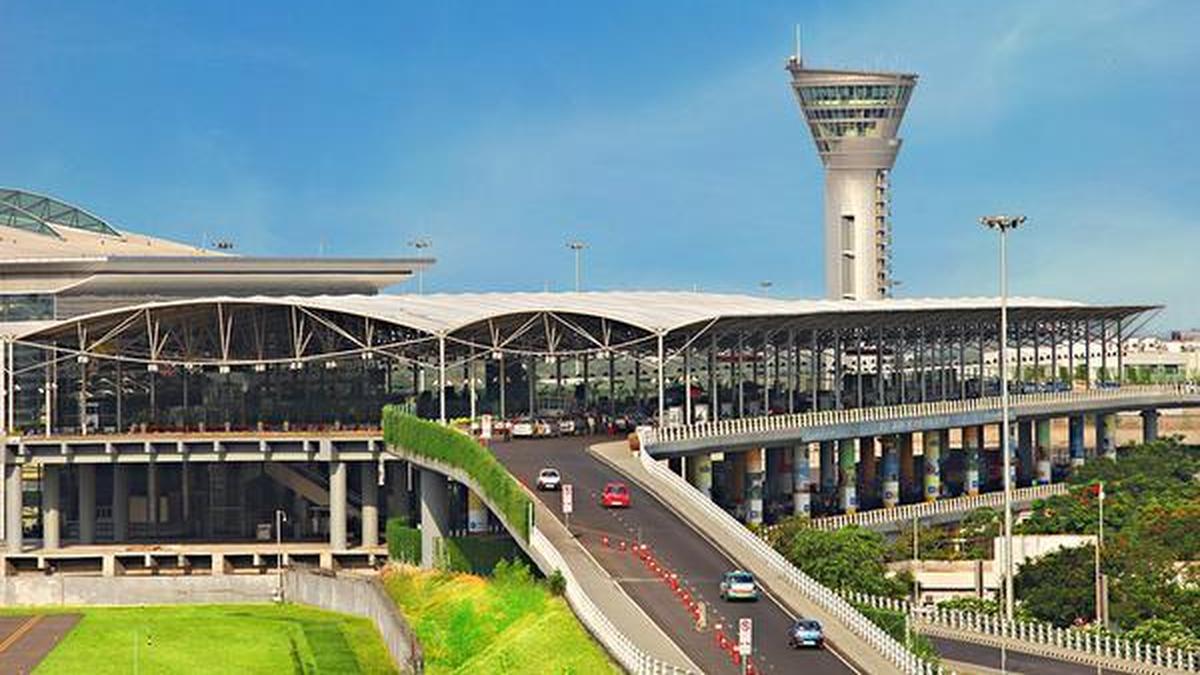
Beginning September 1, 2026, domestic passengers departing from Rajiv Gandhi International Airport (RGIA) in Hyderabad will pay a lower User Development Fee (UDF) of ₹515, down from the current ₹750. The reduction follows a tariff order issued by the Airports Economic Regulatory Authority of India (AERA) for the airport’s fourth control period, which runs from September 1, 2026, to March 31, 2031.
AERA is the statutory body that regulates tariffs and charges for major airports in India, ensuring that they are reasonable and aligned with consumer interests. The tariff order, issued on Monday, sets out the airport charges for the next five years, including UDF, landing charges, and other aeronautical fees.
GMR Hyderabad International Airport Ltd. (GHIAL), which operates RGIA, had proposed an Aggregate Revenue Requirement (ARR) of ₹27,851 crore (or ₹20,025 crore in present value terms) for the control period. ARR represents the total revenue an airport needs to cover its costs and earn a fair return on investment. After examining the proposal, including capital expenditure, operating costs, return on equity, and projected non-aeronautical revenues, AERA rationalised the figures. The regulator approved a baseline ARR of ₹11,683.49 crore (₹9,308.20 crore in present value terms), significantly lower than what GHIAL had sought.
This approved ARR translates into a baseline yield per passenger of ₹426.39, which has been distributed among landing and parking charges, UDF, and other airport charges. Notably, UDF is a fee collected from embarking passengers and is used to fund airport infrastructure and services.
Under the new order, the UDF for departing domestic passengers is fixed at ₹515, compared with ₹580 proposed by GHIAL and ₹750 currently charged. For departing international passengers, the UDF has been set at ₹1,030, down from the existing ₹1,500 and below GHIAL’s proposed ₹1,150.
AERA noted that domestic passengers constitute roughly 82% of the total passenger traffic at Hyderabad airport. The regulator stated that keeping the domestic UDF at a nominal level would help maintain affordable air travel and support the growth of domestic aviation, which is a key policy objective.
The tariff order also specifies how UDF will change over the control period. For domestic passengers, the embarking UDF will start at ₹515 from September 1, 2026, to March 31, 2027, then rise to ₹555 in 2027-28, ₹620 in 2028-29, and ₹670 from April 1 to October 31, 2029. From November 1, 2029, to March 31, 2031, it will fall to ₹415. Disembarking UDF for domestic passengers will follow a similar trajectory, beginning at ₹220 and ending at ₹175 in the final period.
For international passengers, the embarking UDF will be ₹1,030 initially, rising to ₹1,085 in 2027-28, ₹1,130 in 2028-29, and ₹1,175 from April 1 to October 31, 2029. It will then decline to ₹880 from November 1, 2029, to March 31, 2030, and ₹915 in 2030-31. International disembarking UDF will start at ₹440 and vary across the control period, ending at ₹390 in 2030-31.
Landing charges, which airlines pay based on aircraft weight, have also been revised. For domestic flights, the charge will be ₹435 per metric tonne (MT) from September 2026 to March 2027, increasing in stages to ₹745 per MT from April to October 2029, before dropping to ₹230 for November 2029 to March 2030 and ₹275 for 2030-31. International landing charges will start at ₹630 per MT, rise to ₹905 per MT in the first half of 2029-30, and then fall to ₹245 and ₹315 in the subsequent periods.
The new tariff structure is expected to provide relief to domestic air passengers, particularly those on short-haul routes, while ensuring that the airport can recover its legitimate costs. The phased approach to charges aims to balance the need for infrastructure investment with passenger affordability. Hyderabad airport is one of the busiest in India, handling over 20 million passengers annually, and this decision is likely to influence travel decisions and airline pricing in the region.







