How a CJI Remark Sparked a Youth Movement That Led to a Minister's Resignation: Five Key Moments
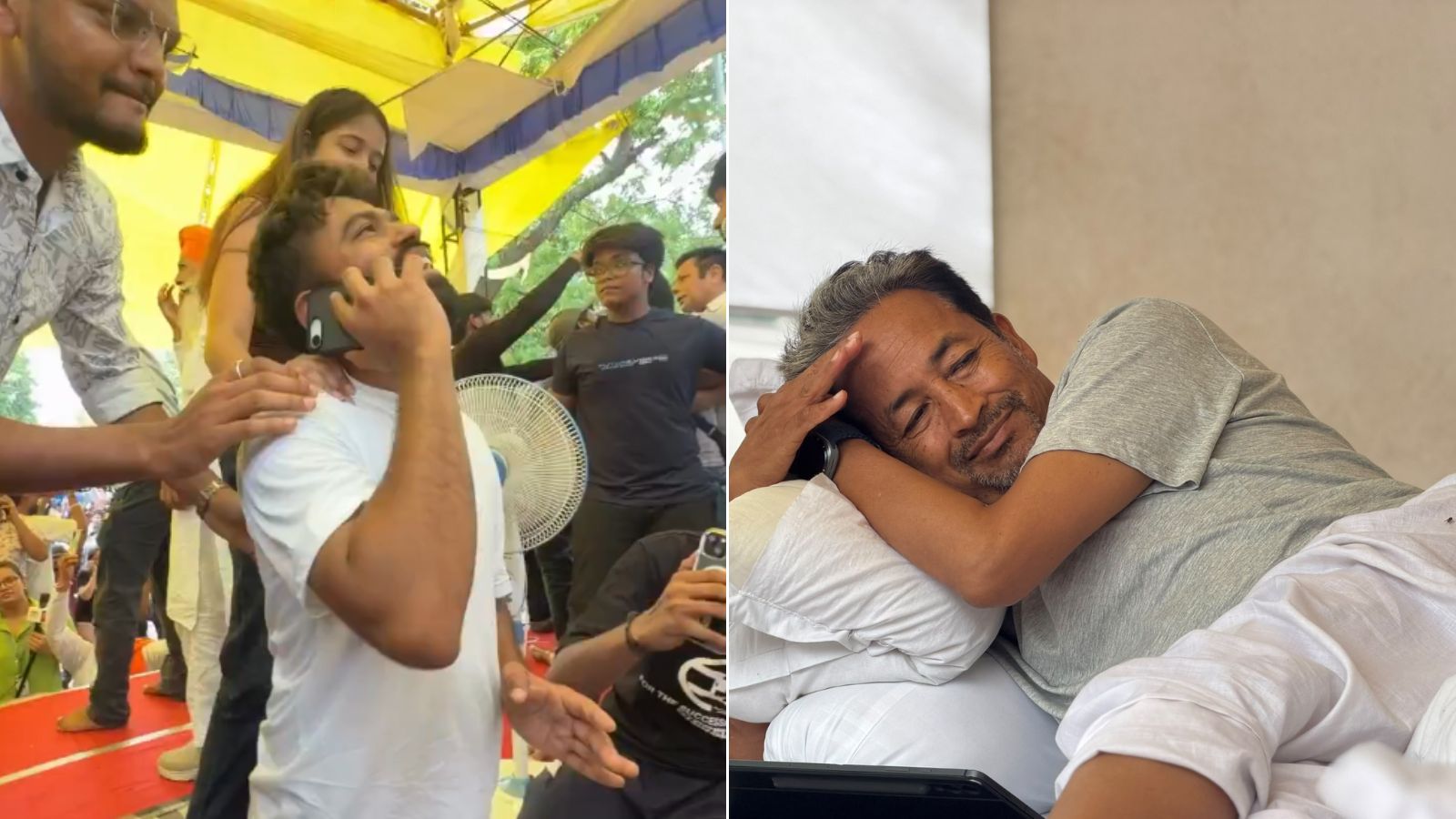
New Delhi's Jantar Mantar has, for nearly two months, been the site of one of India's largest youth-led movements in recent years. What began as a satirical social media post evolved into the Cockroach Janta Party (CJP), a campaign that drew in a Ramon Magsaysay award-winning activist, involved a hunger strike, disrupted Parliament's monsoon session, and culminated in the resignation of Union Education Minister Dharmendra Pradhan.
Here are five defining moments of the CJP protest, from its origin to the minister's resignation.
1. The Cockroach Janta Party is born
The Cockroach Janta Party originated from a Supreme Court hearing on May 15, 2026, during a contempt case. Chief Justice of India Surya Kant, while addressing online criticism of judges, remarked that unemployed young Indians were like “cockroaches”. Within a day, Abhijeet Dipke, a 30-year-old political communications strategist from Maharashtra who was then completing a master's degree in public relations at Boston University, posted a satirical question online: what if all the “cockroaches” came together? The post gained traction rapidly, and Dipke launched the Cockroach Janta Party (CJP) on May 16, 2026, as a parody of the BJP. What began as an online satire turned into a genuine movement, with over a lakh sign-ups within days, a manifesto and anthem, and over 20 million followers on Instagram, surpassing established Indian political parties on the platform. The party is not registered with the Election Commission of India and describes itself as the “Voice of the Lazy and Unemployed.” Its rise was fueled by anger over unemployment, examination irregularities, and political disenfranchisement among Indian youth.
2. Abhijeet Dipke returns to India
Although the CJP was conceived and launched from the United States, Dipke announced in early June that he was leaving Boston to lead the movement on Indian soil. He landed at Delhi's Indira Gandhi International Airport on June 6, 2026, and headed to Jantar Mantar. His return was prompted by the escalating National Eligibility cum Entrance Test (NEET) crisis. Days after NEET 2026 was conducted, the exam was cancelled following reports of question paper leaks and other irregularities — a controversy that, according to CJP, affected over a crore students across NEET, CUET, CBSE, and SSC-GD examinations. In the aftermath, several NEET aspirants reportedly died by suicide, a tragedy that became a rallying point. Dipke sought police permission for a peaceful demonstration at Jantar Mantar and demanded that Union Education Minister Dharmendra Pradhan take moral responsibility and resign.
3. Sonam Wangchuk joins the protest
The movement gained a prominent figure when Ladakh-based engineer and educator Sonam Wangchuk, a Ramon Magsaysay awardee who called himself an “honorary cockroach,” began an indefinite hunger strike at Jantar Mantar on June 28, 2026, in support of the demand for Pradhan's resignation. As his fast continued, Wangchuk's health deteriorated; by the 17th day he had reportedly lost several kilograms and was hospitalised. His participation drew widespread attention and put additional pressure on the government.
4. Parliament's monsoon session disrupted
The CJP protest intensified during Parliament's monsoon session, with supporters gathering outside the Parliament building. The movement's demands were raised by opposition MPs, leading to repeated disruptions. The session saw heated debates over the exam irregularities and the government's response. The protest also coincided with other issues, but the CJP's focus on the education minister remained central.
5. Minister's resignation
On July 21, 2026, Union Education Minister Dharmendra Pradhan submitted his resignation to Prime Minister Narendra Modi, citing moral responsibility for the examination irregularities and the subsequent protests. The resignation came after weeks of mounting pressure from the CJP, opposition parties, and public outcry. Pradhan's resignation was accepted, and he was replaced by a new minister. The CJP declared a temporary pause in protests, though the movement continues to demand systemic reforms.