His Guitar Still Waits: A Father's Pain After NEET Paper Leak Tragedy
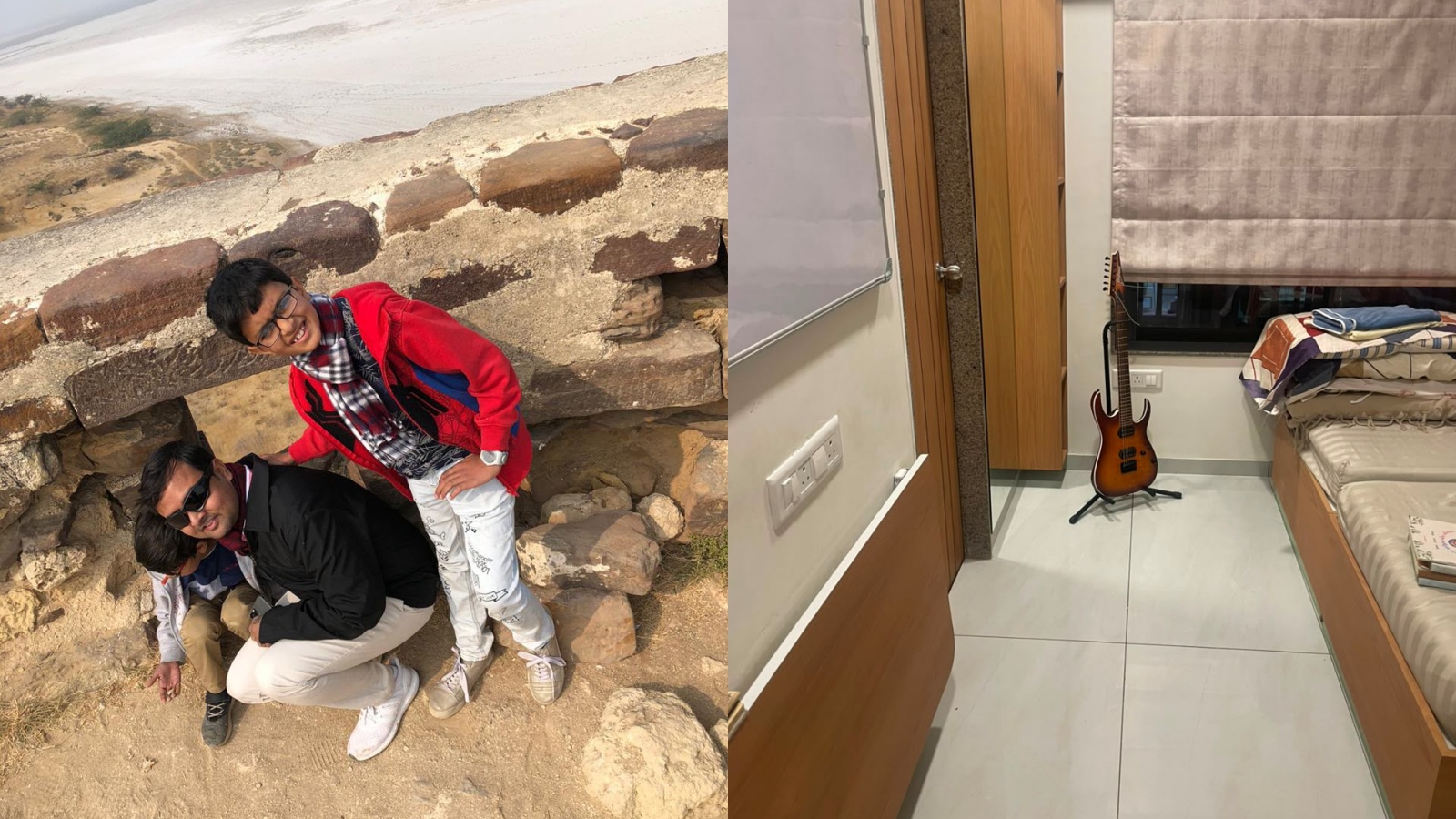
The books have been put away. The biology notes, mock test papers and dog-eared textbooks that once filled Kahaan Patel’s room now sit inside a cupboard, packed away a month and a half after his death. But the guitar remains where he left it. His father, Advocate Prashant Patel, has learned that grief follows no logic. Some things it asks you to put away; others, it refuses to let you touch. The guitar is one of those.
“I was going to buy him a car when he turned 18,” says Prashant, speaking of his son, who died by suicide at 17, unable to cope with the pressure of a re-test after the cancellation of the NEET exam due to a paper leak. “I had even planned a guitar stand in the trunk so he could carry it everywhere.” After the NEET results, he had promised himself, there would also be a customised stethoscope engraved with Kahaan’s name.
Before medicine became his singular ambition, Kahaan was simply a curious child. He built Lego models, dismantled toy aeroplanes to understand how they worked and loved trekking with his family. Later came football, the ukulele and heavy metal music. He wanted an electric guitar but postponed buying one because the entrance examinations were too close. There would be time later, he believed. By Class XI, Kahaan had changed schools to prepare better for the NEET exams. For the next two years, life revolved around a single examination. Holidays disappeared. Hobbies became rewards for a future yet to arrive.
When he walked out of the examination hall on May 3, that future seemed within reach. His friend Dhruvi recalls that Kahaan was confident of scoring around 650 out of 720 marks and securing a seat in a government medical college. For the first time in months, he allowed himself a holiday with friends. But when news of the NEET paper leak broke, Kahaan returned home anxious and uncertain, worried about whether he could achieve top scores again. That performance anxiety pushed him over the edge.
Naina Shahri, a counselling psychologist who has worked on a suicide crisis helpline and now provides trauma-informed support to students affected by the NEET exams, says overwhelming stress can change how people experience possibility. “When someone has invested years into one goal and suddenly experiences something that feels deeply unfair or beyond their control, it can create profound helplessness. Instead of believing the system has failed them, they begin believing they themselves have failed,” she explains.
In the weeks after Kahaan’s death, grief settled into details. Prashant found himself replaying conversations that once seemed ordinary. He wondered if he should have called his son more often during the weeks leading up to the re-examination, instead of worrying that he might disturb his revision. He thought about a family holiday the previous year that Kahaan had later joked had cost him valuable study time. Every memory became evidence in an impossible trial where he was both witness and accused.
“The grief of losing a child can be unbearable,” Shahri says. “Parents often revisit conversations again and again, wondering if something could have changed. They search for signs they may have missed. But grief doesn’t move in a straight line. It returns to the same questions because the mind is trying to make sense of something that feels impossible to understand.”
Psychologists describe this as a common response to traumatic loss. The brain keeps reconstructing the past, hoping to find a version of events in which the ending is different. It is less about finding answers than about trying to regain control after an event that shattered it. For Prashant, speaking about his son has become part of a survival strategy. “I want to remember him,” he says. “I want to talk about him.”
The tragedy also highlights the immense pressure on students in India’s competitive entrance examinations and the consequences when systemic failures—such as paper leaks—compound that stress. It raises questions about the support systems available to young aspirants and the need for more robust mental health safeguards. As investigations into the leak continue, families like the Patels are left to pick up the pieces of shattered dreams.
For now, the guitar waits. Prashant does not know when—or if—he will be able to move it. But he knows one thing: his son’s memory will not be packed away.