Harvard to pay $53 million to families over body parts scandal
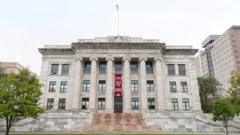
Harvard University has agreed to pay $53 million (about £39 million) to resolve lawsuits filed by families who accused the institution of mishandling the remains of loved ones donated to its medical school.
The proposed settlement, submitted to a Boston court on Monday, seeks to end civil suits against Harvard Medical School (HMS) after its former morgue manager, Cedric Lodge, pleaded guilty to stealing and selling human remains on the black market.
Lodge, 58, admitted to taking body parts from cadavers and selling them online between 2018 and 2021. He was sentenced in December to eight years in prison, according to the US Department of Justice. His wife, who was also involved, received a sentence of one year and a day.
Federal prosecutors said Lodge abused his position as manager of the Anatomical Gifts Programme at the medical school. He dismembered cadavers donated for medical research and sold the parts to buyers in Pennsylvania and Massachusetts. Six other individuals with no connection to Harvard were also indicted and have pleaded guilty.
Harvard students use donated bodies to study and practice medical procedures. When the school finishes using them, the cadavers are typically cremated and the remains returned to families, or buried in the university's medical cemetery, according to court documents.
The civil lawsuits were initially dismissed by a state court judge, but the Massachusetts Supreme Judicial Court revived the cases last fall. On Monday, both Harvard and the plaintiffs jointly asked the court to approve the class-action settlement.
In a letter shared by the university, deans George Daley and Bernard Chang described Lodge's actions as "morally reprehensible" and inconsistent with the standards Harvard expects for the treatment of anatomical donors and their loved ones. They expressed deep regret for the pain caused to families.
Under the settlement, funds will be set up for affected families once the court grants approval. Additionally, from the 2027-2028 academic year, Harvard Medical School will establish an annual financial-aid scholarship for medical students "in appreciation and in honour of all of our anatomical donors," the letter said.
The deans acknowledged that while the criminal sentencing and this settlement conclude the legal cases, "the process of recovering from this painful incident continues."
The case has drawn attention to the importance of ethical standards in body donation programmes across the United States. Harvard's Anatomical Gifts Programme relies on voluntary donations for medical education and research. The university has stated it has cooperated fully with the investigation and implemented reforms to prevent such misconduct in the future.
The settlement still requires approval from the court. If approved, it will bring closure to a painful chapter for the families involved, who have waited years for accountability.







