H-1B Visa Dominance: Why Indians Form 73% of America's Tech Workforce
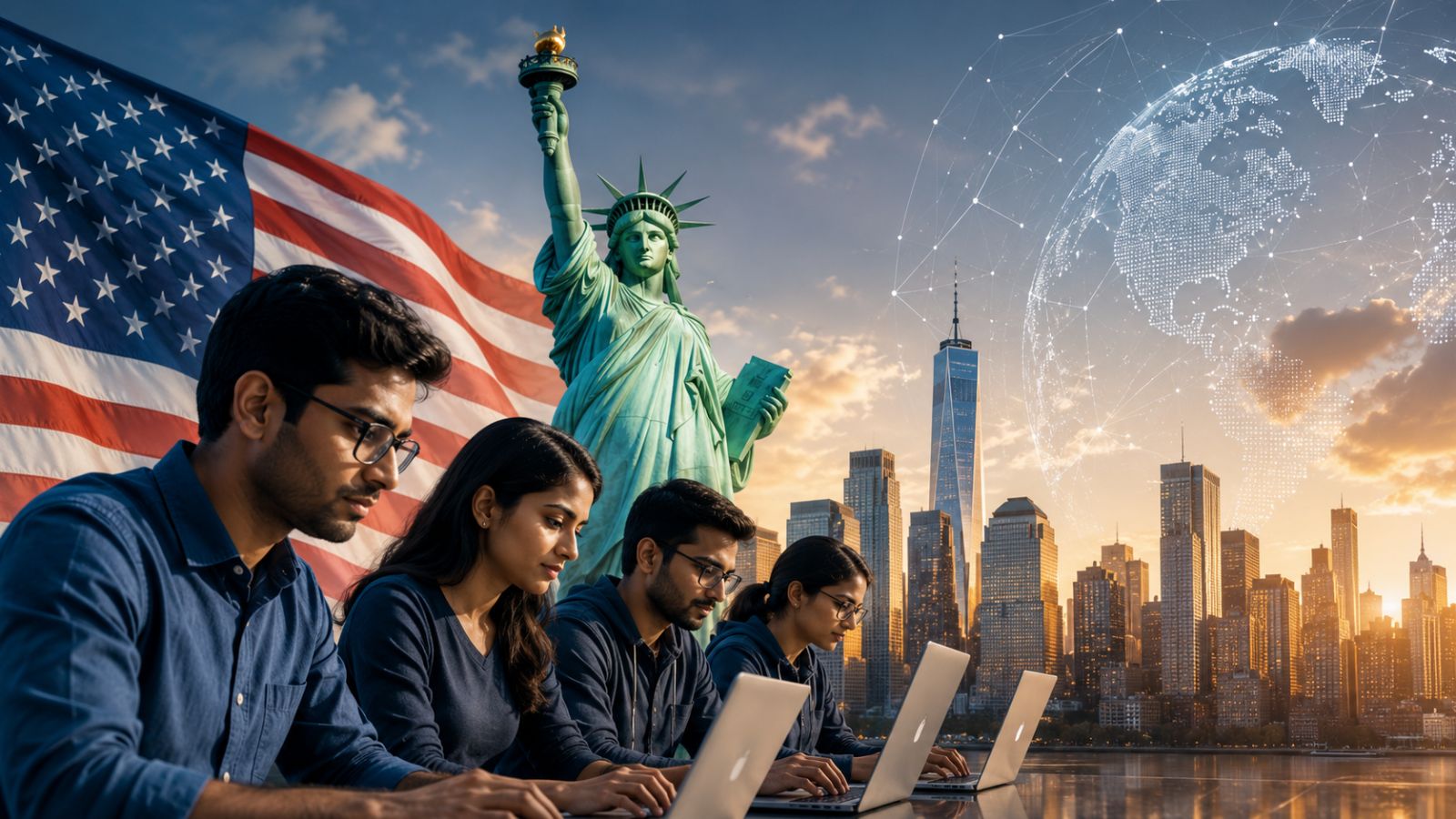
As the United States prepares to celebrate its 250th anniversary of independence in July 2026, one of its most significant modern success stories is closely tied to immigration—particularly highly skilled professionals in the technology sector. Among them, Indian nationals are the most prominent. According to recent data, nearly three out of every four H-1B visas approved by the US go to Indian nationals, making them a critical component of America's technology workforce and many leading Silicon Valley companies.
The H-1B visa, introduced under the Immigration Act of 1990, allows US employers to hire foreign professionals in specialised fields such as software engineering, artificial intelligence, cloud computing, and cybersecurity. While the programme has been central to America's innovation economy, it has also remained a subject of debate, praised for addressing talent shortages but criticised over its impact on domestic jobs and wages.
As the US marks 250 years of nationhood, understanding the H-1B visa's role and why Indians dominate it provides insight into the future of the American tech industry.
What is the H-1B visa?
The H-1B is a non-immigrant work visa that allows US employers to hire foreign professionals in speciality occupations requiring highly specialised knowledge and at least a bachelor's degree or equivalent experience. Administered by the US Citizenship and Immigration Services (USCIS), it is typically issued for an initial three-year period and can be extended to six years. Workers whose employers sponsor them for permanent residency may remain beyond six years while their Green Card applications are processed.
Congress has capped new H-1B visas at 65,000 annually, with an additional 20,000 reserved for applicants with a master's degree or higher from a US university. Because applications regularly exceed these caps, USCIS conducts an annual lottery to select eligible petitioners.
Why Indians dominate the programme
According to a 2025 Pew Research Center analysis based on USCIS data, nearly 73% of approved H-1B petitions in fiscal year 2023 were for individuals born in India. China ranked a distant second at approximately 12%, with all other countries accounting for much smaller shares.
Several factors explain this dominance. First, India produces a large pool of STEM (science, technology, engineering, and mathematics) graduates each year, creating a vast talent pool for global employers. Second, India's IT services industry, including companies such as Infosys, Tata Consultancy Services (TCS), Wipro, and Cognizant, has built deep ties with the US technology sector over the past three decades, relying on the H-1B programme to deploy skilled professionals to American clients. Third, English-language proficiency and familiarity with global business practices make Indian professionals attractive for multinational companies.
Importance for US tech industry
The H-1B programme is closely linked to technology-related occupations. According to Pew Research Center, computer-related jobs accounted for nearly two-thirds of all H-1B petitions. These workers fill roles in AI, cloud computing, cybersecurity, and other fields critical to America's continued innovation. As the US looks toward its next 250 years, the programme remains a key factor in maintaining its competitive edge in technology.