Gujarat flagged as 'red zone' as secondary school dropout rates exceed 15%
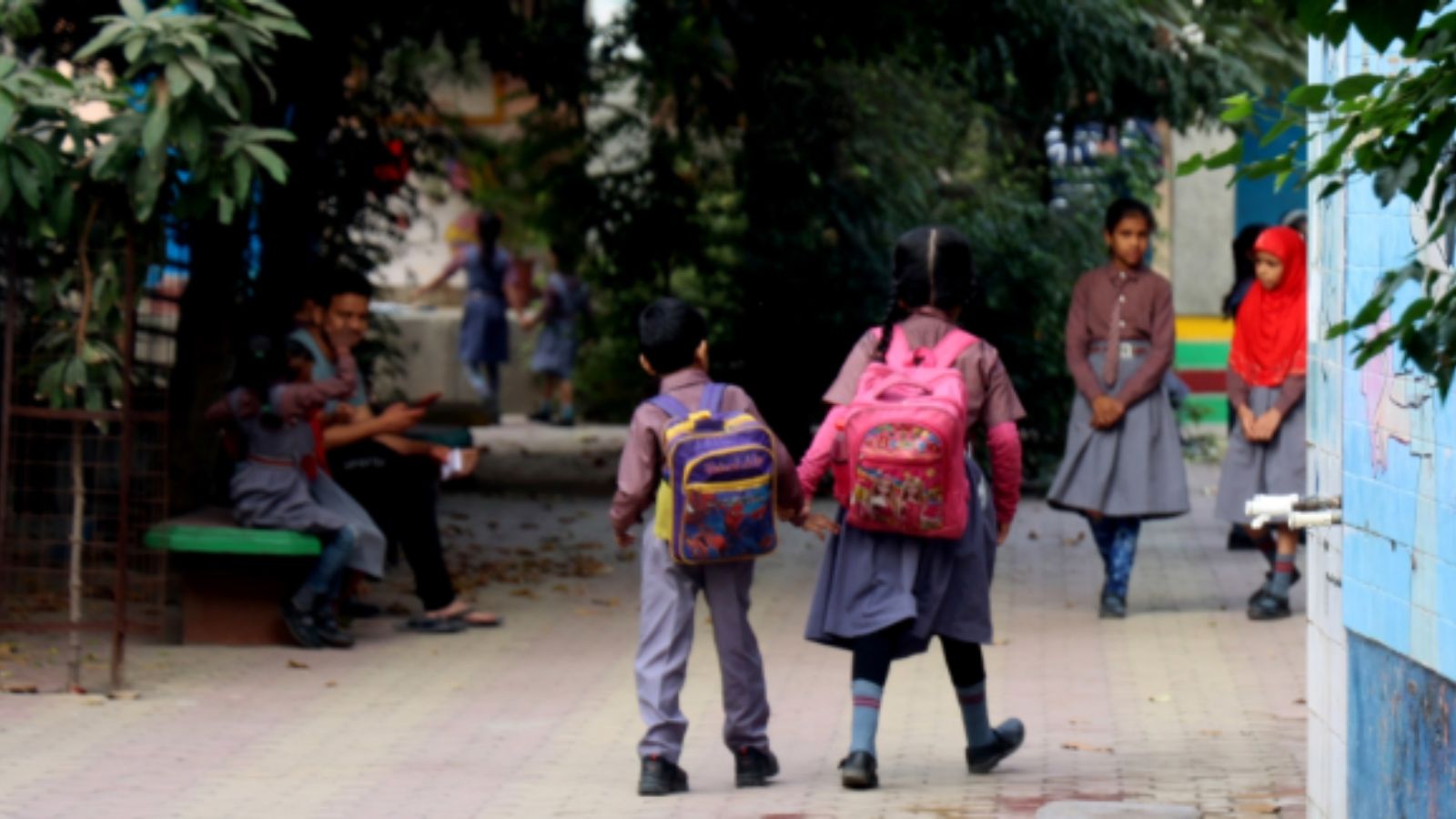
Gujarat has been placed in the 'red zone' of a central education ministry report for recording a secondary school dropout rate above 15 per cent. This means that more than 15 out of every 100 students in the state leave school before completing secondary education.
The latest Unified District Information System for Education Plus (UDISE+) 2025-26 data also shows that enrolment in Gujarat's secondary and higher secondary schools remains far below the national average. This is despite the state government running the Shala Praveshotsav school enrolment programme for more than two decades.
UDISE+ is the central education management information system that enables schools to record and submit data in real time. The data reveals a lower age-specific enrolment rate (ASER) in Gujarat. According to the 2025-26 report, the net enrolment rate for higher secondary schools in Gujarat is 29.1 per cent, which is the number of students enrolled in a particular education level divided by the population of the official age group for that level. For girls, the net enrolment rate is 29.6 per cent, lower than the national average of 41.1 per cent.
UDISE figures show that Gujarat's higher secondary school enrolment has dropped from over 40 per cent in 2022-23 to 34.7 per cent in 2023-24 and to 24 per cent in 2024-25—well below the national average of 35.8 per cent—before improving to 29 per cent in 2025-26.
The ASER figures indicate that only 31.3 per cent of Gujarat students eligible for secondary or higher secondary school actually enrolled, far worse than the national averages of 51.3 per cent and 52.5 per cent, respectively. Enrolment in secondary schools was 49.5 per cent in 2022-23, dropping to 45.7 per cent in 2023-24, then drastically to 26.1 per cent in 2024-25 before improving.
An education official associated with the enrolment data told The Indian Express that reasons for dropping out range from students changing schools to early marriage. 'Other reasons might be area or district specific, like in rural or tribal areas where boys drop out to financially support their families, or social restrictions on girls travelling to other villages for higher education. In many cases, students drop out after failing exams,' the official added.
In primary schools, Gujarat has a zero dropout rate. However, 17.6 per cent of boys drop out of secondary school (Classes 9 and 10) in the state, far higher than the national average of 10.9 per cent. The rate among girls is 13.3 per cent, against the national average of 8 per cent. The overall dropout rate of 15.7 per cent, compared to the national average of 9.5 per cent, indicates that while Gujarat has succeeded in getting children into primary school, it struggles to keep them in classrooms once they reach secondary school.
The one silver lining is that out of 53,425 schools in Gujarat, the number of schools with zero enrolments marginally dropped from 63 in 2024-25 to 58 in 2025-26. The number of teachers in such schools dropped from 78 to 74 in the same period.
Anticipating the UDISE results, during the annual school enrolment programme in June, the state government focused on bringing back 6.4 lakh students who had dropped out the previous year. At the end of the three-day campaign, 50,000 remained out of school.