Gen Z Girls From 108 Countries Build ShaktiSat, Targeting Lunar Mission
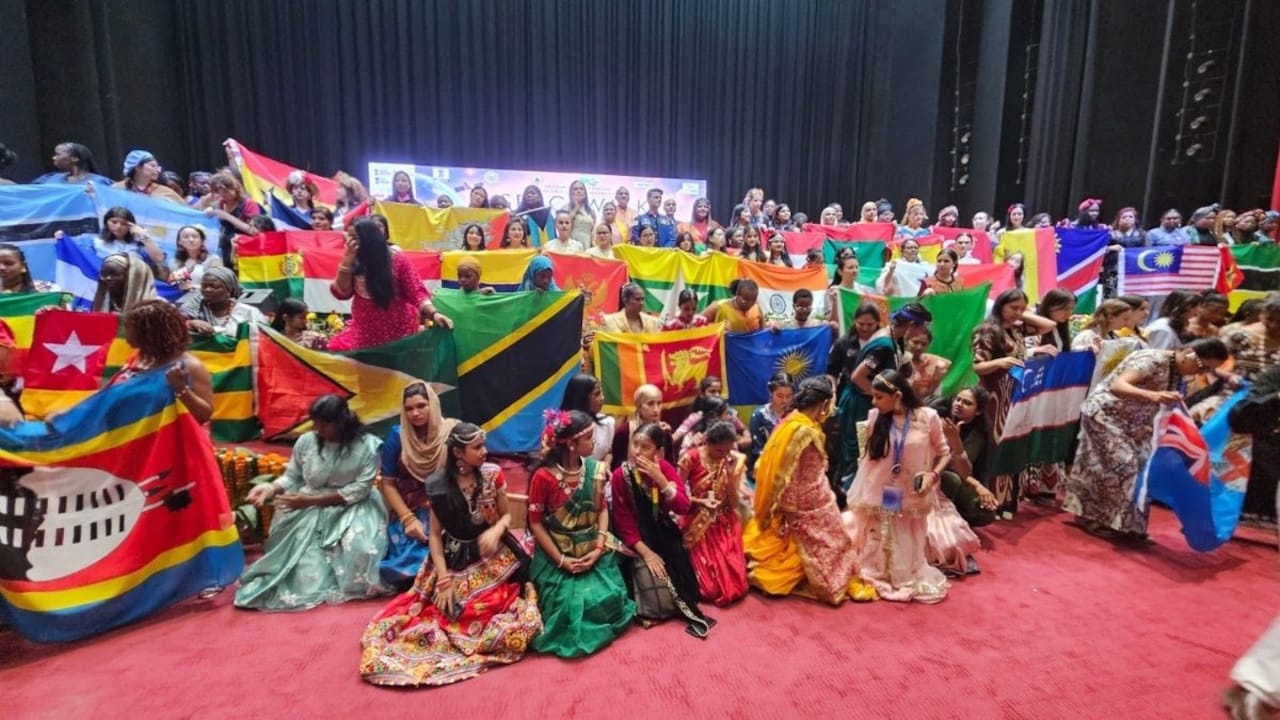
In a significant step for women in space science, schoolgirls from 108 countries have come together in Greater Noida to build ShaktiSat, a satellite designed and constructed by girls under the banner of Mission ShaktiSat. The initiative, led by Chennai-based Space Kidz India, aims to involve 12,000 girls from around the world in what could be one of the largest student-led space projects ever undertaken.
The project has the support of the Indian Space Research Organisation (ISRO), the Indian National Space Promotion and Authorisation Centre (INSPACe), and Gautam Buddha University, where the gathering took place. Girls from across Africa, Asia, Europe, the Americas, and Oceania participated in the event, learning and collaborating on satellite engineering, coding, electronics, and mission design.
Dr Srimathi Kesan, founder and CEO of Space Kidz India, explained the mission's ambition. "108 countries, 12,000 girls, mission to the moon is the objective of ShaktiSat," she said. The programme is designed to give girls hands-on experience in building real space hardware. While senior engineers provide technical guidance, the girls themselves are involved in constructing the engineering structures. "They have made the engineering structures which children can do. So yes, what they have made is going space and then to the moon," Dr Kesan said.
The roots of ShaktiSat go back to Space Kidz India's earlier satellite missions that involved girls. Inspired by the enthusiasm and the global challenges faced by women, Dr Kesan decided to expand the concept. "So I said, why not bring in everybody? These teams need to work together for the future. So bring everybody together, teach them basic space education until the launch," she said.
One of the mission's key dates is significant: Space Kidz India has requested an October 11 launch, which coincides with the International Day of the Girl Child. "If we can have the launch on October 11, being the International Girl Child Day, that is going to send a loud message from India to the world," Dr Kesan said.
The gathering also featured Group Captain Shubhanshu Shukla, the Indian astronaut who flew to the International Space Station as part of the Axiom-4 mission in 2025. Shukla interacted with the participants and highlighted the importance of collaboration. "The one thing that I realised is that space exploration is inherently very collaborative in nature. The value of teamwork is what I realised during my mission," he said.
He praised the girls for bringing together so many nations in a common scientific effort. "Girls from all these different countries are coming together to make a single payload and satellite that will be launched to space. I think it cannot get better than this," he said. Asked if schoolgirls could become future aerospace scientists, Shukla said, "I think absolutely anybody can make great aerospace scientists given the intent and the hard work that it requires." He also extended his compliments to the entire team of Space Kidz India and all the people associated with the programme, including "all the girls who are involved in it."
Mission ShaktiSat's long-term vision includes placing satellites in low Earth orbit for educational purposes and eventually contributing to a lunar mission. By involving thousands of girls in the process, the programme seeks to build a pool of skilled female engineers and scientists who can lead future space explorations.
The event at Gautam Buddha University stands as a demonstration of what international cooperation and youth participation can achieve. It sends a message that space is no longer the preserve of a few nations or genders, but a realm where every young person with curiosity and determination can contribute.







