From free seedlings to Rs 2.1 crore: How a Punjab nursery revolutionised vegetable farming
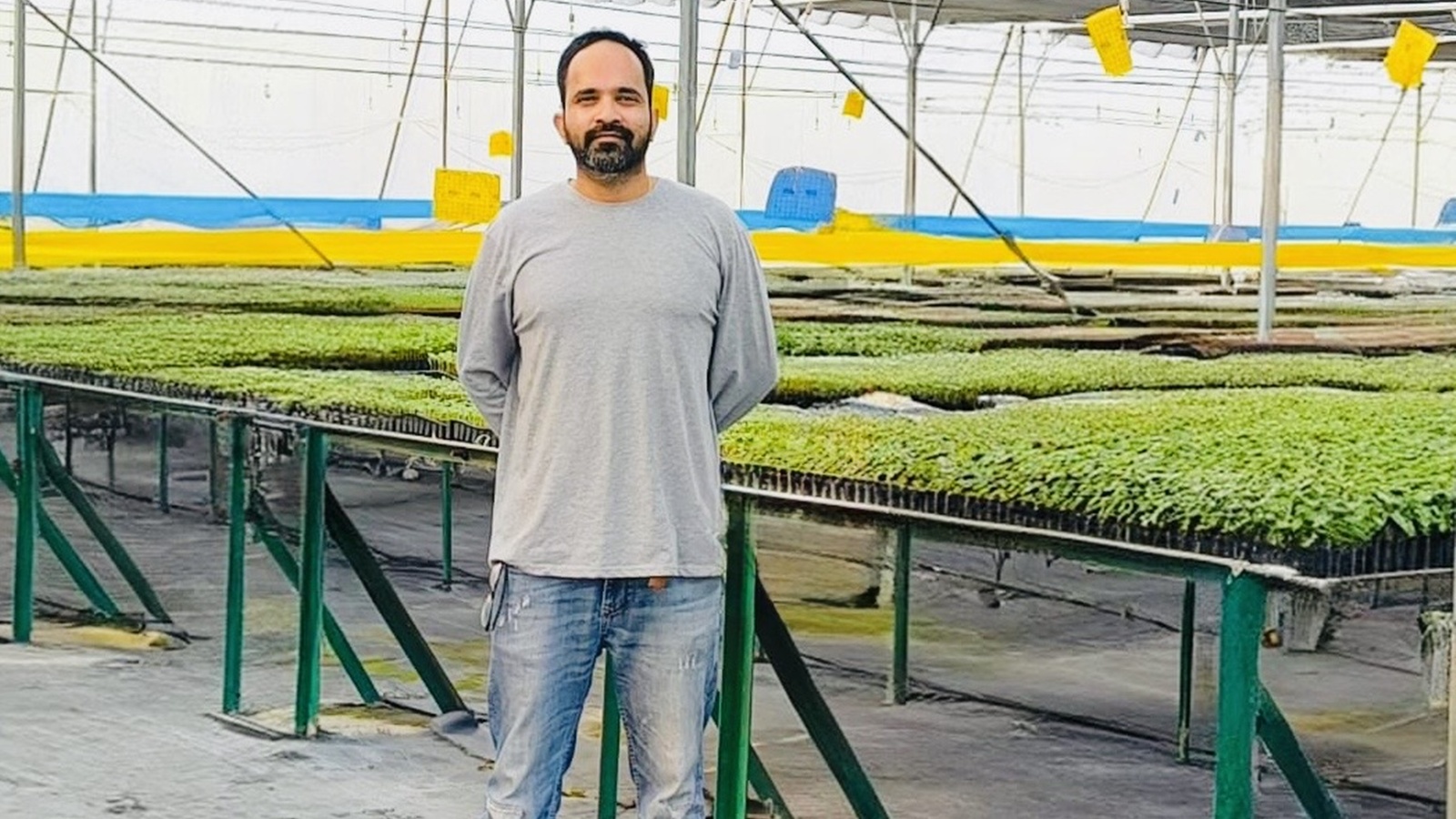
In 2021, Rajeev Bhaskar, a 34-year-old horticulture graduate, gave away nearly one lakh grafted vegetable seedlings free of cost across Punjab, Haryana and Himachal Pradesh. There were no customers, no revenue, and no guarantee that the experiment would succeed. His aim was not to sell but to convince sceptical farmers about a technology unfamiliar to them.
“Nobody would have believed in grafted vegetables simply because someone claimed they worked,” Bhaskar says. “Farmers had to see results in their own fields, and not a single farmer complained about the performance.”
Grafted seedlings are produced by joining the rootstock of a strong, disease-resistant plant with the scion of a high-yielding variety. Bhaskar sourced the seedlings from Raipur, Chhattisgarh, where the technology was already established. The exercise was never meant to generate revenue but to build trust.
The gamble paid off. Farmers reported healthier, pest-free crops, stronger plants and almost no incidence of destructive soil-borne diseases such as bacterial wilt. Word spread quickly, and those who had tried the free seedlings returned with larger orders.
“The rootstock provides disease resistance and tolerance to environmental stress, while the scion ensures superior yield and fruit quality,” Bhaskar explains.
Encouraged by the response, Bhaskar established Aruj Nursery, North India’s first specialised grafted vegetable nursery, at Sehjowal village in Rupnagar’s Nangal tehsil in 2022. He partnered with healthcare entrepreneur Dr BK Sharma and his son Ahsas Sharma, a technology professional. Bhaskar manages production and technical operations, while the Sharmas provided land and investment. Together they invested nearly Rs 1.30 crore in two naturally ventilated polyhouses covering about 3,000 square metres each and other facilities. Though eligible for a subsidy on the polyhouses, they are yet to receive it. Even so, they expect to recover their investment this year and begin making profits.
The first year proved difficult. The nursery produced only 50,000 grafted seedlings in 2022 and ended with a deficit of nearly Rs 18 lakh because of heavy infrastructure costs and limited farmer awareness.
Four years later, the picture changed dramatically. This year, the nursery has produced around 12 lakh grafted vegetable seedlings and expects a turnover of more than Rs 2.10 crore in 2026, up from Rs 1.60 crore in 2025, making it one of the fastest-growing specialised grafted vegetable nurseries in the region.
“The nursery was established to make grafting technology accessible to vegetable growers across North India by providing practical technical guidance to farmers,” Dr Sharma says.
Bhaskar’s journey began after completing his BSc in Horticulture from GB Pant University in 2013. He joined a multinational vegetable seed company in Chhattisgarh, where he worked until 2017 and received advanced training in vegetable grafting through programmes and visits to Kasetsart University in Thailand. He later conducted successful demonstrations of grafted vegetables in Punjab. Between 2018 and 2021, he worked in farming and horticulture consultancy, laying the foundation for the nursery.