Food, Fuel, Fertiliser, Finance: Jaishankar Flags '4F' Crisis at UN High-Level Week
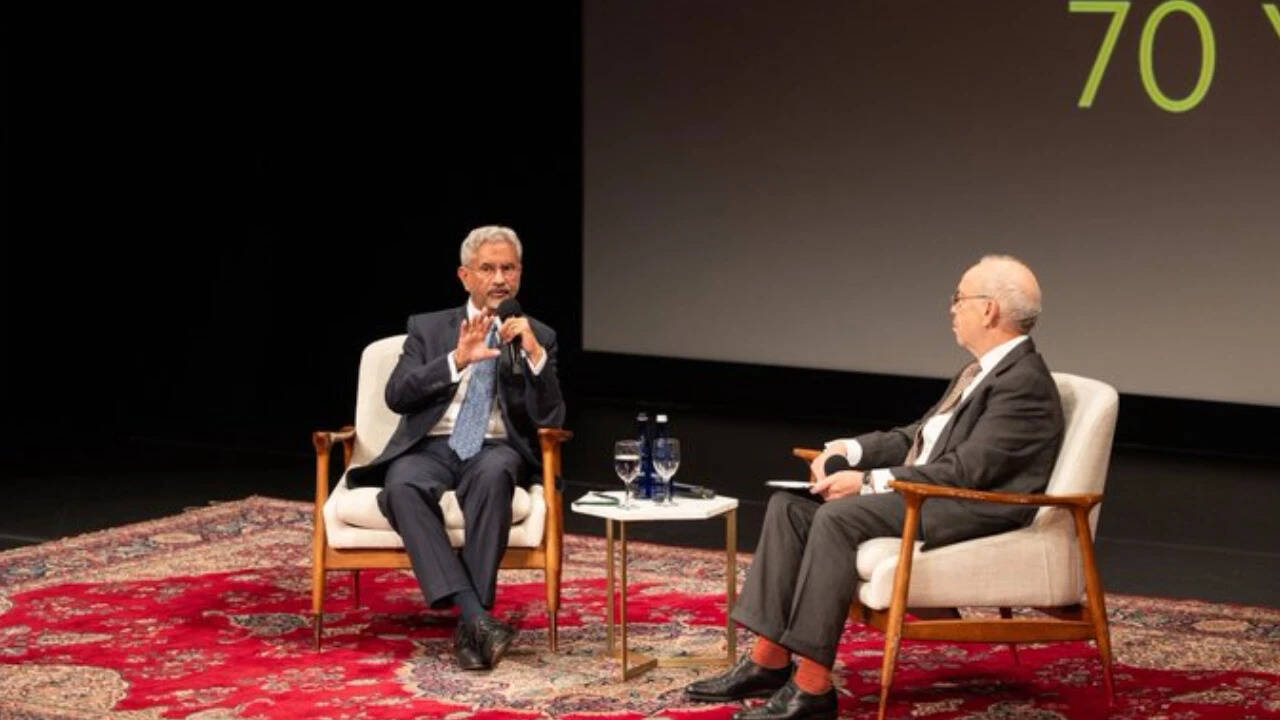
External Affairs Minister S. Jaishankar, speaking at the Asia Society at the conclusion of the UN High-Level Week in New York, painted a sober picture of a world grappling with multiple conflicts and what he called the “4F” crisis — food, fuel, fertiliser and finance.
In his remarks, Jaishankar said, “We have right now two major ongoing conflicts, each one of whom has a consequence for every country in the world. These are conflicts with enormous repercussions. On top of that, the situation in the Middle East or West Asia, as we call it, remains very difficult. In Africa, again, there are a number of conflicts, most notably Sudan, but others as well.”
He added that a large part of the world faces the 4F crisis, which he had also highlighted in his address to the UN General Assembly. “Food, or fuel, or fertilisers, or finance. On top of this, supply chain vulnerabilities are growing,” he said.
The minister did not name the two major conflicts in the quoted remarks. His comments came amid ongoing wars and crises that have dominated global attention, including the war in Ukraine, the conflict in Gaza, and the civil war in Sudan. Each has had far-reaching effects on energy and food supplies, inflation, and humanitarian needs.
Sharing highlights from his conversation on X, Jaishankar said the current global landscape was marked by a paradox of “obsessive competition and deep interdependence”. He said the “indivisibility” of the global landscape required a cohesive outlook and stressed the “inevitability of multipolarity”.
The UN High-Level Week is the annual gathering of world leaders at the United Nations General Assembly, where countries discuss peace and security, development, climate change and reform of global institutions. India has consistently used the platform to call for dialogue and diplomacy, reformed multilateralism, and greater attention to the concerns of the Global South.
The “4F” framework — food, fuel, fertiliser and finance — captures the interlinked pressures on developing countries. Rising food and energy prices, shortages of fertiliser, and tighter financial conditions have strained budgets and pushed many nations closer to debt distress. India has argued that these challenges require collective solutions, including supply chain diversification, climate finance, and reform of international financial institutions.
Jaishankar’s emphasis on multipolarity reflects India’s long-standing position that global governance must reflect current realities rather than the power structures of the past. New Delhi has sought to balance its strategic partnerships while advocating for a rules-based order, respect for sovereignty and territorial integrity, and peaceful resolution of disputes.
At the Asia Society event, his remarks underscored a central theme of India’s diplomatic messaging: that competition among major powers cannot obscure the deep connections that bind countries together. In a world of “obsessive competition and deep interdependence”, he suggested, no country can solve transnational challenges alone.
The minister’s comments also came as India continues to engage with both developed and developing nations on issues ranging from trade and technology to climate action and peacekeeping. By highlighting the 4F crisis and the conflicts in West Asia and Africa, Jaishankar placed the concerns of the Global South at the centre of the international agenda.
While the path ahead remains uncertain, his remarks signalled India’s intent to remain an active voice for dialogue, de-escalation and inclusive global governance at a time of mounting geopolitical strain.







