Flash floods, landslides kill 14 in J&K's Poonch, Rajouri; several missing
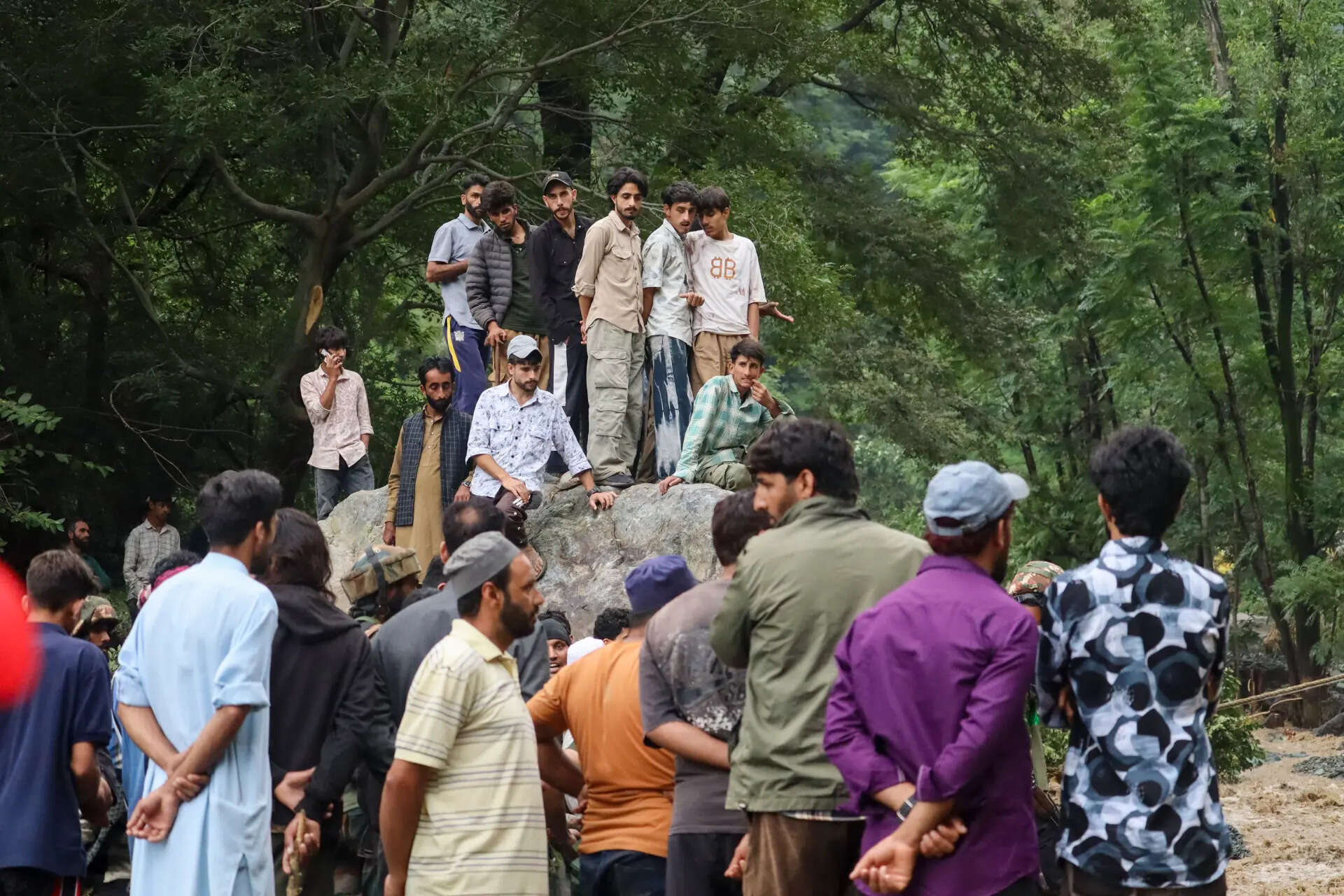
At least 14 people were killed and several others reported missing after torrential rain triggered flash floods and landslides in the Pir Panjal region of Jammu and Kashmir's Poonch and Rajouri districts on Sunday. Officials said the death toll may rise as rescue operations continue to search for those trapped under debris.
The worst-affected area was Lower Murrah in Surankote tehsil of Poonch, where eight members of a single family were swept away. Two bodies were recovered by evening, while search teams worked to locate the remaining six. The deceased included Noor Safia (59), her sons Sajad Ahmed (16), Haqnawaz Ahmed (10), and Shahnawaz Ahmed (10); Khalda Kouser (25) and her two-year-old son Sofian; Bano Bi (60); and Mohammad Akram (7). Four other deaths were reported from Sangla village, and one from nearby Sangalani. Nazia Kouser (28) died in Noona Bandi, and four injured persons were taken to Poonch district hospital.
Chief Minister Omar Abdullah cut short his stay in New Delhi and flew to Jammu to oversee relief operations. Lieutenant Governor Manoj Sinha reviewed rescue efforts and directed immediate assistance for affected families. “Affected families have been moved to safety. All departments are on high alert,” Sinha said. “I urge residents to stay calm and follow official updates. I am deeply saddened by the loss of lives.”
Rescue teams comprising police, Army, State Disaster Response Force (SDRF), civil administration, and local volunteers deployed in the worst-hit areas of Surankote, Haveli, and Mandi. The Army's White Knight Corps reported rescuing 11 civilians, including five children, from floodwaters. In Jammu city, rescue teams pulled three boys to safety near Peer Kho temple after the Tawi river swelled suddenly. In Rajouri, Army, police, and SDRF saved two boys stranded on the flooded Dhangri riverbank and nine others marooned in Thanamandi.
Heavy rain also disrupted traffic on the strategic Jammu-Srinagar National Highway 44, with authorities advising commuters to avoid vulnerable stretches. The annual Amarnath Yatra, which began on July 3, and pilgrimages to the Vaishno Devi shrine in Katra and Shiv Khori in Reasi were temporarily suspended after the India Meteorological Department forecast adverse weather for the next three days.
Authorities issued a flood alert across Jammu division after water levels surged in the Chenab and other rivers. Gates of the Salal hydroelectric project in Reasi remained open for a second day during reservoir flushing, sharply increasing discharge into the Chenab. Police in neighbouring Ramban also issued an advisory after gates of the Baglihar hydroelectric project were opened, raising river levels.
Former Chief Minister Ghulam Nabi Azad condoled the loss of lives and the widespread destruction. The state government has announced compensation for the families of the deceased and is coordinating with all agencies to ensure swift relief and restoration.


