DU clears foreign semester & direct PhD entry amid teachers' dissent
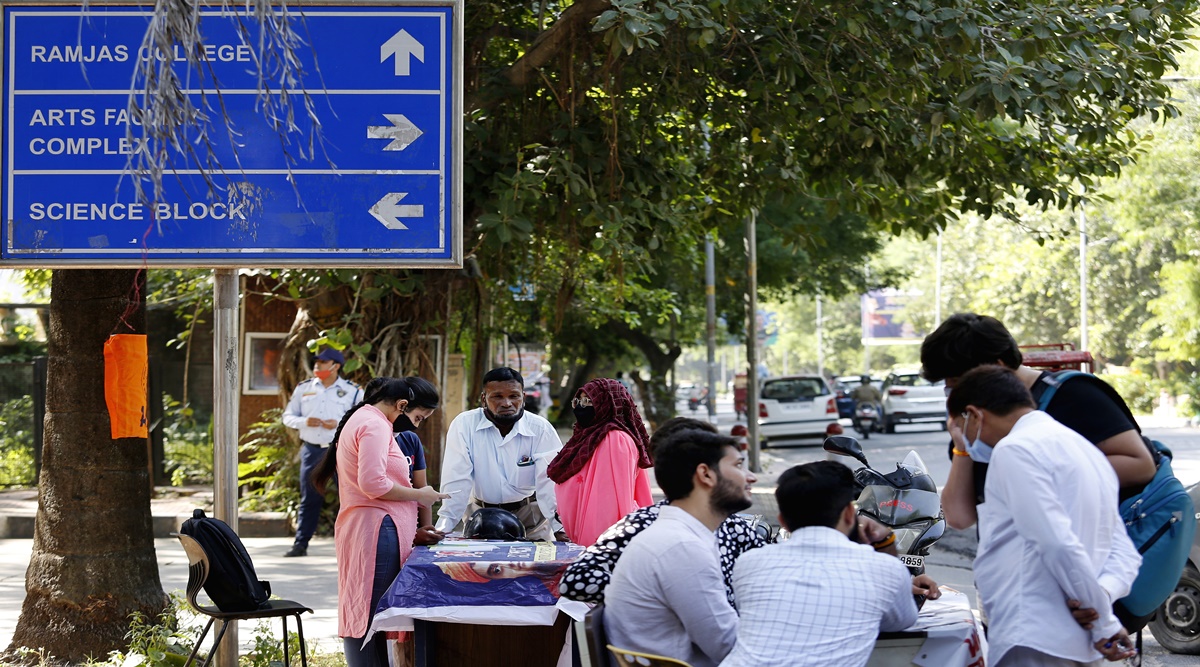
The Delhi University Executive Council (EC) on Thursday approved a Semester Away Programme (SAP) for undergraduate students in collaboration with foreign higher education institutions, and allowed direct admission to PhD programmes for students completing four-year undergraduate degrees. Both decisions were taken despite objections raised by elected council members.
The meeting, chaired by Vice Chancellor Prof Yogesh Singh, saw amendments to the PhD ordinance that now permit candidates with a minimum 7.5 CGPA and at least one publication listed in Scopus to pursue doctoral studies directly after a four-year undergraduate programme. The amended provisions do not require an entrance examination or an interview before the Departmental Research Committee.
Elected EC members Mithuraaj Dhusiya and Aman Kumar, representing the Indian National Teachers’ Congress (INTEC), submitted a formal dissent note. They questioned the academic preparedness of students entering PhD programmes directly from undergraduate studies, and highlighted the absence of any screening mechanism. The note argued that doctoral research demands specialised knowledge and that identifying a viable research topic generally requires advanced study in a discipline.
The dissent note also cited concerns raised by teachers over the “unrealistic nature” of expected research outcomes in the fourth year of undergraduate study. It warned of possible gaps in students’ fundamental understanding of their subjects. Allowing such students to directly enter PhD programmes could create a “misleading illusion of academic competence” and dilute the value of postgraduate programmes, the note said.
In addition, the members pointed out that the amended ordinance lacks provisions for changing supervisors during the PhD programme, including who would appoint an alternative supervisor and ensure timely completion of the doctorate.
The Executive Council also approved the Semester Away Programme, proposed under the Undergraduate Curriculum Framework (UGCF)-2022. This scheme allows undergraduate students to spend a semester at a foreign higher education institution. The proposal had earlier been considered by the university and discussed by the Academic Council.
The elected members raised concerns that the SAP could undermine the value of DU’s own degree programmes and lead to the “devaluing” of coursework and courses offered by the university. Their dissent note said differences between the version of the SAP proposal approved earlier by the EC and the latest version were “not clearly marked”, and the rationale for the changes was not explained.
Financial implications were also flagged. Participants would have to pay the fees applicable at the host foreign institution in addition to their regular DU fees. “In the name of ‘choice’ through ‘Semester Away Programme’, students are being lured into buying credits from foreign campuses,” the dissent note said. The members argued that the programme could be accessible mainly to students who can afford additional tuition, travel and living expenses, potentially contributing to the “further privatisation” of higher education.
The proposal, however, allows students to apply for external or institutional scholarships and mobility grants before leaving for the host institution. Financial assistance from DU or its colleges may also be provided on a need-cum-merit basis, subject to availability of funds.
The Executive Council also approved DU’s annual accounts for 2025-26, along with the accounts of its halls and hostels, Provident Fund and National Pension System. It approved recommendations on pay protection for teachers who had previously served in ad hoc or temporary positions and were later appointed on a regular basis through due process. Under the approved provisions, eligible teachers appointed through open recruitment and properly constituted selection committees at DU or similarly funded institutions will benefit.