Digital Bank Records to Be Legal Evidence as Rajya Sabha Passes Bill
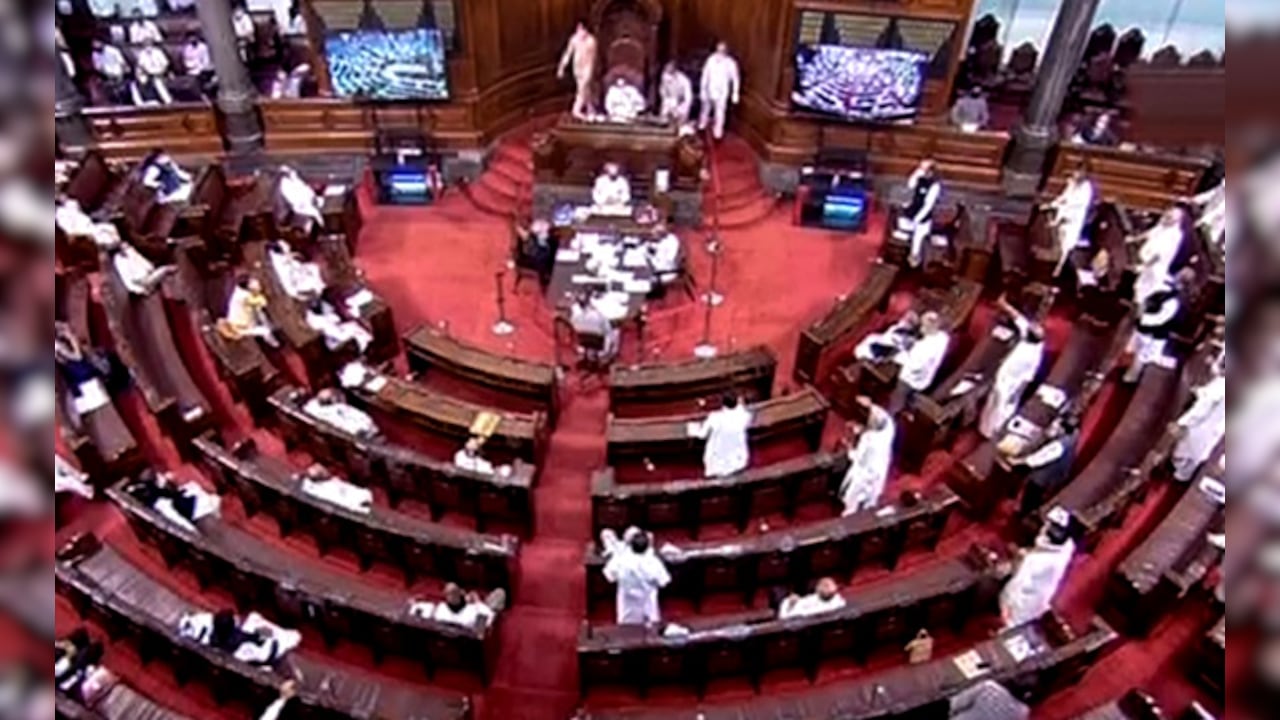
The Rajya Sabha on Monday passed the Bankers' Books Evidence Bill, 2026, by a voice vote, paving the way for digital bank records to be recognised as admissible evidence in legal proceedings. The passage came after Opposition members walked out before a detailed discussion could take place.
The Bill, which replaces the 135-year-old Bankers' Books Evidence Act of 1891, was already approved by the Lok Sabha. It aims to align the legal framework governing financial evidence with contemporary digital banking practices.
Earlier in the day, the House faced multiple adjournments due to protests by Opposition members. When the House reassembled, Vice-Chairman Harivansh Narayan Singh called upon Union Finance Minister Nirmala Sitharaman to move the Bill for consideration. As soon as the Bill was tabled, Opposition members continued raising slogans, leading to a heated exchange with the Vice-Chairman.
The Vice-Chairman told Leader of Opposition Mallikarjun Kharge that he would be allowed to speak under the rules if he confined his remarks to the Bill. Kharge raised his voice, but his words were drowned out in the din. Subsequently, the Vice-Chairman urged members to stick to the subject and called upon several speakers from various parties, including the AITC, BJP, BJD, YSRCP, NCP, TDP, VRS, DMDK, AIADMK, and Shiv Sena.
Explaining the need for the legislation, Finance Minister Nirmala Sitharaman said the original 1891 law was enacted when banking records were maintained predominantly in physical form. Its primary purpose was to allow certified copies of bank records to be used as evidence in court, saving bank officials the trouble of producing original ledgers. With the rapid growth of digital banking, records are now created, stored, and maintained using modern technology.
Sitharaman said the new Bill has been introduced to protect "full privacy and safeguards" while modernising the legal framework. She emphasised that the government found it necessary to update the law to keep pace with technological advancements in the banking sector.
Members who spoke on the Bill welcomed the long-overdue technological update. They also discussed data privacy and security measures in the new law, underscoring the need to strike a balance between evidentiary value and individual privacy rights.
The Bill is now expected to receive the President's assent before becoming law. Once enacted, it will significantly simplify the process of presenting digital bank records as evidence in courts, reducing reliance on physical documents and expediting legal proceedings involving banking matters.
The legislation marks a major step in modernising India's financial legal framework, reflecting the shift towards a digital economy. Legal experts have noted that the change will reduce paperwork and make the judicial process more efficient, particularly in cases related to financial fraud, loan defaults, and banking disputes.