Delhi University’s New PG History Syllabus Drops Delhi Sultanate Paper, 22 Electives Omitted
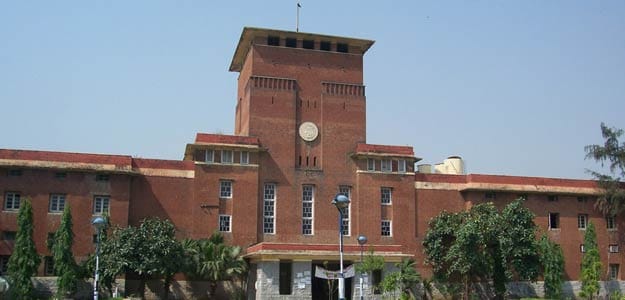
New Delhi: The University of Delhi has removed a specialised postgraduate paper on the Delhi Sultanate from its newly notified History syllabus, according to a report. The paper, titled “The Delhi Sultanate: Structures of Authority in Medieval North India (13th-14th Centuries),” was earlier taught in Semester III of the MA History programme.
The course examined the formation of the medieval state, structures of political authority, and the exercise of power in medieval North India. It also explored political, religious, and cultural developments of the 13th and 14th centuries. For decades, the paper served as a core component of the Medieval India specialisation at the postgraduate level.
A History professor cited in the report clarified that the postgraduate paper was not comparable to the undergraduate Delhi Sultanate module. The undergraduate course, the professor said, functions as a broad survey of Indian history, whereas the postgraduate paper involved a focused thematic and historical study of the period. A similar distinction applies to another omitted paper, “History of North India, c. 1400-1550,” which has also been dropped from the Semester III list.
The syllabus changes go beyond medieval history. Other papers missing from the final Semester III syllabus include “Gender and Women in Early India: 1500 BCE to 1000 CE,” “Political Processes and Structure of Polities in Ancient India,” and “Religion and Society in Ancient Indian Literature.”
According to the report, the History Department proposed 38 Discipline Specific Elective (DSE) papers, but only 16 were included in the final notified syllabus. This leaves 22 proposed DSE papers outside the official notification. Several of these remain listed in university records as “Under Discussion” or “Undiscussed.” The final syllabus notification was issued on August 7.
The revised postgraduate programme is based on the Postgraduate Curriculum Framework 2024 under the National Education Policy (NEP) 2020. It will take effect from July 2026, the university document confirms.
The Delhi Sultanate period, spanning roughly 1206 to 1526 CE, was a formative era in Indian history. It saw the establishment of a series of dynasties — including the Slave, Khilji, Tughlaq, Sayyid, and Lodi — and shaped administrative, architectural, and cultural traditions in the subcontinent. The removal of a dedicated postgraduate paper on this period has drawn attention from academics and students, particularly given the paper’s long presence in the curriculum.
However, experts note that syllabus revision is a routine academic exercise. Under NEP 2020, universities are restructuring programmes to introduce flexibility and multidisciplinary learning. The omission of specific papers does not necessarily mean the subject is being excluded entirely from the curriculum; it may be covered within broader courses or offered as optional modules in later semesters.
The university has not yet issued a public statement on the specific reasons for the omissions. The report’s findings highlight a broader trend of curriculum rationalisation, where departments must select from a larger set of proposed electives due to constraints in faculty, resources, or academic priorities.
Students and faculty are likely to watch how the remaining syllabus unfolds, especially whether the omitted topics are incorporated into other papers or offered as future electives. For now, the revised syllabus stands as notified, with implementation scheduled for the 2026-27 academic session.







