Delhi Schools Told to Form Anti-Tobacco Committees, Hold Monthly Awareness Sessions
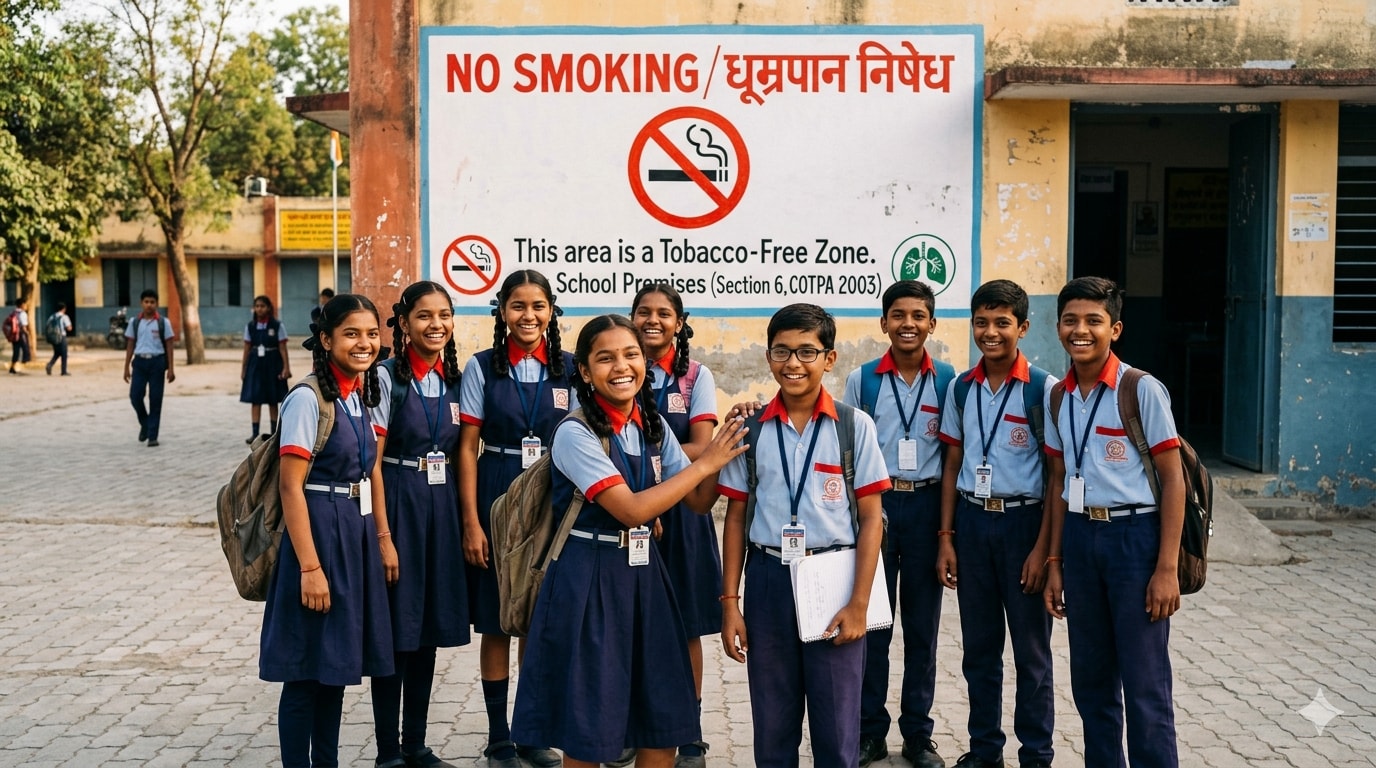
The Delhi Directorate of Education has directed all government, government-aided and recognised private unaided schools in the national capital to take concrete steps to prevent tobacco use and substance abuse on their campuses.
Under the directions, issued through a circular by the department's Educational and Vocational Guidance and Counselling Bureau, schools must form anti-tobacco committees, organise regular awareness programmes for students and follow a standard operating procedure (SOP) aimed at creating drug-free campuses. The instructions form part of the Nasha Mukt Bharat Abhiyaan and the Nasha Mukt Delhi campaign.
The initiative aims to spread awareness, identify substance abuse at an early stage and provide counselling and support to students who need it.
How the committees will work
Every school will have to form or strengthen an Institution Level Task Force (ITF), also referred to as an Anti-Tobacco Committee, under the leadership of the principal or head of the school. The panel will include a nodal teacher or Prahari Club in-charge, a Health and Wellness Ambassador, a School Management Committee member, a student representative and a local police representative. It will be responsible for planning and monitoring activities to prevent tobacco use and substance abuse.
Schools have also been asked to strengthen their Prahari Clubs, which will function as school-level Nasha Mukt Delhi Clubs and organise regular awareness and prevention activities.
Monthly sessions for Classes 6 to 12
According to the SOP, schools must organise life skills education and awareness sessions for students of Classes 6 to 12 under the NAVCHETNA Life Skills Module. These sessions are to be held between the 15th and 17th of every month, conducted by teachers trained during the 2025-26 academic session.
Schools will also hold awareness and sensitisation programmes for teachers and parents at least twice in each academic session, preferably in August and January. These sessions will focus on preventing substance abuse, recognising early signs and informing participants about available support services.
Referrals with confidentiality
The directions require schools to set up a referral system for students suspected of, or identified as, using tobacco or other substances. Such students should be referred to healthcare professionals, mental health experts or de-addiction services, depending on their needs. The process must protect students' confidentiality and ensure that they are not stigmatised or discriminated against.
Schools have also been told to follow the Narcotic Drugs and Psychotropic Substances (NDPS) Act, 1985, and the Cigarettes and Other Tobacco Products Act, 2003, along with other applicable government guidelines.
Records and monthly reporting
Schools will maintain records of committee meetings, Prahari Club activities, awareness programmes, life skills sessions, student referrals and participation. They must submit an implementation checklist to the concerned district authorities every month.
At the district level, monitoring committees headed by the Deputy Director of Education (District) will oversee implementation of the SOP. These committees will conduct random inspections, review compliance reports, monitor school activities and ensure that information is regularly updated on the Nasha Mukt Vidyalaya portal.
Why schools are central to the effort
Public health bodies, including the World Health Organization, have long noted that most tobacco users begin using tobacco during adolescence, which is why school-based prevention programmes are widely recommended. Existing law already places specific obligations on institutions: the Cigarettes and Other Tobacco Products Act bars the sale of tobacco products to persons under 18 and within 100 yards of educational institutions.
The new circular shifts the focus from prohibition alone to early identification and support. By combining student committees, teacher training, parent sessions and a confidential referral route, the SOP seeks to ensure that a young person found using tobacco or other substances is guided towards help rather than punished or shamed.
The effectiveness of the plan will depend on how consistently schools hold the monthly sessions, how well the referral system protects privacy, and whether district inspections translate into timely support rather than paperwork.