Crude Words, Real Consequences: FIR Over PM Remarks Sparks Free Speech Debate
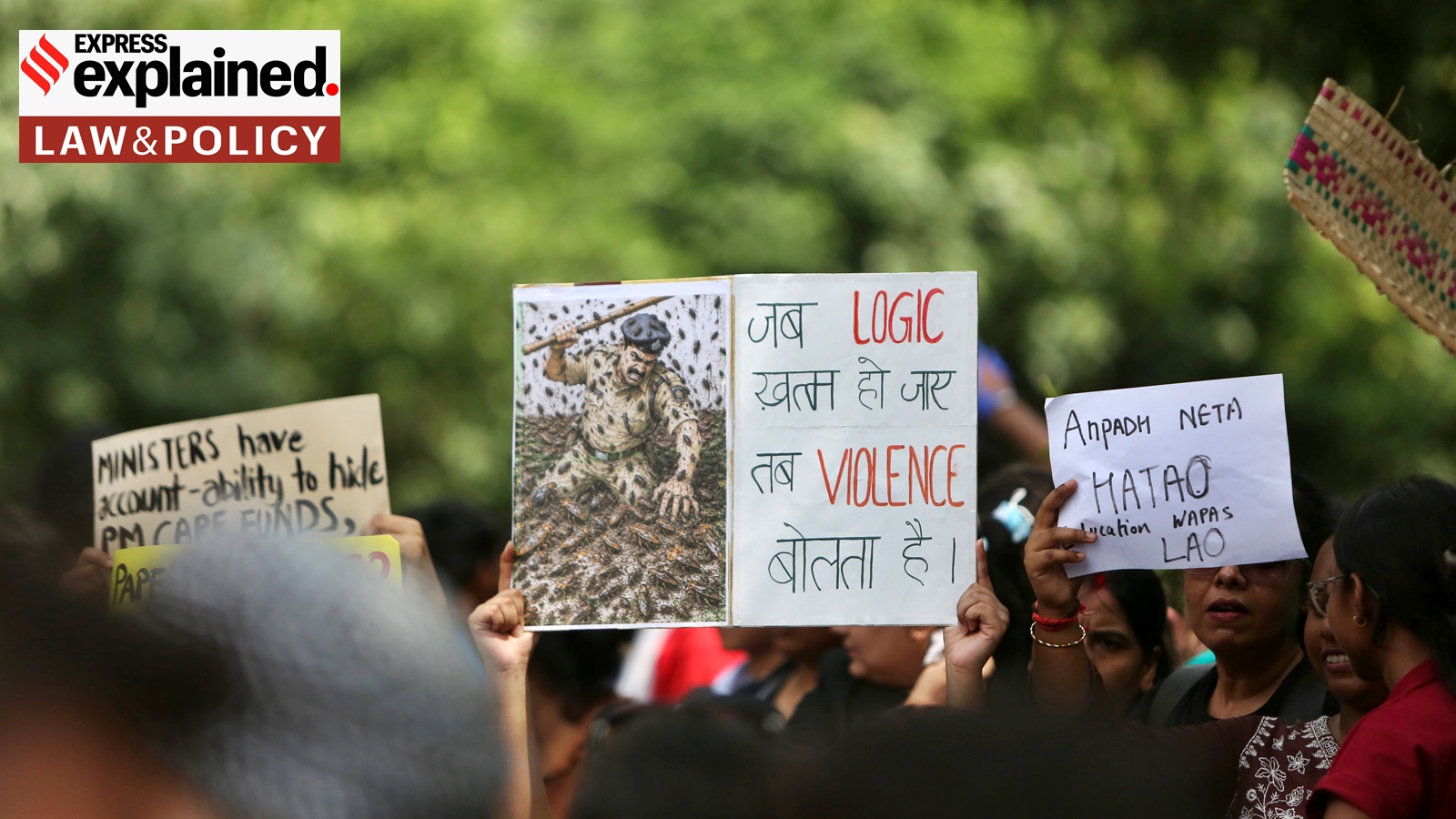
On July 29, Noida Police registered a Zero FIR against 25-year-old Ruchika Singh for remarks made about Prime Minister Narendra Modi during a protest at Delhi’s Jantar Mantar. The FIR invokes Sections 352, 353(1) and 356(1) of the Bharatiya Nyaya Sanhita (BNS), which cover insult, public mischief and defamation.
The case has reopened a longstanding legal and social question: is crude language a crime in India? The answer, under current law, is nuanced and has evolved considerably over the decades.
The provision most commonly used in such disputes is Section 296 of the BNS (formerly Section 294 of the Indian Penal Code). It punishes anyone who, “to the annoyance of others,” performs an obscene act in a public place, or sings, recites or utters any obscene song, ballad or words in or near a public place. The maximum punishment is three months in jail.
While this is often the default charge for loud or crude public behaviour, the legal meaning of “obscene” is narrow. Courts have repeatedly held that not every vulgar or offensive expression qualifies as obscenity under the law.
The legal test for obscenity in India was first established in the 1965 landmark case Ranjit D. Udeshi v. State of Maharashtra. The Supreme Court upheld the ban on D.H. Lawrence’s novel Lady Chatterley’s Lover and the constitutionality of Section 292 of the IPC, which criminalises the sale of obscene books. The court adopted the 1868 English Hicklin test, which asked whether isolated passages could corrupt the most vulnerable reader. Under this standard, the novel was found obscene.
For decades, Indian courts continued to apply this archaic test, even after England had moved away from it. A shift came in 2006 in the case Doordarshan v. Anand Patwardhan, where the Supreme Court allowed the telecast of a documentary that the state broadcaster had refused to air due to its adult certification. The court held that obscenity must be judged by viewing a work as a whole, from the perspective of an average, healthy viewer, not by isolating scenes.
The test changed more substantially in 2014 in Aveek Sarkar v. State of West Bengal. The Supreme Court formally discarded the Hicklin test and adopted a “community standards” test. It held that material is obscene only if it “tends to arouse sexual feelings, judged by an average person applying contemporary standards.” The court clarified that only sex-related material with a tendency to excite lustful thoughts can be considered obscene.
Legal scholar Gautam Bhatia has raised concerns about the “community standards” formulation, which was borrowed from the American case Roth v. United States (1957). Bhatia noted that Roth prescribed a three-part test, including patent offensiveness and absence of redeeming social value, but the Supreme Court adopted only the first prong. He argued this approach risks allowing majority sensibility to decide what is decent in a deeply plural country.
In 2024, the Supreme Court addressed the distinction between vulgarity and obscenity in a case involving the web series College Romance. A petition had sought a ban on an episode containing expletives, arguing the content was obscene. The court quashed the FIR, holding that vulgarity and profanity are not, by themselves, the same as obscenity. The court stated that while the literal meaning of certain terms may be sexual in nature, their usage does not necessarily arouse sexual feelings, which is the legal threshold for obscenity.
The case of Ruchika Singh now raises deeper questions about the limits of free speech when it comes to remarks about public figures. Freedom of expression is a constitutional right, but it is not absolute. The challenge for courts is to balance the dignity of individuals, including leaders, with the right to dissent and criticise. The Supreme Court has consistently held that criticism, even harsh or offensive language, is protected unless it crosses the line into obscenity, defamation or incitement to violence.
In a democracy, the language of protest is often raw and unfiltered. Whether that language should attract criminal penalties is a matter that the judiciary will ultimately decide. The outcome will have significant implications for the space available for public dissent in India.