Crop Damage No Ground to Block Elephant Corridors, Supreme Court Rules
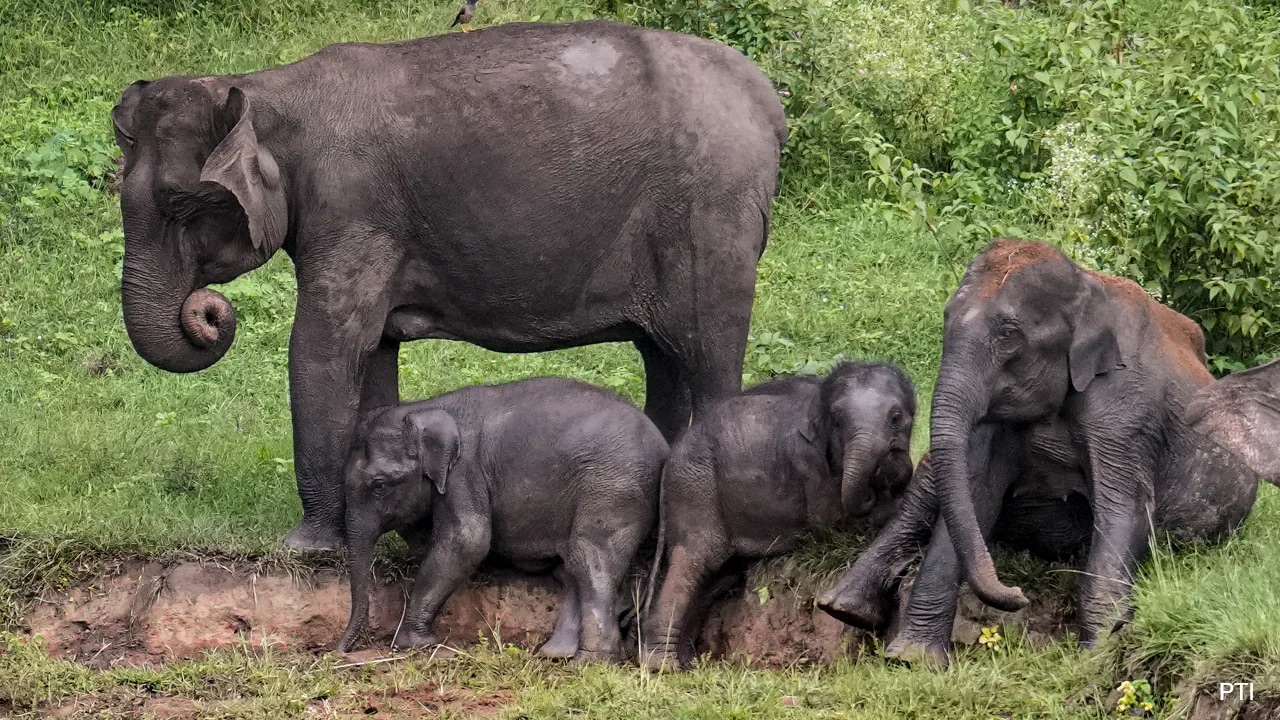
The Supreme Court has ruled that crop damage cannot be cited as a reason to block elephant corridors, underscoring the need to protect the natural movement of wildlife. The court directed the Union Environment Ministry to carry out a fresh survey of elephant corridors across the country and submit a comprehensive status report.
Hearing the matter, the court observed that elephant herds travel long distances and require uninterrupted routes between habitats. Conservation priorities cannot be set aside because of local issues, it said. "We are very clear that there cannot be obstacles in the way of wildlife. Elephant herds have a practice of travelling long distances. No State can say that just because crops are getting destroyed, there have to be obstacles in their path," the court said.
The court was informed that the Ministry of Environment, Forest and Climate Change has issued mandatory guidelines to ensure the smooth movement of elephants through designated corridors. However, several corridors have been impeded or blocked because of local factors.
Taking note of these concerns, the court in its order said, "We have been informed that there are mandatory guidelines issued by the Ministry of Environment, Forest and Climate Change to ensure seamless and unobstructed elephant corridors passing through different States. However, owing to certain local factors, the elephant corridors have been impeded, blocked or obstructed."
The order directs the Union of India and the concerned ministry to conduct a fresh survey and submit a comprehensive report, including the initiatives and steps taken to prevent such obstructions. The status report must also point out the position on the use of firearms or any other coercive action against elephants.
During the hearing, counsel pointed to instances where elephants are chased by groups of people, describing such actions as a "mob-like situation" that often worsens the conflict. "They are chased in a very mob-like situation, which in fact exacerbates the situation, aggravates the situation," counsel said. The court was also urged to ban "hulla parties" – groups that use noise and intimidation to drive elephants away – and to prevent the use of firearms.
"Steps have to be taken to prevent use of firearms against the natural movement of the elephants. Especially, ban on hulla parties, etc., is required in this regard," counsel submitted. The court responded that necessary measures should be taken and it should be apprised of them through the status report.
Elephant corridors are critical to elephant conservation in India. They connect natural habitats that have become fragmented due to human activities and development. Corridors allow elephants to move safely between habitats, helping maintain healthy and genetically diverse populations. They also reduce the chances of human-elephant conflict and support the long-term survival of elephant populations by preserving ecological connectivity.
Under Project Elephant, the government has identified and validated elephant corridors across 14 elephant-range states. According to the report "Elephant Corridors of India, 2023", prepared with technical support from the Wildlife Institute of India, the country has elephant corridors spread across four regions.