Congress MP Manish Tewari Calls for Parliamentary Debate on New Anti-Defection Law After TMC, Shiv Sena Splits
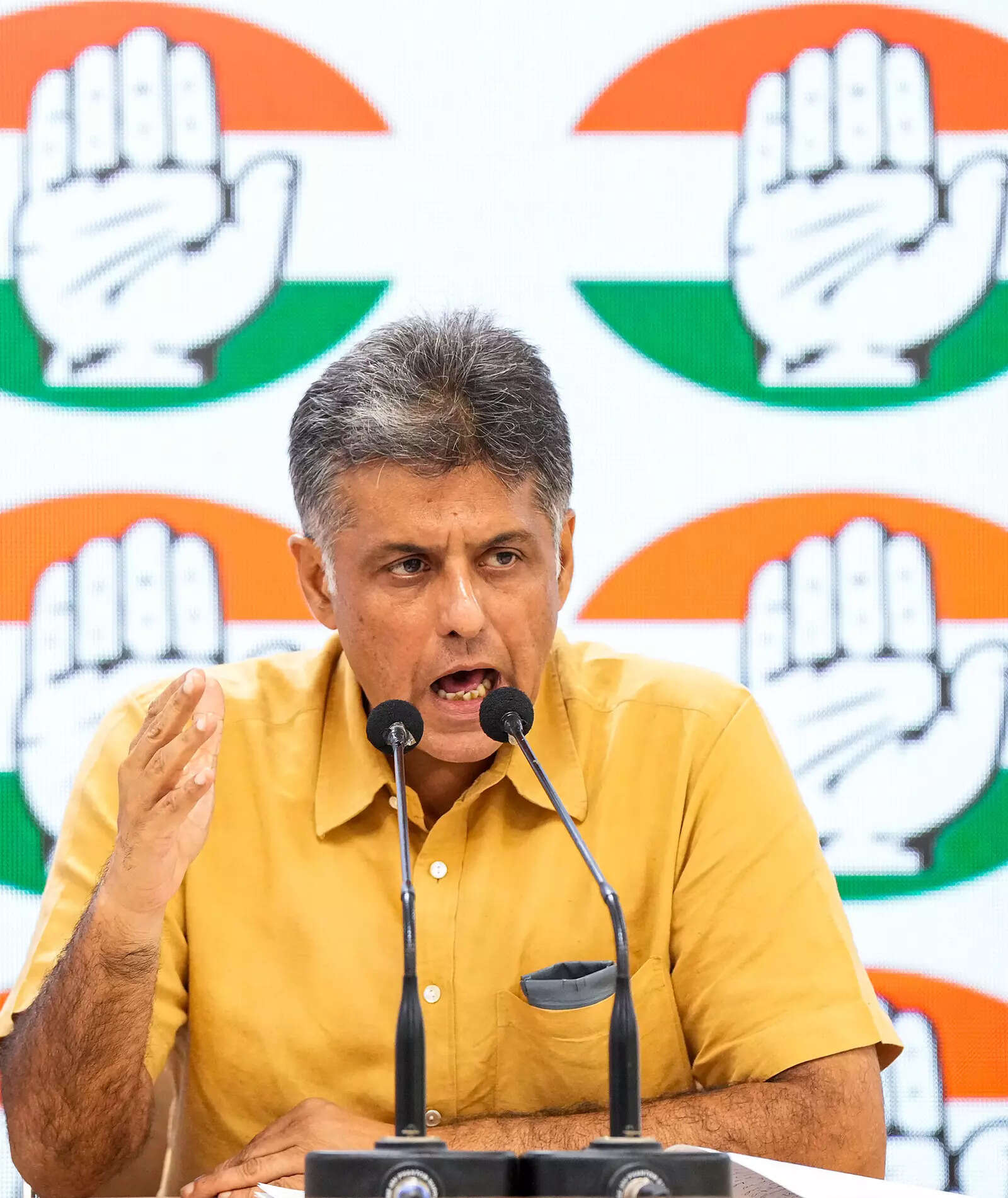
New Delhi, March 31: Congress Member of Parliament Manish Tewari has urged Parliament to deliberate on the need for a new anti-defection law, following recent splits in the Trinamool Congress (TMC) and Shiv Sena (UBT). Speaking to reporters on Friday, Tewari said the current provisions under the Tenth Schedule of the Constitution have proven inadequate in preventing political defections, and a comprehensive discussion is warranted.
The TMC recently saw a faction break away, while the Shiv Sena (UBT) has been grappling with internal divisions that led to a split earlier this year. These events, according to Tewari, highlight the loopholes in the existing anti-defection framework, which was enacted in 1985 to curb the practice of legislators changing parties for personal or political gain.
“The anti-defection law, as it stands, has certain grey areas. Parties are able to engineer splits by claiming a merger, which is exempt under the law if two-thirds of the members agree. This has been exploited. Parliament should discuss whether a more robust law is needed to uphold democratic principles,” Tewari said.
The Congress leader emphasized that the issue is not about targeting any particular party but about strengthening India’s democratic institutions. He suggested that a parliamentary committee could examine the matter and recommend amendments. Tewari’s remarks come at a time when the political landscape has seen multiple defections and counter-defections, raising questions about the stability of elected governments.
The anti-defection law, embedded in the Tenth Schedule of the Constitution, was introduced by the Rajiv Gandhi government to check political horse-trading. However, critics argue that it has been misused to silence dissent within parties and that the merger exemption has become a tool for orchestrated splits. Legal experts have also pointed out that the law does not clearly define what constitutes a “split” versus a “defection,” leading to protracted adjudication by the Speaker or the Chairman of the House.
Tewari’s proposal has elicited mixed reactions. While some opposition parties have expressed support for revisiting the law, ruling party members have dismissed it as a distraction. However, Tewari maintained that the matter transcends party lines. “This is not a Congress versus BJP issue. It is about the health of our parliamentary democracy. We owe it to the people to ensure that their elected representatives remain accountable and do not switch sides for personal gain,” he said.
The discussion is likely to gain traction in the upcoming session of Parliament, with several leaders indicating interest in the subject. Whether it leads to legislative action remains to be seen, but Tewari’s statement has reopened a crucial debate on political ethics and governance.


