Colombia bans FGM: A mother’s trauma and a historic law for Latin America
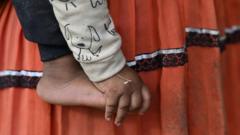
Colombia has become the first country in Latin America to criminalise female genital mutilation (FGM), a move activists have described as a milestone in the global fight against the practice. The bill was passed unanimously in Colombia's Congress, following years of advocacy and a persistent effort to bring the hidden procedure into the open.
FGM involves the partial or total removal of external female genitalia for non-medical reasons. It is recognised internationally as a violation of human rights and can cause severe pain, infection, long-term health problems, and even death. The practice is often rooted in cultural beliefs and carried out in secret, making it difficult to track and eliminate.
The new law makes FGM a criminal offence in Colombia, imposing penalties on those who perform or facilitate the procedure. While the legislation is a significant step, campaigners caution that enforcement and community education will be essential to protect vulnerable girls, especially in indigenous communities where the practice has historically been reported.
The urgency of such measures is illustrated by the experience of Carla Quiñonez, a mother whose daughter was subjected to FGM at the age of six months. Quiñonez, who asked not to be identified by her real name, said her daughter’s great-grandmother performed the procedure while the baby was in her care. When the infant was returned, she had a fever, swelling, and bleeding, and cried incessantly.
“I confronted my grandmother, but she said it was normal and that I could not tell anyone,” Quiñonez told the BBC, which documented her story as part of its reporting on the Colombian law. The nearest health centre was far away, so Quiñonez’s mother, a midwife, resorted to medicinal plants to ease the baby’s pain. She also challenged the great-grandmother, but the older woman defended the practice, saying that men mock women who have a clitoris.
The personal account highlights the deep cultural entrenchment of FGM and the secrecy that surrounds it. In many societies, the practice is linked to notions of purity, modesty, and marriageability, and is often enforced by older women who see themselves as guardians of tradition. Yet the physical and psychological harm is profound and lasting.
Colombia’s move places it at the forefront of regional action. Until now, no Latin American country had a specific law against FGM, despite reports of the practice occurring in some indigenous and Afro-descendant communities. The unanimous vote in Congress sends a strong signal that such customs, however deeply held, cannot override the rights and well-being of girls.
Globally, FGM remains a serious concern. According to the World Health Organization, more than 200 million girls and women alive today have undergone the procedure, predominantly in Africa, the Middle East, and Asia. Some countries have enacted laws, but enforcement remains inconsistent. In Europe and North America, diaspora communities have faced legal scrutiny and prevention efforts.
Activists in Colombia have stressed that the new law must be accompanied by awareness campaigns and support services for survivors. Legal prohibition alone is not enough, they argue, because many families continue to practise FGM in secret, often with no reliable data on its prevalence. The law also sends a message to survivors that their suffering is acknowledged and that justice is possible.
For Quiñonez, the legislation offers a measure of vindication. She has struggled with guilt and anger over what happened to her daughter, but she hopes the law will protect other children. “No girl should have to go through what my baby went through,” she said. Her story underscores why Colombia’s unanimous vote is more than a symbolic gesture—it is a necessary legal tool in a long and difficult battle.
As the first country in Latin America to criminalise FGM, Colombia now faces the task of making the law meaningful. This will require training for health workers, reporting mechanisms, and a willingness to confront deeply held cultural norms. But the passage of the law itself marks an turning point, affirming that the safety and dignity of girls cannot be subject to tradition.