China's biggest EV recall: 4 million cars over hidden door handle risk
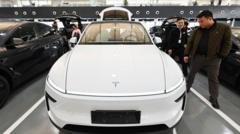
China has ordered the recall of more than four million electric vehicles (EVs) over safety concerns related to hidden door handles, in what is being described as the country's largest automotive recall to date. The move affects nearly three million Chinese-made Teslas, along with vehicles from domestic manufacturers XPeng, Xiaomi and Geely.
The recall follows growing scrutiny of flush, minimalistic door handles that have become a signature design feature of many modern EVs. While the sleek look has been widely adopted by automakers, safety experts and regulators have raised concerns that these handles can be difficult to locate and operate during emergencies, particularly after a collision causes a loss of electrical power.
Tesla announced on Friday that it is recalling certain Model 3, Model Y, Model S and Model X vehicles because the exterior door handles are "difficult to identify and operate due to their colour being similar to the interior trim." In a statement, the company said that in extreme situations, such as a severe collision causing the vehicle's low-voltage system to fail, this could hinder occupants from quickly opening the doors to escape and impede rescue efforts by those outside the vehicle, posing a safety hazard.
As part of the recall, warning labels will be placed on the interior door panels of the affected vehicles. Tesla will also issue a software update designed to automatically lower the windows after a collision, providing an alternative exit route. However, industry analysts have described these measures as more of a "band-aid" than a lasting solution to the underlying design issue.
The recall comes after two fatal crashes in China involving Xiaomi EVs, in which power failures were suspected to have prevented doors from being opened. These incidents have intensified public concern over the safety of hidden door handles, which are often flush with the car's body and protrude only when activated electronically.
In February, Chinese authorities announced a ban on hidden door handles in future vehicles. Under new rules scheduled to take effect on 1 January 2027, cars sold in China will be required to have a mechanical release mechanism on both the inside and outside of their doors, ensuring that occupants and rescuers can open the doors even without electrical power.
The design trend originated with Tesla's Model S sedan in 2014, and Chinese brands were quick to adopt the look, according to Tu Le, managing director of consultancy Sino Auto Insights. The use of similar handles has "snowballed" across the industry as automakers sought to emulate Tesla's sleek aesthetic, he said.
The issue has also drawn attention from safety regulators outside China. In the United States, Tesla's door handles have been the subject of a probe by the National Highway Traffic Safety Administration (NHTSA) after reports that they suddenly stopped working, leaving children trapped inside vehicles. In July, the NHTSA suggested creating a new formal safety standard for all carmakers and told the BBC that it is reviewing whether to require emergency door-exit systems in vehicles.
As of now, the BBC understands that carmakers have not yet notified authorities of any plans for a similar recall in the US. Tesla, XPeng, Xiaomi and Geely have been contacted for comment but have not yet issued public responses to the Chinese recall.
With the new Chinese regulation set to take effect in 2027, automakers will need to rethink their door designs or incorporate fail-safe mechanical systems. The recall serves as a reminder that aesthetic innovation must be balanced with fundamental safety requirements, especially in vehicles that rely heavily on electronic systems.







