Canada weighs response options as US tariff dispute deepens
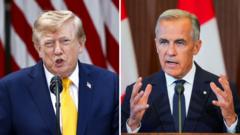
Canada is facing economic repercussions from the latest US tariffs, but Ottawa is considering a range of countermeasures. The effectiveness of these measures will depend on timing and Canadian political will, which themselves can serve as tools in negotiations with the Trump administration.
Financial analysts estimate that the recent 50% tariffs on approximately $20 billion worth of Canadian imports could reduce Canada's GDP by 0.3% to 0.6% in the short term. Despite these concerns, a majority of Canadians support the government's firm stance. A weekend poll by Angus Reid found that 76% of respondents back Ottawa's decision to walk away from trade negotiations, even while worrying about their own job security. Political leaders across parties have shown a united front.
The dispute comes at a politically sensitive time in the United States, with midterm elections approaching and the economy a key issue for voters. The Republican majority in Congress appears tenuous, and two of the biggest Senate races are in Michigan and Maine, both bordering Canada and sending most of their exports there. The Yale Budget Lab estimates that, under current law, President Trump's global tariffs will cost American households about $1,100 annually. Any further increase in the cost of goods and the broader impact of the trade dispute on businesses could further sour public opinion on the economy.
Speaking on Monday, Canadian Prime Minister Mark Carney said that US workers will be hurt by the latest threat to increase tariffs on Canadian autos and auto parts to 50% after 1 January. "What is the message sent out to the workers in Michigan, Ohio, Kentucky, Alabama? These workers depend absolutely on Canada, their largest consumer," he said, adding that Canada buys more American cars than the European Union and other countries.
British Columbia Premier David Eby noted on CNN that US consumers will see the impact of the tariffs on a wide range of goods. "If you're building a new home, on plywood; if you're replacing your floor, on veneers; if you're getting married, on cut flowers; if you're going out fishing, on fishing poles," he said. "It is a bizarre policy for Americans. It's going to hurt them."
Ontario Premier Doug Ford, one of the most vocal leaders opposing the tariffs, did not rule out specifically targeting Republican-controlled US states with retaliatory measures. "We will make sure America's economy feels the pain," he said. As for the coming midterms, Ford added, "If I were allowed to, I'd be down there door-knocking."
These statements illustrate the economic and political calculations Canada is making as it seeks to counter the tariffs while minimising domestic damage. The dispute is not merely a trade conflict; it also involves navigating the complexities of US domestic politics. By highlighting the impact on American consumers and workers, Canadian leaders are aiming to build pressure on the Trump administration and potentially influence the outcome of the elections.
For now, Canada appears prepared to endure short-term economic pain in pursuit of a more favourable long-term trade relationship. The timing of any further retaliatory measures, and the political will behind them, will be critical as the dispute continues to evolve.







