Can Amendment Invalidate Transgender ID Cards? Supreme Court Asks Centre
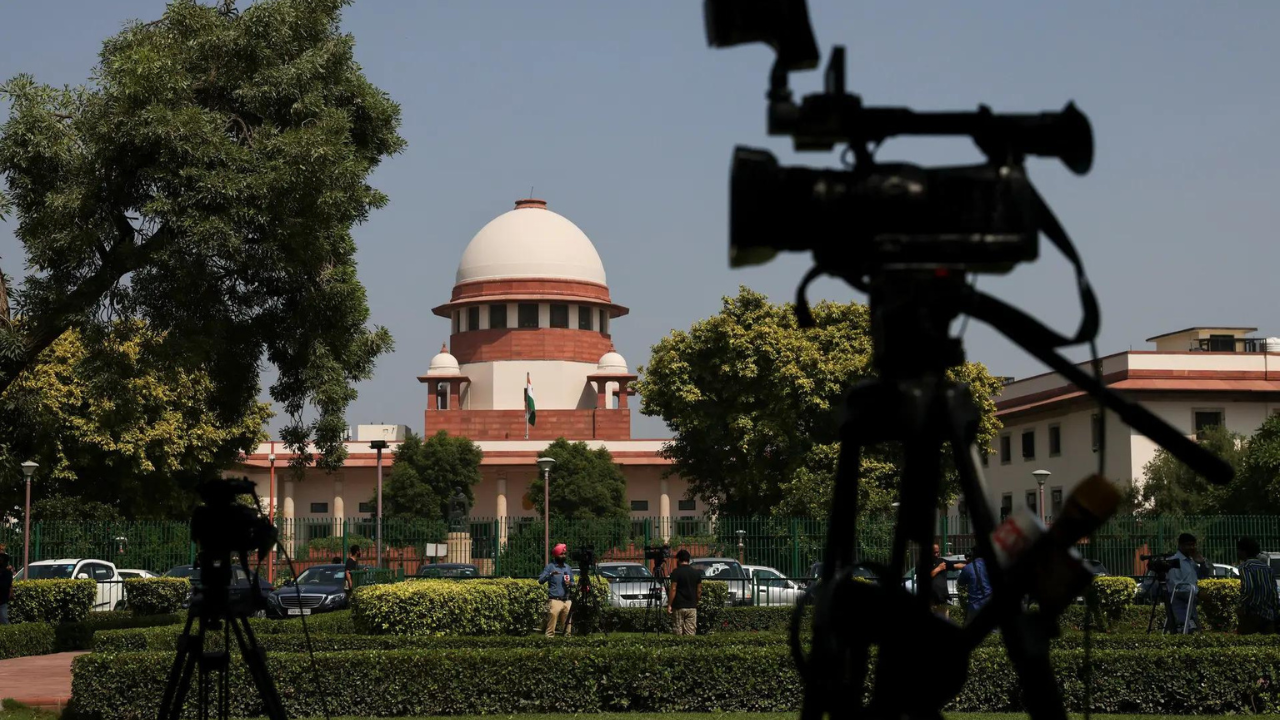
The Supreme Court on Monday sought the Union government's response on a batch of pleas challenging the Transgender Persons (Protection of Rights) Amendment Act, raising concerns that the new law erases benefits available under the earlier legislation and hampers access to hormone therapy for transgender individuals.
A three-judge bench, led by Chief Justice Surya Kant and also comprising Justices Joymalya Bagchi and V Mohana, asked a pointed question: if the amendments are to be applied prospectively, how could transgender identity cards issued under the previous provisions of the law be rendered invalid? The court's query came during a hearing on petitions alleging that the amended Act undermines the rights guaranteed under the original 2019 legislation.
Senior advocates appearing for the petitioners argued that the amendments have created a situation where transgender persons who were midway through their hormone treatment are being denied the same. According to the petitioners, doctors are reluctant to continue such treatment for fear of prosecution under the new law. They further alleged that the national portal for transgender persons, which served as a gateway for availing various benefits and certificates, has been discontinued, thereby depriving many transgenders of their entitlements.
The amendment to the Transgender Persons (Protection of Rights) Act, 2019, has been a subject of legal scrutiny. While the government has maintained that the changes are aimed at streamlining the recognition process and ensuring better implementation of welfare schemes, the petitioners contend that the amendments dilute the very concept of self-identified gender and introduce arbitrary conditions that could exclude many from the framework of legal protection.
The Supreme Court's observation assumes significance as it directly questions the validity of a retrospective cancellation of identity documents issued under the previous law. If the amendments are only prospective, existing certificates and identity cards should remain in force, the bench indicated. The court has given the government time to file its response and listed the matter for further hearing.
Legal experts point out that the case touches upon broader questions of constitutional rights, including the right to equality and the right to live with dignity, as recognised by the Supreme Court in the landmark NALSA judgment of 2014. That judgment recognised transgender persons as a third gender and directed the state to provide reservations in education and employment, as well as legal recognition of their self-identified gender.
The petitioners argued that any amendment that restricts these rights would be violative of the constitutional scheme. They also raised concerns about the discontinuation of the national portal, which was a centralised mechanism for transgender persons to obtain identity cards and access health schemes. Without the portal, many would find it difficult to prove their identity and claim benefits, they said.
The government is yet to file a formal response to the court's query. The bench has scheduled the next hearing after four weeks, giving all parties time to submit their written submissions. The outcome of this case is being closely watched by the transgender community and civil society organisations, as it could determine the future of legal protections for one of India's most marginalised groups.


