Cambridge study: India's satellite launch cost four times US; space department refutes
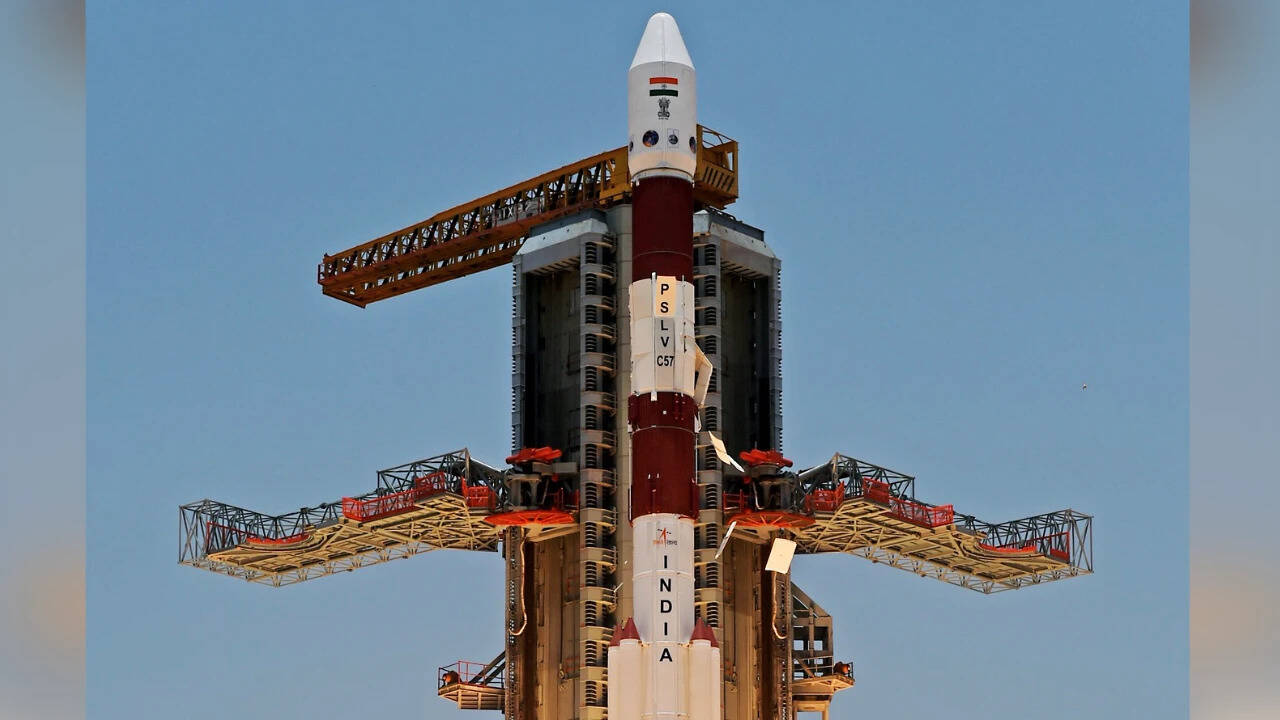
NEW DELHI: A study by the University of Cambridge has found that India's cost of launching a satellite per kilogram is about four times higher than that of the United States, and the highest among major spacefaring nations. However, a senior source in the Department of Space has disputed the findings, saying the study overlooked subsidies and other cost-saving measures that effectively reduce the price for Indian customers.
The peer-reviewed study, published in the journal Economics Letters, was authored by Alessio Terzi of the University of Cambridge and Francesco Nicoli of Politecnico di Torino. It analysed a database of more than 6,740 rocket launches between 1960 and 2025, covering 16 geographical entities, including the US, Russia, China, India, Europe and Japan. The dataset includes over 330 different rocket configurations and 4,405 launches.
The researchers said the database provides a unique opportunity to compare the cost of space access across countries, as it standardises data across different rocket types and launch years. The findings highlight significant variation in launch prices worldwide.
Using this standardised approach, the study found that at the end of 2025, the cost of launching a satellite from India stood at $13,302 (approximately Rs 12.7 lakh) per kilogram. This is more than four times the US figure of $3,225 (about Rs 3.1 lakh), which was the lowest among the markets studied. India was followed by Europe, with launch costs of $9,897 (about Rs 9.5 lakh) per kg. Russia, China and Japan were found to be less expensive than India.
The study also projected that the cost of sending payloads into low Earth orbit would halve by 2030 and fall by about 93 per cent by 2040. The average cost last year was $3,868 per kg, which is expected to drop to $1,569 by 2030 and possibly to $273 by 2040.
Responding to the findings, a highly-placed source in the Department of Space told TOI that the study did not account for various concessions provided by Isro's commercial wing, NewSpace India Limited (NSIL). According to the source, satellite customers are given a 30 per cent subsidy on launch costs. Additionally, Indian customers save on logistics and transport because launches take place from Sriharikota, which is within the country. The source also argued that foreign launchers typically carry multiple satellites to the same orbit, which increases costs for individual payloads that must manoeuvre to their final orbits.
The Department of Space and IN-SPACe have also introduced two financial incentive schemes: the Launch Services Price-support Scheme (LSPS) and a Price Support Scheme. These are designed to reduce entry barriers for Indian non-government entities. Under the LSPS, which has a corpus of Rs 800 crore, financial support ranges from 30 per cent to 100 per cent for satellite launches and related space infrastructure. This includes up to 50 per cent support for using Isro and Department of Space launch facilities, a 30 per cent subsidy on launch costs (capped at $3,000 per kg) for small vehicles carrying up to 500 kg, and full 100 per cent funding (capped at $13,000 per kg for up to four missions) for payloads up to 120 kg.
The study, however, focuses on the list price of launch services and does not factor in such subsidies or location-specific savings. The government source maintained that when these benefits are included, the effective cost for Indian customers may be substantially lower than the figures cited in the study.
The debate over launch costs comes at a time when India is seeking to expand its share of the global space market. The government has opened the sector to private players and is promoting indigenous launch capabilities. Independent experts say that while comparisons based on list prices can be useful, they must be interpreted with caution, as actual costs often depend on mission requirements, payload size, and support mechanisms.
The differing perspectives underscore the complexity of comparing launch costs across nations, as government subsidies and non-market factors play a significant role. For now, the debate remains unresolved, with the study offering one measure and the space department pointing to a more nuanced picture.







