Bypoll verdicts in Bengal, Tamil Nadu, Assam and Puducherry: Why they matter
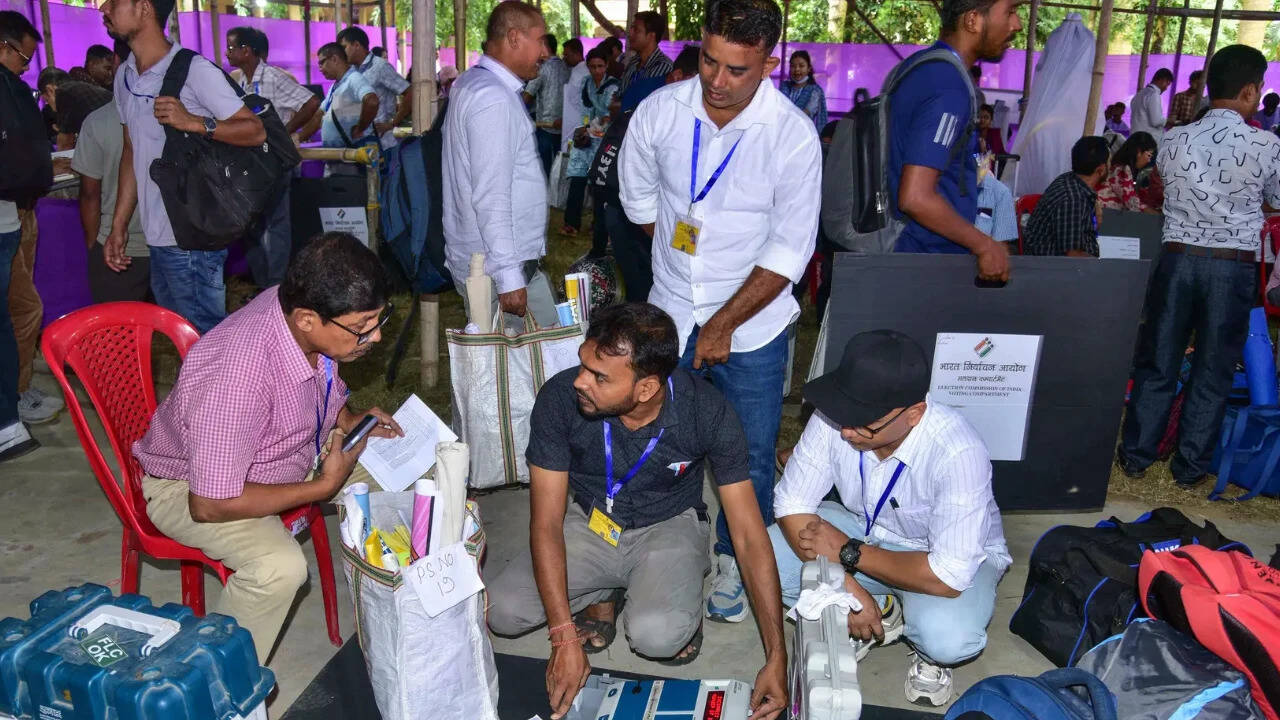
Counting of votes for the bye-elections in West Bengal, Tamil Nadu, Assam and Puducherry is set to take place amid heightened political interest, with parties and voters waiting for results that could shape the political narrative in these regions. Ahead of the counting, polling officials have been checking Electronic Voting Machines (EVMs), VVPAT units and other polling materials at distribution centres, in line with the Election Commission of India’s standard procedures.
Bye-elections, or bypolls, are held to fill vacancies that arise when a sitting member resigns, dies, is disqualified or otherwise leaves a seat. While they involve a limited number of constituencies, their outcomes are often read as early signals of public mood, organisational strength and alliance chemistry. In that sense, the contests in West Bengal, Tamil Nadu, Assam and Puducherry are being watched beyond their immediate boundaries.
The Election Commission has put in place a familiar protocol for counting. EVMs are stored in strong rooms under round-the-clock security after polling. Candidates and their agents are allowed to watch the storage and movement of machines. On counting day, votes are taken up constituency-wise, with postal ballots and service voters’ ballots often counted first. The results are declared by the returning officer concerned after the counting process is completed and any requests for recount are dealt with according to law.
In West Bengal, bypolls have often been seen as prestige battles that test the organisational hold of the ruling party and the principal Opposition. In Tamil Nadu, the contests are viewed through the prism of the State’s dominant alliances, which have been reconfiguring ahead of future elections. Assam’s bypolls are significant for the ruling coalition and the Opposition alike, as they can influence the political momentum in the State. In Puducherry, the Union Territory’s small but politically active electorate makes every seat important for the government and the Opposition.
These results will not, by themselves, change governments. But they can alter assembly arithmetic, affect the morale of party cadres and add to the national debate over governance and electoral strategy. A strong showing can strengthen a party’s hand in legislative business; a poor one can invite internal questions. That is why parties have deployed senior leaders, held rallies and kept a close watch on the counting arrangements.
The Election Commission has repeatedly urged all stakeholders to follow its instructions and maintain calm. Political parties have been reminded to ensure that their workers do not gather in large numbers outside counting centres. Security has been tightened at distribution and counting venues, and observers have been appointed to oversee the process. The Commission has also said that any complaint regarding the counting process should be brought to the notice of the returning officer or the observer concerned.
For voters, the bypoll is a reminder of the importance of every single seat. In a democracy, by-elections are not mere formalities. They fill a constitutional vacuum, give representation to a constituency that would otherwise go unrepresented, and hold elected representatives accountable to the electorate. The outcome in each of these States and the Union Territory will be a verdict on local issues as much as on national themes.
As officials prepare for the counting, the focus will be on the robustness of the process and the credibility of the result. The Election Commission’s guidelines, the presence of polling agents and the availability of legal remedies for disputes provide checks and balances. Once the votes are counted and the returning officers declare the winners, the newly elected members will be expected to take their seats and represent their constituents in the legislature.
The results are likely to be announced after the counting process is completed. Until then, all eyes will remain on the strong rooms, the counting halls and the political reactions that follow. In a diverse democracy, such contests are closely watched because they reflect not just who wins a seat, but also how citizens choose to be represented.







