Bullet Train Cost Revised to Rs 2 Lakh Crore, Almost Double Original
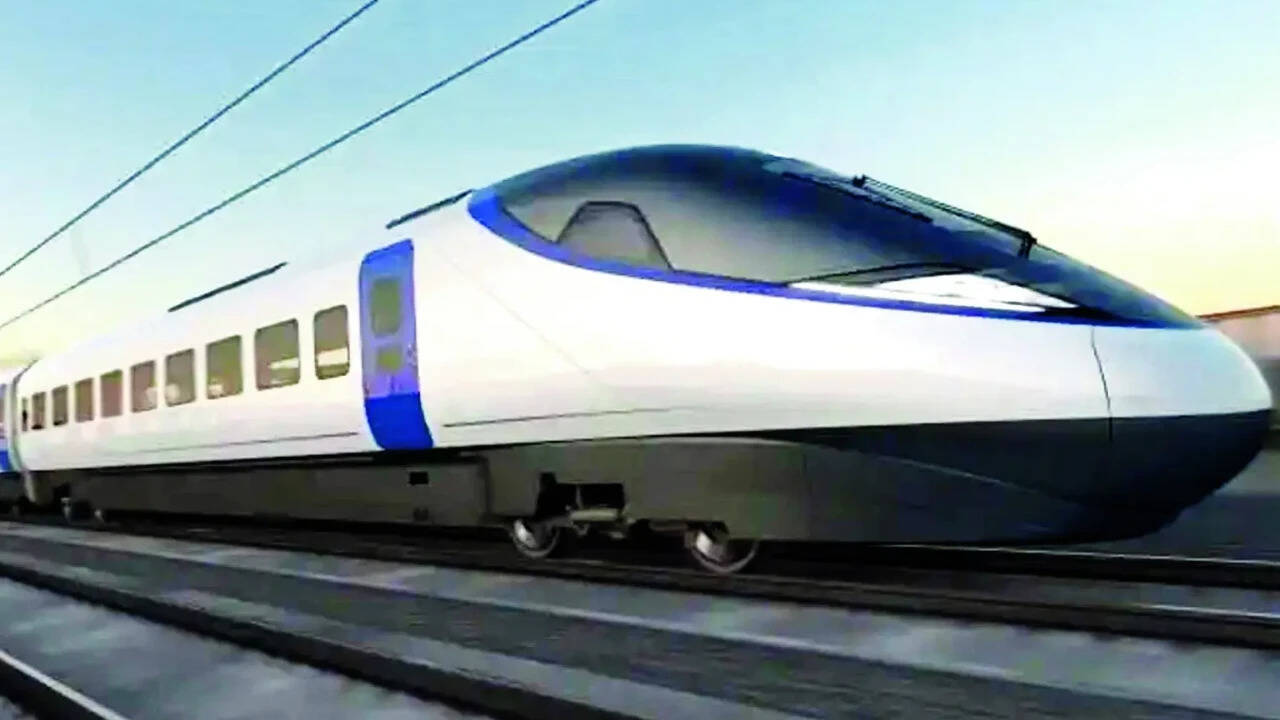
New Delhi: The Mumbai-Ahmedabad High Speed Rail project, commonly known as the bullet train, is now estimated to cost approximately Rs 2 lakh crore — nearly double the original estimate of Rs 1.08 lakh crore approved in 2015. The latest projection follows a January disclosure by Railway Board Chairperson Satish Kumar, who reported an 83 per cent increase to Rs 1.98 lakh crore.
The revised figure, which has not yet been detailed in an official project report, has been attributed to multiple factors including higher land acquisition compensation, escalating prices of raw materials, design modifications, and prolonged delays in executing civil contracts. The project is being implemented by the National High Speed Rail Corporation Limited (NHSRCL), with financial and technical support from Japan.
At the updated estimate, the per-kilometre cost of the 508-km corridor rises to approximately Rs 394 crore, making it one of the most expensive rail projects worldwide. Government officials, however, defend the expenditure as essential for introducing Japanese Shinkansen technology to India and reducing travel time between Mumbai and Ahmedabad to about two hours.
NHSRCL officials say the revised cost has been reviewed with the Japan International Cooperation Agency (JICA), which is financing nearly 81 per cent of the project through a long-term concessional loan. They maintain that the project will remain financially viable, despite the higher capital outlay, given the projected economic benefits over the coming decades.
Proponents point to the potential for job creation, reduced travel time, lower carbon emissions, and boost to trade and tourism. They argue that high-speed rail is a transformative investment that will place India among a select group of nations with advanced rail systems.
However, opposition parties and public finance experts have voiced strong reservations. They are demanding a comprehensive audit by the Comptroller and Auditor General (CAG) and a transparent discussion in Parliament. A senior opposition leader criticised the government, saying, "The bullet train is becoming a symbol of fiscal irresponsibility. Rather than allowing costs to spiral, the government must reassess the project’s impact on the common taxpayer."
The project has faced governance and implementation hurdles. Land acquisition has seen protests in both Maharashtra and Gujarat, leading to legal disputes and delays. The construction of the 21-km undersea tunnel near Thane Creek, the first of its kind in India, has also posed significant engineering challenges, slowing the project’s overall progress.
Originally slated for completion by 2023, the project deadline has been pushed back repeatedly. Current estimates suggest that the Mumbai-Ahmedabad corridor may not be operational before 2029, further increasing holding costs and interest burdens.
Economists suggest that a mechanism for independent, real-time monitoring should be established to prevent further cost escalation. They advocate for fixed-price engineering, procurement, and construction (EPC) contracts, and transparent quarterly project reviews in the public domain.
While the exact revised cost is yet to be formally confirmed by the Centre, the apparent upward trend in expenses underscores the need for cautious stewardship of public funds. The government is expected to present an updated cost estimate and revised implementation schedule to the Union Cabinet in the coming months. Until then, the bullet train project remains a subject of intense debate, balancing promises of future connectivity against the immediate burden of massive public spending.







