BJP leaders counter Rahul Gandhi's Manusmriti remarks in women's rights debate

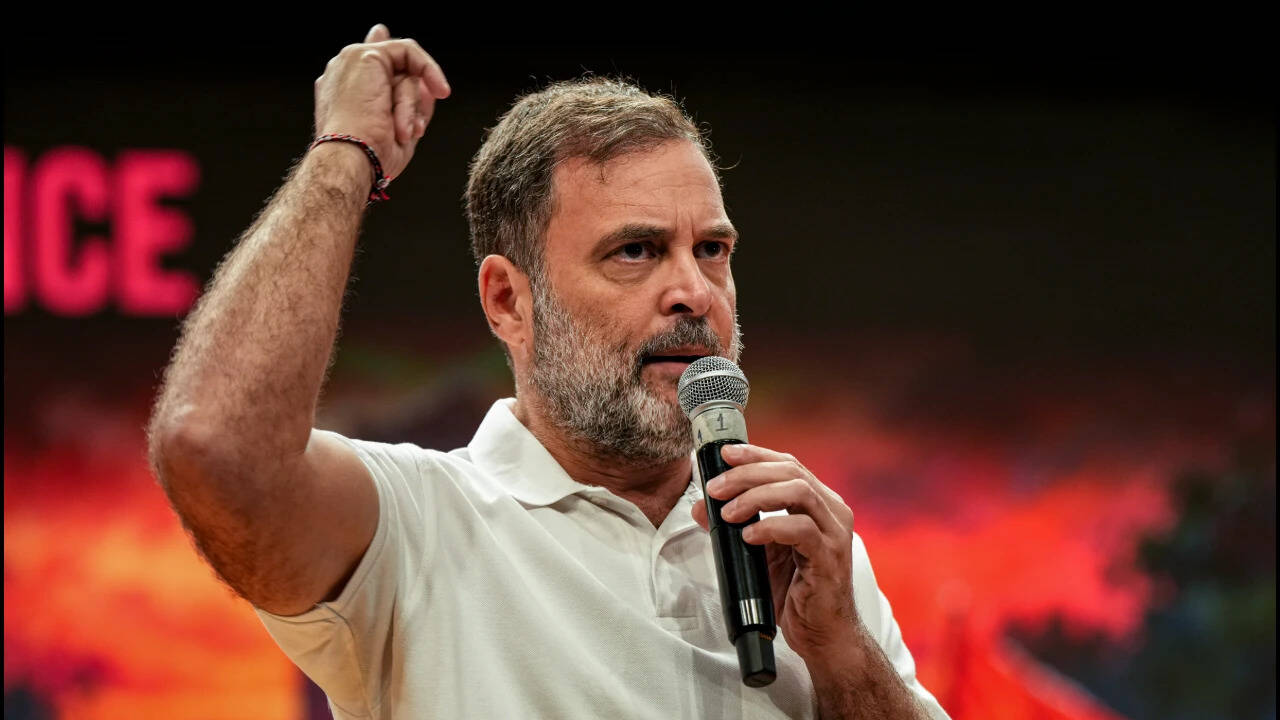
Leader of the Opposition in the Lok Sabha, Rahul Gandhi, has faced sharp criticism from Bharatiya Janata Party (BJP) leaders over his recent remarks on the Manusmriti and women's rights. The controversy began on August 22, 2026, when Mr. Gandhi spoke to female students in Maharashtra, criticising what he called the "Manusmriti mindset" and urging them to "smash patriarchy." The Congress party shared his remarks on social media platform X, quoting him as saying: "The Manusmriti states that a woman must never be independent. But I believe women should be independent. You may have relationships with your father, brother, husband, or son, but you do not belong to them. You belong to yourself."
The same day, BJP MP Nishikant Dubey responded on X, accusing Mr. Gandhi of ignorance of Indian scriptures. He quoted two verses from the Manusmriti that emphasise respect for women, with translations reading: "Where women are respected and worshipped, the gods reside; where they are not respected, all work and noble deeds bring no results." Mr. Dubey wrote: "Reading the Manusmriti may not be possible for you, @RahulGandhi ji. This is a shloka from the Manusmriti; read, understand, and speak. Because of the English language, do you know nothing about India's Vedas, Puranas, scriptures, Ramayana, and Mahabharata?"
On August 24, Assam Chief Minister Himanta Biswa Sarma posted a lengthy critique on X, accusing Mr. Gandhi of using women's empowerment as a "convenient smokescreen to target and discredit Hindu Dharma." Mr. Sarma argued that while the Manusmriti is not a universally binding code for Hindus, Sharia is foundational to Islamic jurisprudence. He questioned how often Mr. Gandhi had spoken with the same outrage against "patriarchal and medieval practices that persist under Sharia." He also referenced the Shah Bano case and the Congress's opposition to the Triple Talaq law, as well as an allegation that Mr. Gandhi ensured no women were included in the Karnataka Cabinet.
The Manusmriti, an ancient Sanskrit text, has historically been a subject of debate. Scholars note that it is one of many Dharmashastra texts and its authority has been contested across different periods and regions. While some verses are seen as endorsing patriarchal norms, others emphasise respect for women. This complexity is often overlooked in political discourse.
Mr. Sarma further said: "Congress rhetoric on women's rights rings hollow when measured against its own record. They betrayed our mothers and sisters by reversing the effect of the Shah Bano judgment." He challenged Mr. Gandhi to unequivocally support a Uniform Civil Code if he truly believes in women's equality, asking whether his idea of women's rights would continue to "begin and end with attacking Hinduism."
As of now, Mr. Gandhi and the Congress party have not publicly responded to these allegations. The exchange highlights the ongoing political debate over religious texts, gender equality, and the intersection of faith and governance in India. It also reflects the deep partisan divisions that often characterise discussions on such sensitive topics.
This incident is part of a broader pattern where political leaders frequently invoke religious texts to score points against opponents. Observers note that such rhetoric, while polarising, often draws attention to the need for a nuanced understanding of historical texts and their relevance to contemporary rights discourse.