Bhiwandi Building Collapse Kills 8: 1,790 Unsafe Structures Remain as Monsoon Crisis Deepens
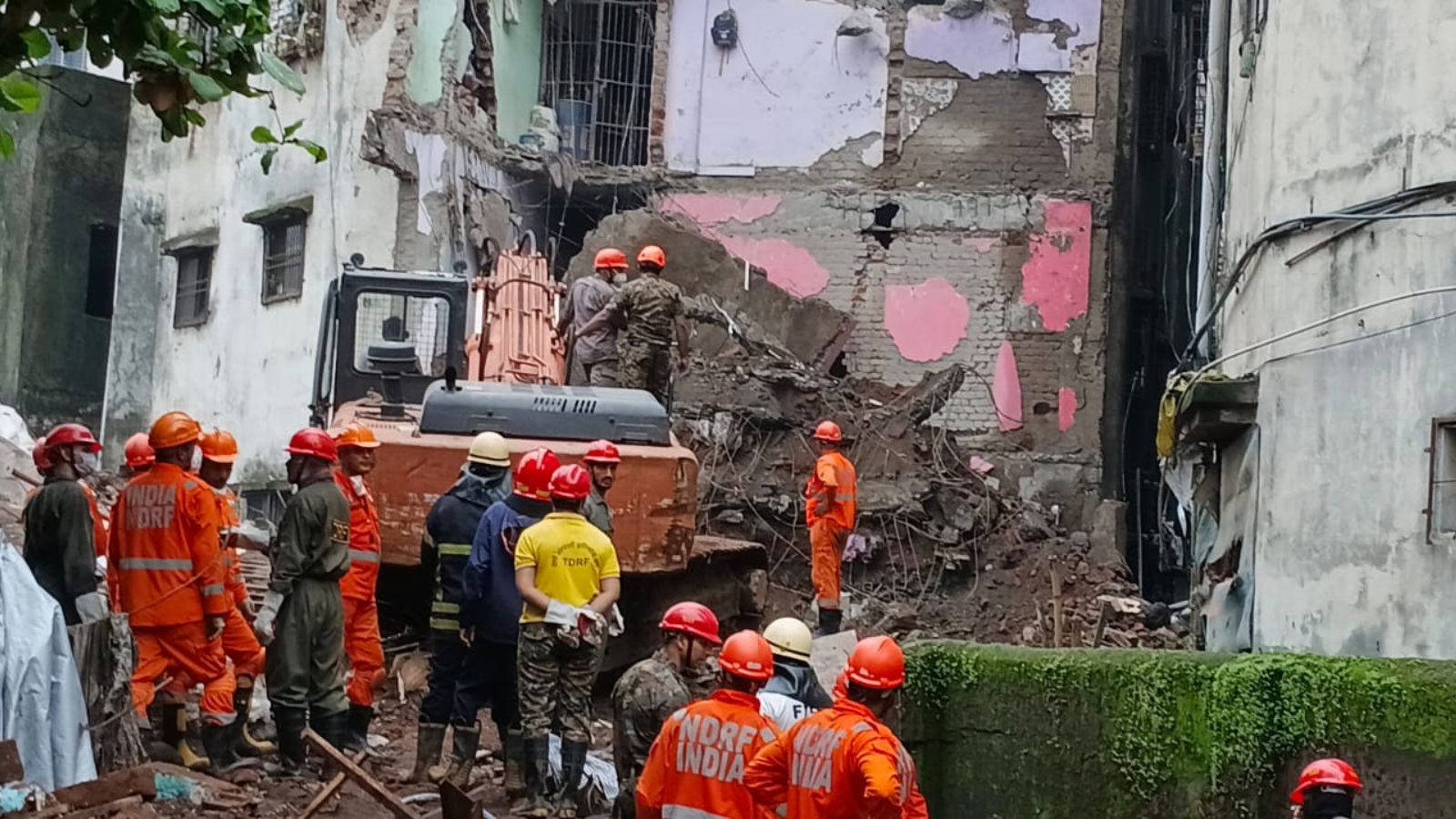
At least eight people were killed when a four-storey building collapsed late Thursday night in Bhiwandi, a town in Maharashtra's Thane district. The structure came down during the monsoon season, a period that has repeatedly exposed the vulnerability of the area's ageing and poorly maintained buildings.
The incident has once again turned attention to the condition of Bhiwandi's building stock. Ahead of the 2026 monsoon, the Bhiwandi Nizampur City Municipal Corporation identified 1,790 dangerous buildings in the town, including 227 in the C1 category that require immediate evacuation and demolition.
The scale of the problem becomes apparent when compared with Mumbai. According to the Brihanmumbai Municipal Corporation, 174 C1 dangerous buildings have been identified in Mumbai this year. Mumbai, with a population of over 1.25 crore and an area of 603 square kilometres, is vastly larger than Bhiwandi, which has a population of around 7.5 lakh and an area of about 27 square kilometres. Yet Bhiwandi has more than ten times as many dangerous buildings.
Several factors have contributed to this situation. Many buildings in Bhiwandi are several decades old and were not built to withstand the heavy rains and waterlogging associated with the monsoon. Illegal construction has made the problem worse, with many structures being raised without proper approvals or in violation of building norms.
Redevelopment of these buildings has been slow and delayed for years. Long pending projects, legal disputes, and difficulties in relocating residents have prevented the replacement of unsafe structures with safer ones. In several cases, residents continue to live in buildings that have been officially declared dangerous because they have no alternative accommodation.
The Bhiwandi Nizampur City Municipal Corporation has, in the past, issued notices to occupants of C1 buildings and arranged temporary shelters. However, the numbers are large, and enforcement is uneven. Many buildings are occupied by people who are not willing to move, while some owners oppose demolition orders in courts. The process of evacuation, therefore, remains slow and contested.
The recurring nature of these collapses before and during the monsoon shows that the issue is not being addressed with the required urgency. The identification of dangerous buildings is an annual exercise, but demolition and evacuation have not kept pace with the scale of the problem. Each year, the same list is updated, but the risk remains.
For the residents of Bhiwandi, this means living with uncertainty. Buildings that have been flagged as unsafe continue to be occupied, and families remain exposed to the dangers of collapse, especially during heavy rainfall. The latest incident is a reminder of the human cost of this inaction.
Experts suggest that a comprehensive audit of the town's building stock, along with a clear timeline for action, is needed to prevent further loss of life. This would require a coordinated effort between the municipal corporation, the state government, and private stakeholders to ensure that dangerous buildings are either repaired, demolished, or rebuilt without further delay.
As officials assess the damage and families grieve, the larger question is whether the lessons from this incident will translate into concrete measures. Without a sustained and time-bound strategy to address Bhiwandi's unsafe buildings, the town is likely to witness more such tragedies in the future.