Barrierless tolling on NHs showing early results: e-notices decline at key plazas
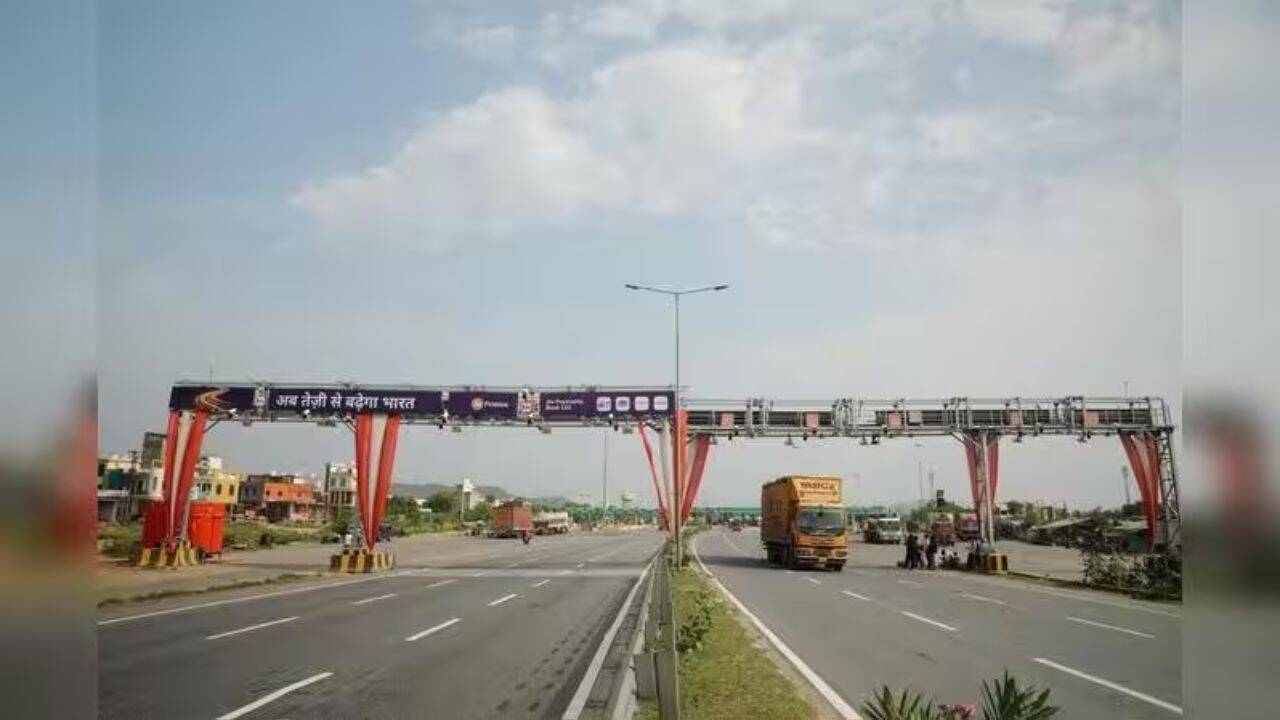
New Delhi: Barrierless tolling on national highway (NH) stretches, coupled with electronic notices for violations, appears to be encouraging greater compliance among road users, according to data from the National Highways Authority of India (NHAI). The system, known as multilane free flow (MLFF), allows vehicles to pass through toll plazas without stopping, with tolls collected electronically via FASTags.
At the Choryasi toll plaza on NH-48 in Gujarat, the first to go live under the new system, the number of e-notices issued for non-payment of tolls fell from 1.7 lakh in May to 1.1 lakh in June, and further to 92,240 in July. Similarly, the Mundka toll plaza in Delhi, which began MLFF operations on May 10, recorded 1.69 lakh e-notices in June, followed by a marginal decline to 1.67 lakh in July.
MLFF is currently operational at five toll plazas across the country. After Choryasi and Mundka, the system was rolled out at Daulatpura on the Delhi-Jaipur highway and Gharaunda on the Delhi-Chandigarh highway in the third and fourth weeks of June, respectively. Manoharpura on the Delhi-Jaipur highway was the latest to go live, on July 1.
Data from the newer plazas show that e-notices issued during the first month of MLFF operations were significantly lower than those recorded when the system was first introduced at Choryasi and Mundka. Daulatpura issued 33,038 e-notices in July, while Gharaunda and Manoharpura recorded 86,760 and 70,550 e-notices, respectively.
An official involved with NHAI’s tolling system said the trend indicates a growing awareness among road users about the need to pay tolls electronically. “As awareness about e-notices for toll non-payment spreads, road users are becoming more compliant. A large number of vehicle owners, particularly car users without active FASTags, are also falling in line,” the official said.
The MLFF system is designed to reduce congestion at toll plazas, allowing vehicles to maintain speed while passing through. However, the shift requires all vehicle owners to have functioning FASTags, as tolls are deducted automatically. Those without active FASTags or with insufficient balance in their accounts are issued e-notices for violations.
Under the current rules, failure to pay or challenge an e-notice within 72 hours can result in the vehicle owner being liable to pay double the toll amount. Prolonged non-payment can also lead to restrictions on access to Vahan-related services, including vehicle registration and transfer-related processes.
The declining trend in e-notices at existing MLFF plazas suggests that the combination of enforcement and awareness is working. NHAI officials said the authority is closely monitoring the performance of the system and will consider expanding MLFF to more toll plazas based on the experience gained so far.
While the early numbers are encouraging, experts note that sustained compliance will depend on robust enforcement mechanisms and seamless FASTag infrastructure. The authority has also been urging road users to keep their FASTags active and maintain adequate balance to avoid penalties.
The broad rollout of barrierless tolling is part of a larger effort to modernise highway infrastructure and improve the efficiency of toll collection across India. As more plazas transition to MLFF, the impact on traffic flow and user convenience will be watched closely by both commuters and policymakers.







