Assam Floods: 27 Dead, Over 5.6 Lakh Affected as Unprecedented Waters Inundate Upper Assam
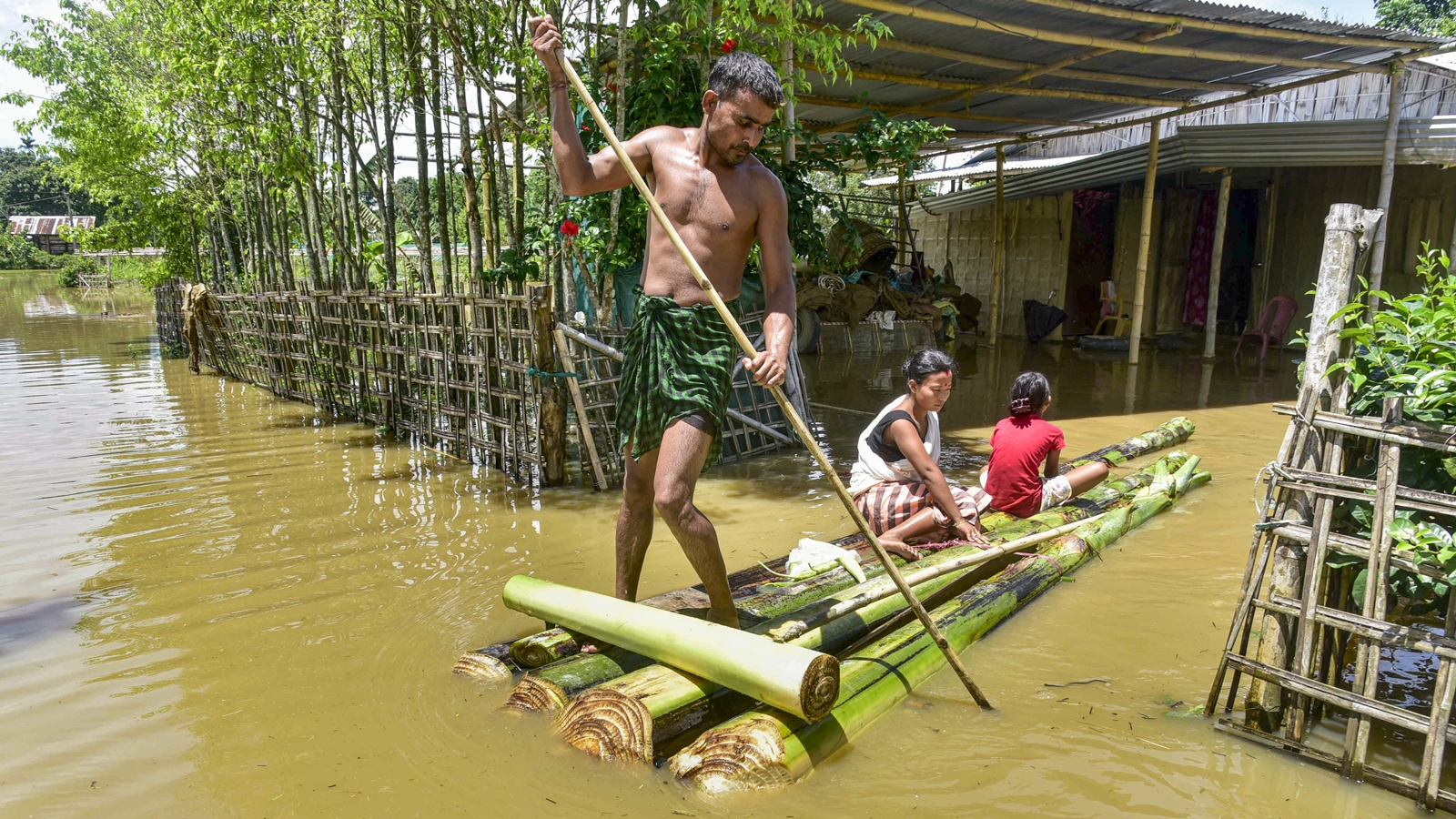
Through a long and sleepless night, Prasanta Borthakur’s family, including his 95-year-old father, spent hours perched on chairs placed on their beds as floodwaters entered their home in Nazira, in Assam’s Sivasagar district.
The water began rising rapidly between 5 pm and 7 pm on Sunday evening, soon entering their home in the Rajapul area and rising up to their chests. After sending out frantic calls and distress messages through the evening and night, a National Disaster Response Force (NDRF) team reached them on a boat on Monday morning and evacuated them.
“Ours is the highest house in Rajapul, and till date, water has never entered our home. In my 95 years, my father said he has never seen such flooding. Our whole village went underwater, and everyone spent the night like us, or on rooftops, or even in trees,” said 50-year-old Borthakur.
What unfolded in their village over Sunday and Monday was only the beginning of days of unprecedented flooding across the Upper Assam districts of Sivasagar, Charaideo, Jorhat and Golaghat. The flooding has been spreading to new areas daily and has claimed 27 lives so far. Within a span of 24 hours on Monday, 21 people lost their lives.
According to estimates by the Assam State Disaster Management Authority, the number of people affected by the floods rose from 3.6 lakh on Monday to 5.6 lakh on Tuesday, signalling rapid deterioration. As of Tuesday night, 6,101 people were evacuated by boats, with 5,764 from Sivasagar. Some 12,284 people were staying in relief camps across seven districts of Assam.
Floods inundate vast swathes of Assam every year, displacing lakhs of people. But the current floods are unprecedented in this inland belt, which does not usually experience such magnitude as it is located considerably away from the Brahmaputra’s main banks. This time, the Brahmaputra’s tributaries—the Dikhow, Disang, and Janji—have swelled and inundated large areas.
By Tuesday evening and Wednesday, floodwaters reached Sivasagar town and rose to waist level. “I have never in my life seen such flooding here,” said 53-year-old Nasimuddin Ahmed, a government office worker. “The small river Darika, which flows a few kilometres from the town, has overflowed. Every year there is some waterlogging, but this is the first time the river has reached the town. It reached my backyard, and I could not step out of home today.”
Assam Chief Minister Himanta Biswa Sarma attributed the floods to a “cloudburst” in Nagaland’s Mon district, located upstream from these tributaries. He earlier said the floods had resulted in “water levels unseen in half a century.” However, a scientist at the Meteorological Centre in Kohima clarified that the rainfall in Mon does not technically qualify as a cloudburst, which the India Meteorological Department defines as rainfall exceeding 100 mm within one hour. On Sunday, Mon received 137 mm of rainfall over eight to nine hours. In the preceding 15-20 days, the district had experienced several spells of heavy rainfall, saturating the mountains. Sunday’s heavy spell then triggered the flooding. Mon itself was devastated, with nine people losing their lives to landslides.
The Opposition has questioned the government’s preparedness, raising the issue in the Legislative Assembly. As rescue and relief efforts continue, the full extent of the disaster is still unfolding.


