'As India Leads, World Listens': Rajnath Singh Hails BRICS Joint Declaration
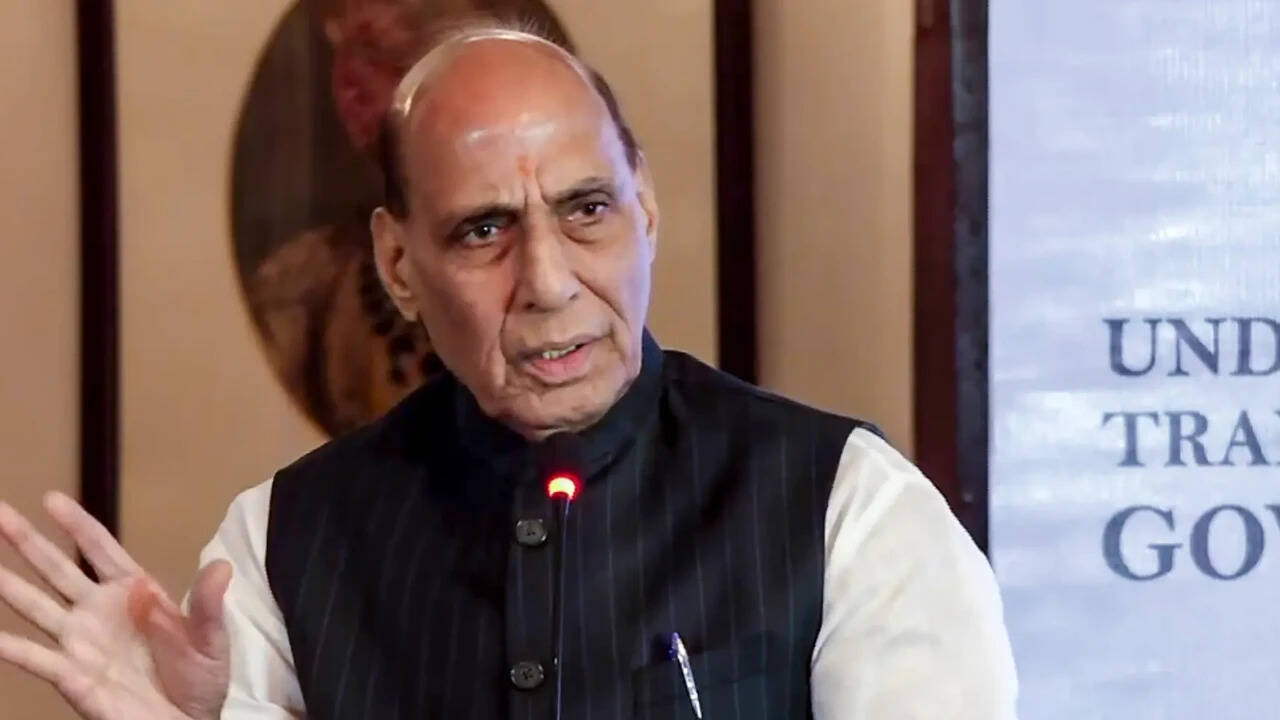
BRICS countries adopted a joint declaration at the close of their 18th summit, held under India's chairship, after negotiations that ran until 4 am on Saturday, officials said. Defence Minister Rajnath Singh welcomed the outcome, saying it showed that "as India leads, the world listens".
The final round of talks was complicated by differences between Iran and the United Arab Emirates over the conflict in West Asia. An earlier meeting of BRICS foreign ministers under India's presidency had also ended without a joint statement.
That makes the summit declaration the first collective political text agreed by the grouping during India's term as chair, and it was reached only after negotiators worked through the night to find language acceptable to every member.
The process recalled the 2023 G20 summit in New Delhi, where a joint declaration was agreed after extended discussions over wording on the war in Ukraine. BRICS works on consensus: a single member can block a text, and references to armed conflicts are usually the last and the hardest passages to settle.
BRICS — originally Brazil, Russia, India, China and South Africa — has admitted new members since 2024, including Egypt, Ethiopia, Iran, the United Arab Emirates and Indonesia. It presents itself as a platform for cooperation among emerging economies and for reform of institutions such as the United Nations Security Council and the Bretton Woods bodies. Because its members have different strategic alignments, its joint declarations are read as a measure of how far they can convert shared economic interests into common political positions.
The gap between Iran and the UAE illustrates that difficulty. The two countries differ sharply on the conflict in West Asia: the UAE normalised relations with Israel in 2020, while Iran does not recognise Israel and has been directly involved in hostilities in the region. Bridging those positions required prolonged negotiation.
The expansion has also changed the arithmetic of negotiations. What was once a five-member group that could often agree on broad language now includes economies at different stages of development and with different security ties, so drafting sessions have grown longer and drafts more carefully hedged.
Mr Singh's remarks placed the agreement in the context of India's wider diplomatic outreach, presenting the declaration as evidence that New Delhi can help shape a common position among countries with competing interests.
Joint declarations matter because they set the tone for the grouping's work in the months that follow — on trade, development finance, climate negotiations and reform of global governance. Their value lies less in their language than in whether members act on them. As with any consensus text, the final wording represents a compromise each member can accept rather than any single member's preferred position.
The declaration also gives India a concrete outcome to point to as it completes its chairship, at a time when the grouping's expansion has raised questions about whether consensus remains workable. The text as adopted is the authoritative record of what was agreed, and statements by individual governments remain the clearest guide to how each member interprets it.