An Indian Apple or Samsung by 2028? Ashwini Vaishnaw Sets a Deadline
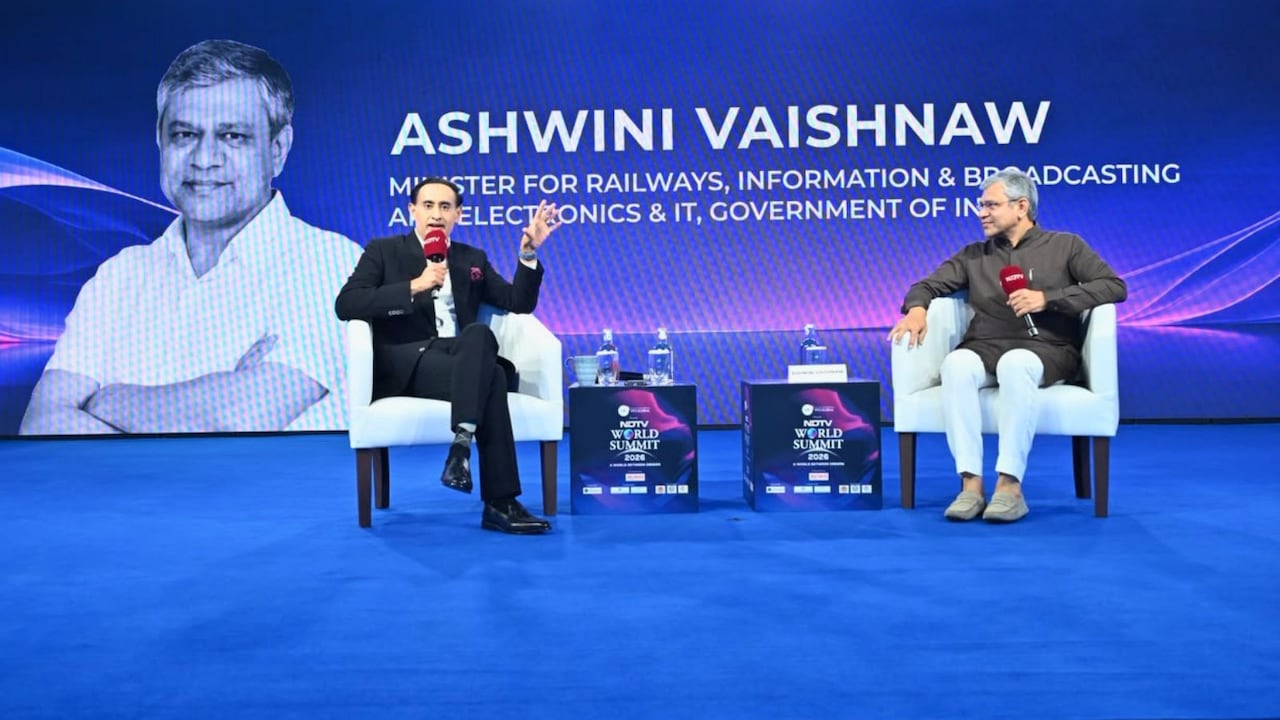
India could have its own mobile phone brand — designed and manufactured within the country — by October 2028, Union Electronics and IT Minister Ashwini Vaishnaw has said, attaching a specific date to a goal that has so far eluded India's rapidly expanding electronics manufacturing sector.
Speaking at the NDTV World Summit 2026, Vaishnaw was responding to a question from NDTV CEO and Editor-in-Chief Rahul Kanwal on why India does not yet have a homegrown competitor to Apple or Samsung. The minister said the country was steadily building the capabilities needed to design its own smartphones rather than only assemble them for others.
"This is October 23, 2026... You'll have Indian brand mobile phones designed and manufactured in India by October 23, 2028. Please note it," Vaishnaw said at the summit.
The remarks come as India attempts to move to the next stage of electronics manufacturing — from assembling phones for global companies to developing products under Indian brands, with domestic design expertise and intellectual property (IP).
Why building an Indian Apple is difficult
Designing a smartphone is a complex exercise because many technologies and components must work together inside a compact device.
Vaishnaw noted that a mobile phone requires radio frequency communication, antennas, computing power, memory, passive components, camera modules, displays and power management systems. Manufacturers must also manage the device's weight and power consumption.
"For a mobile phone, you have to have radio frequency communication. You have the antenna. You have compute, you have memory, you have all the passive components," he said. "That's why it's extremely complex to design a mobile phone," the minister added.
India has made significant progress in smartphone manufacturing in recent years, becoming one of the world's largest assembly hubs. But building a globally competitive brand requires more than factories: it involves designing the underlying hardware, creating intellectual property, and developing the expertise to integrate many components into a finished product.
How India is building design capability
The minister said the government had challenged Indian designers about three years ago to develop smartphone circuit boards, or printed circuit boards (PCBs).
The PCB is the foundation on which a phone's electronic components are connected. Designing one requires expertise in hardware architecture and the integration of different systems.
"Three years back, we gave this challenge to Indian designers. Why can't you design the PCB, which is the motherboard of a mobile phone? Why can't you design that?" he said.
According to Vaishnaw, two companies took up the challenge, and one of them developed a design that was selected by a major telecom service provider in the United States.
He said the company had designed and delivered an advanced 5G handset to one of the largest telecom service providers in the US, and that the device had already been manufactured and delivered to customers.
The minister did not identify the companies involved or the service provider.
Vaishnaw suggested the example shows Indian firms beginning to develop capabilities beyond contract manufacturing. The next step, he said, is to use the skills built over the past few years to create an Indian mobile phone brand.
"Now we will use that capability to have the Indian brand, Indian design, Indian IP," he said.
The timeline is ambitious. Building a consumer technology brand involves not only hardware design but also software, supply chains, after-sales service and consumer trust — areas where established global players have decades of head start. Whether an Indian-designed handset can compete on these fronts by 2028 will be closely watched by the industry.